
Health
Big Oil Hesitant Over Trump’s Venezuelan Oil Revival Plans

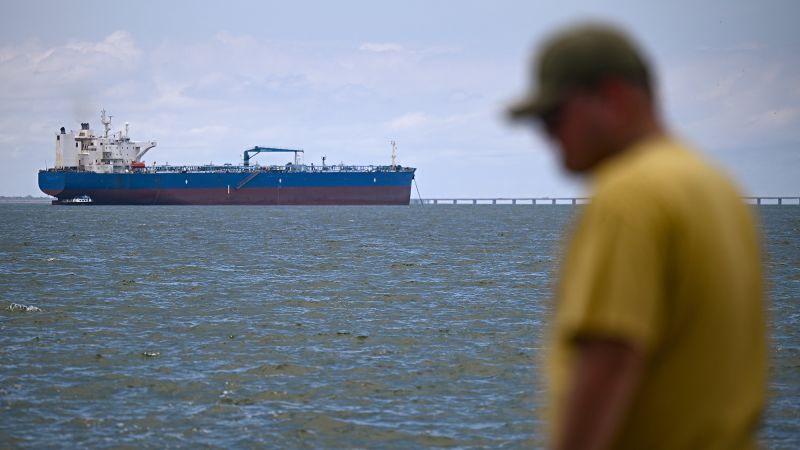
President Donald Trump has expressed optimism about the potential for U.S. oil companies to access Venezuela’s extensive oil reserves. However, industry insiders indicate that major American oil executives are unlikely to engage with the country’s oil sector due to a multitude of challenges. These include ongoing political instability, a decayed oil infrastructure, and a history of asset seizures by the Venezuelan government.
The current state of Venezuela’s oil industry raises significant concerns. According to sources, many U.S. oil executives believe that the risks outweigh the benefits, especially given the country’s tumultuous political climate. “The appetite for jumping into Venezuela right now is pretty low,” noted one industry insider. “We have no idea what the government there will look like.” This sentiment highlights a disconnect between the Trump administration’s ambitions and the industry’s cautious approach.
Taylor Rogers, a spokesperson for the White House, countered this hesitance, asserting that American oil companies are prepared to invest significantly to rebuild Venezuela’s oil infrastructure, which has suffered under the regime of Nicolás Maduro. “All of our oil companies are ready and willing to make big investments,” she stated. The White House plans to facilitate communication between oil executives and government officials, led by Energy Secretary Chris Wright and Secretary of State Marco Rubio.
The Economic Reality of Venezuela’s Oil Sector
Venezuela holds the largest proven oil reserves globally, surpassing those of Iraq, Russia, and the United States combined. Nevertheless, the country’s economic infrastructure is in dire straits. Years of mismanagement and underinvestment have left the national oil company in a precarious position. According to Luisa Palacios, a former chairwoman of Citgo, “Venezuela is broke. It doesn’t have any money.”
Estimates from consulting firm Rystad Energy suggest that maintaining current production levels of approximately 1.1 million barrels per day would require an investment of about $53 billion over the next 15 years. To restore production to its peak level of 3 million barrels per day, total capital expenditures could reach an astonishing $183 billion by 2040. The high costs are exacerbated by the fact that much of Venezuela’s oil is classified as “heavy,” necessitating more complex and expensive refining processes.
Another complicating factor is the current low oil prices, which fell by 20% last year, representing the steepest decline since 2020. While lower prices benefit consumers by reducing gasoline costs, they create a challenging environment for oil executives and their shareholders when considering risky investments. “The idea that there will be an overnight restart of the Venezuelan oil industry is just unrealistic,” said Doug Leggate, managing director at Wolfe Research.
Challenges and Opportunities for U.S. Oil Companies
Despite the obstacles, some U.S. companies, particularly Chevron, may find opportunities in Venezuela. Chevron has maintained a presence in the country throughout its political upheaval, currently producing around 150,000 barrels per day under a sanctions license recently extended by the Trump administration. Analysts believe that Chevron is uniquely positioned to navigate the complexities of operating in Venezuela.
Other major U.S. oil firms like ExxonMobil and ConocoPhillips possess the financial resources and expertise needed for potential investment. However, both companies have previously faced significant losses due to asset nationalization under former President Hugo Chávez, adding to their reluctance to re-enter the market. ConocoPhillips is still pursuing approximately $12 billion in compensation from the Venezuelan government, while ExxonMobil seeks $2 billion.
“The starting risk premium there is very high,” stated Palacios, who now serves as interim director of research at Columbia University’s Center on Global Energy Policy. She emphasized that Venezuela is not the only option for oil investment in Latin America, pointing out the rapid growth of oil production in neighboring Guyana.
As the situation continues to evolve, the Trump administration may consider offering guarantees or other incentives to encourage U.S. investment in Venezuela’s oil sector. For now, the industry remains cautious, prioritizing stability and predictability in their investment decisions. The future of Venezuela’s oil industry remains uncertain, as both political dynamics and economic realities weigh heavily on the prospects for U.S. involvement.

Urgent Swatting Incident Ties Up Emergency Resources in Alabama

Urgent Tax Alert: Claim Your Deductions Before April 15!

Scientists Investigate Cosmic Defects: Where Are They Now?

Spring Bocce Leagues Open Registration in Rapid City

CALV Offers Essential Communication Class for Real Estate Pros

Samsung Galaxy Watch 9 Set for Larger 435mAh Battery Upgrade

Healthy Choice Wellness Reports Earnings, Stock Sees Uptick

Prince Harry Claims to Be ‘Antidote to Andrew’ Amid Royal Crisis

Pet Owners Weigh Kibble Against Fresh Dog Food Options

ALMA Discovers Companion Orbiting Giant Star π 1 Gruis

U.S. Visa Rescheduling Hits H‐1B Applicants as New Vetting Rules Take Effect

University of Hawaiʻi Joins $25.6M AI Project for Disaster Monitoring

F-22 Raptor vs. Su-57 Felon: A 2025 Fighter Jet Comparison

Recent Divorce Judgments from Iberia Parish Court Records

Ohio State Study Uncovers Brain Connectivity and Function Links

Prince Andrew Faces Fallout from Scandals and Allegations

Urgent: Flight Cancellations Loom at Texas Airports Amid Shutdown

Frank Dunn, Esteemed Builder and Community Leader, Passes Away at 89
-
 Science8 months ago
ALMA Discovers Companion Orbiting Giant Star π 1 Gruis
-
 Politics6 months ago
U.S. Visa Rescheduling Hits H‐1B Applicants as New Vetting Rules Take Effect
-
Science8 months ago
University of Hawaiʻi Joins $25.6M AI Project for Disaster Monitoring
-
 World8 months ago
F-22 Raptor vs. Su-57 Felon: A 2025 Fighter Jet Comparison
-
 Politics8 months ago
Recent Divorce Judgments from Iberia Parish Court Records
-
 Science9 months ago
Ohio State Study Uncovers Brain Connectivity and Function Links
-
 World8 months ago
Prince Andrew Faces Fallout from Scandals and Allegations
-
 Top Stories8 months ago
Urgent: Flight Cancellations Loom at Texas Airports Amid Shutdown
-
 Lifestyle8 months ago
Frank Dunn, Esteemed Builder and Community Leader, Passes Away at 89
-

 Business8 months ago
Appian Recognizes 2025 Partner Award Winners for Enterprise Innovation
-

 Entertainment6 months ago
Malachi Barton Tops Google Searches as Disney’s Rising Star of 2025
-

 Science9 months ago
Innovator Captures Light at 2 Billion Frames Per Second