
World
Trump’s Oil Strategy in Venezuela Faces Lessons from Iraq

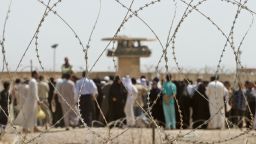
President Donald Trump has outlined a straightforward approach for the U.S. operation in Venezuela: seize the oil and initiate exports. However, the experiences of major oil companies in post-invasion Iraq highlight that the reality is far more complex. The U.S. invasion of Iraq in 2003 and the subsequent capture of leader Saddam Hussein offer a cautionary tale for oil firms eyeing Venezuela, where a different set of social and political dynamics is at play.
While the situation in Venezuela lacks an active war and U.S. troops are not currently deployed, the lessons learned from Iraq remain relevant. Analysts suggest it may take years before oil companies commit significant investments in Venezuela, primarily due to anticipated security risks and the complex political landscape. Bill Farren-Price, a senior research fellow at the Oxford Institute for Energy Studies, remarked, “It’s really going to be a very, very difficult mountain to climb.” He emphasized that rebuilding oil industries, even in oil-rich nations like Iraq and Venezuela, typically requires substantial time and effort.
Reflections on the Iraq Experience
Following the U.S. invasion of Iraq, then-Deputy Defense Secretary Paul Wolfowitz asserted that Iraq’s vast oil reserves would help finance the country’s reconstruction. This expectation, however, was far from reality. Mohamad Bazzi, director of the Center for Near Eastern Studies at New York University, explained that the Bush administration overestimated the speed at which the U.S. and Iraq would benefit from Iraqi oil.
Historically, Iraq’s oil industry had been nationalized and closed off to Western companies since the 1970s. After the invasion, the U.S. disbanded the Iraqi armed forces and removed thousands of officials from Hussein’s ruling Baath Party, placing government departments, including the oil ministry, under temporary U.S. control. An interim Iraqi government regained authority in 2004, but it was not until around 2009 that contracts were offered to foreign oil companies. Raad Alkadiri, managing partner of 3TEN32 Associates, noted that these contracts were structured to make firms contractors rather than granting them ownership rights over oil reserves, which discouraged foreign investment.
The security situation in Iraq also deteriorated sharply after the invasion, creating a chaotic environment for oil operations. Bazzi highlighted issues such as looting, sabotage of oil infrastructure, and the emergence of insurgency and civil war, all of which made it challenging for foreign companies to operate safely.
Venezuelan Challenges Ahead
In Venezuela, the security landscape remains uncertain. The Trump administration has opted to maintain remnants of the Maduro regime, unlike the complete regime change seen in Iraq. Carlos Solar, a senior research fellow at the Royal United Services Institute, indicated that various armed groups could create a “chaotic security scenario” in Venezuela, which would complicate any negotiations.
Venezuela’s security environment is characterized by its militarization, with four main groups: the Venezuelan army, organized crime syndicates, Colombian guerrilla factions, and colectivos—paramilitary groups loyal to Maduro. As a result, the Trump administration is reportedly considering deploying private military contractors to safeguard oil and energy assets, a strategy reminiscent of the extensive use of private security during the Iraq War.
Despite the potential for oil exploration, experts like Amy Myers Jaffe, director of the Energy, Climate Justice and Sustainability Lab at New York University, emphasize that the current uncertainties surrounding the Venezuelan government create significant barriers. Questions about the stability of the current regime, potential elections, and the overall political landscape make it difficult for oil companies to justify large investments at this time.
“The lesson of Iraq is that it’s not really about how much oil is there—it’s about what’s going to happen on the ground,” Jaffe cautioned.
The complex interplay of political, social, and security factors in both Iraq and Venezuela underscores the challenges that await oil companies. As they weigh their options, the experiences of the past will undoubtedly inform their future strategies in this volatile region.

Urgent Swatting Incident Ties Up Emergency Resources in Alabama

Urgent Tax Alert: Claim Your Deductions Before April 15!

Scientists Investigate Cosmic Defects: Where Are They Now?

Spring Bocce Leagues Open Registration in Rapid City

CALV Offers Essential Communication Class for Real Estate Pros

Samsung Galaxy Watch 9 Set for Larger 435mAh Battery Upgrade

Healthy Choice Wellness Reports Earnings, Stock Sees Uptick

Prince Harry Claims to Be ‘Antidote to Andrew’ Amid Royal Crisis

Pet Owners Weigh Kibble Against Fresh Dog Food Options

ALMA Discovers Companion Orbiting Giant Star π 1 Gruis

U.S. Visa Rescheduling Hits H‐1B Applicants as New Vetting Rules Take Effect

University of Hawaiʻi Joins $25.6M AI Project for Disaster Monitoring

F-22 Raptor vs. Su-57 Felon: A 2025 Fighter Jet Comparison

Recent Divorce Judgments from Iberia Parish Court Records

Urgent: Flight Cancellations Loom at Texas Airports Amid Shutdown

Ohio State Study Uncovers Brain Connectivity and Function Links

Frank Dunn, Esteemed Builder and Community Leader, Passes Away at 89

Appian Recognizes 2025 Partner Award Winners for Enterprise Innovation
-
 Science9 months ago
ALMA Discovers Companion Orbiting Giant Star π 1 Gruis
-
 Politics7 months ago
U.S. Visa Rescheduling Hits H‐1B Applicants as New Vetting Rules Take Effect
-
Science10 months ago
University of Hawaiʻi Joins $25.6M AI Project for Disaster Monitoring
-
 World10 months ago
F-22 Raptor vs. Su-57 Felon: A 2025 Fighter Jet Comparison
-
 Politics9 months ago
Recent Divorce Judgments from Iberia Parish Court Records
-
 Top Stories10 months ago
Urgent: Flight Cancellations Loom at Texas Airports Amid Shutdown
-
 Science10 months ago
Ohio State Study Uncovers Brain Connectivity and Function Links
-
 Lifestyle10 months ago
Frank Dunn, Esteemed Builder and Community Leader, Passes Away at 89
-
 Business9 months ago
Appian Recognizes 2025 Partner Award Winners for Enterprise Innovation
-

 World10 months ago
Prince Andrew Faces Fallout from Scandals and Allegations
-

 Entertainment8 months ago
Malachi Barton Tops Google Searches as Disney’s Rising Star of 2025
-
 Top Stories9 months ago
Republican Matt Van Epps Wins Tennessee Special Election