
World
Minnesota Judges Reject ICE Protest Arrest Warrants Amid Evidence Issues

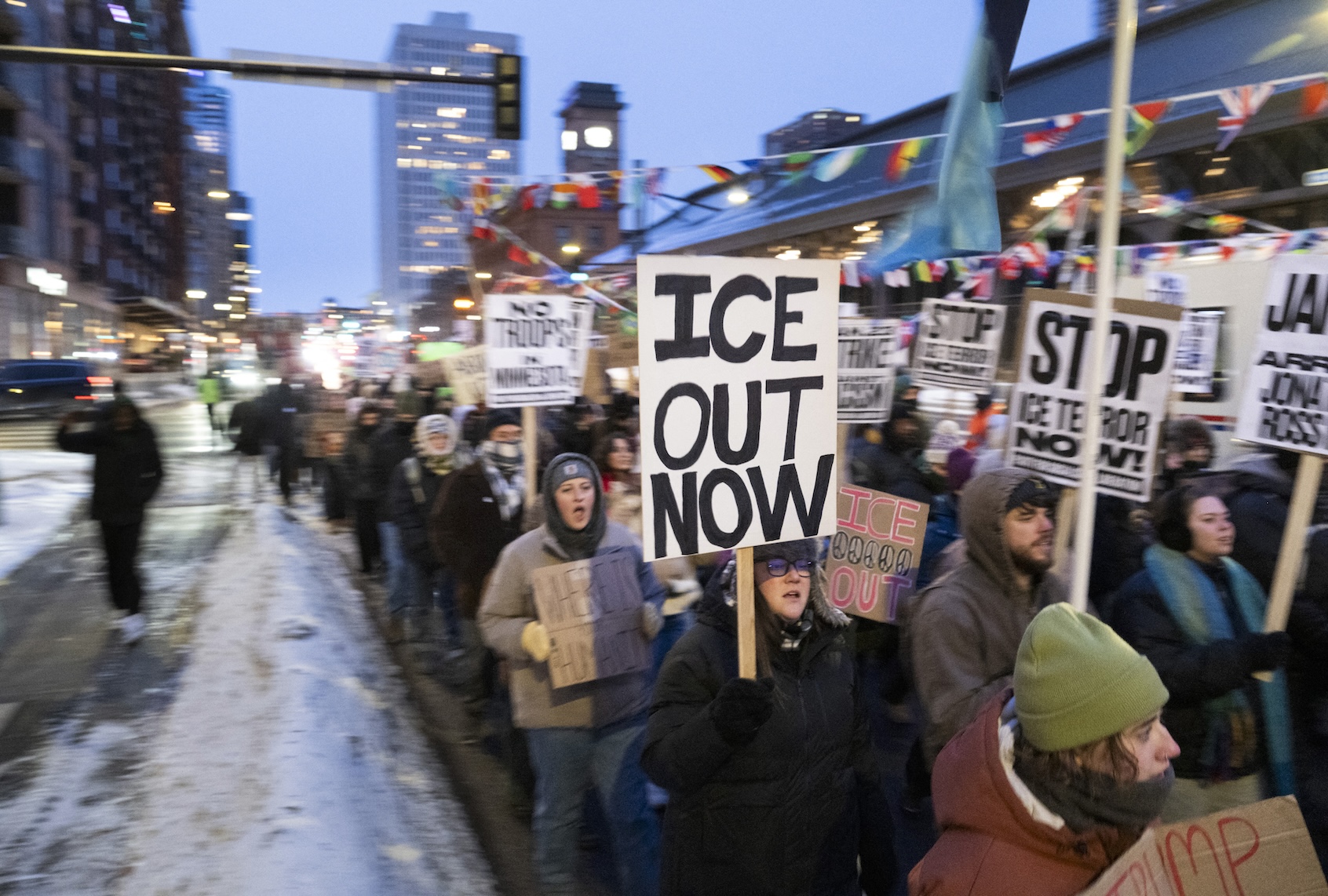
Federal judges in Minnesota are increasingly rejecting arrest warrants related to protests against the presence of Immigration and Customs Enforcement (ICE) officers. These decisions highlight concerns over the adequacy of evidence presented by federal prosecutors. According to a report from MS NOW, the warrants allege that protesters have assaulted officers and committed other crimes during demonstrations in Minneapolis. However, judges have found that many of these requests lack sufficient proof of criminal activity.
One notable case involved a federal judge who declined to issue a warrant for a protester accused of throwing an egg at a law enforcement vehicle. This instance reflects a broader trend in which judges are scrutinizing the evidence behind proposed warrants. In another high-profile case, Magistrate Judge Douglas Micko dismissed a complaint against Chauntyll Louisa Allen, a St. Paul school board member, who faced allegations of attempting to intimidate worshippers at a church where an ICE official serves as a pastor. Although Judge Micko did authorize a charge of conspiracy to make threats, the failure to secure broader charges indicates a significant legal hurdle for prosecutors.
Frustration Among Law Enforcement Officials
The repeated rejections of arrest warrants have led to frustration within law enforcement. Gregory Bovino, commander of Customs and Border Protection, expressed his discontent during a press conference on Thursday. “We work very hard with the Department of Justice, with the courts, to gather and obtain those warrants,” he stated. Bovino emphasized the commitment to continue collaborating with judges and the courts to secure these warrants, despite the setbacks faced thus far.
The legal landscape surrounding protests against ICE has become increasingly complex. Critics argue that the attempts to prosecute protesters may be motivated by a desire to suppress dissent. The implications of these judicial decisions extend beyond individual cases, raising questions about the balance between law enforcement and civil liberties.
Context of Ongoing Protests
The protests in Minnesota have been part of a larger movement against ICE and its practices, particularly in the wake of heightened scrutiny and allegations of misconduct by immigration enforcement agencies. Activists argue that the presence of ICE in communities has contributed to fear and division, sparking widespread demonstrations in various cities.
The current legal challenges faced by the government illustrate the ongoing tension between enforcement efforts and community responses. As these cases unfold, they will continue to serve as a focal point for discussions around immigration policy and civil rights.
The situation in Minnesota reflects broader national conversations about the role of federal law enforcement in local communities. As judges reject warrants due to insufficient evidence, the impact on future protests and law enforcement strategies remains to be seen. The outcome of these cases could set precedents for how similar situations are handled across the country.

Urgent Swatting Incident Ties Up Emergency Resources in Alabama

Urgent Tax Alert: Claim Your Deductions Before April 15!

Scientists Investigate Cosmic Defects: Where Are They Now?

Spring Bocce Leagues Open Registration in Rapid City

CALV Offers Essential Communication Class for Real Estate Pros

Samsung Galaxy Watch 9 Set for Larger 435mAh Battery Upgrade

Healthy Choice Wellness Reports Earnings, Stock Sees Uptick

Prince Harry Claims to Be ‘Antidote to Andrew’ Amid Royal Crisis

Pet Owners Weigh Kibble Against Fresh Dog Food Options

ALMA Discovers Companion Orbiting Giant Star π 1 Gruis

U.S. Visa Rescheduling Hits H‐1B Applicants as New Vetting Rules Take Effect

University of Hawaiʻi Joins $25.6M AI Project for Disaster Monitoring

F-22 Raptor vs. Su-57 Felon: A 2025 Fighter Jet Comparison

Ohio State Study Uncovers Brain Connectivity and Function Links

Recent Divorce Judgments from Iberia Parish Court Records

Prince Andrew Faces Fallout from Scandals and Allegations

Urgent: Flight Cancellations Loom at Texas Airports Amid Shutdown

Frank Dunn, Esteemed Builder and Community Leader, Passes Away at 89
-
 Science8 months ago
ALMA Discovers Companion Orbiting Giant Star π 1 Gruis
-
 Politics6 months ago
U.S. Visa Rescheduling Hits H‐1B Applicants as New Vetting Rules Take Effect
-
Science8 months ago
University of Hawaiʻi Joins $25.6M AI Project for Disaster Monitoring
-
 World8 months ago
F-22 Raptor vs. Su-57 Felon: A 2025 Fighter Jet Comparison
-
 Science8 months ago
Ohio State Study Uncovers Brain Connectivity and Function Links
-
 Politics8 months ago
Recent Divorce Judgments from Iberia Parish Court Records
-
 World8 months ago
Prince Andrew Faces Fallout from Scandals and Allegations
-
 Top Stories8 months ago
Urgent: Flight Cancellations Loom at Texas Airports Amid Shutdown
-
 Lifestyle8 months ago
Frank Dunn, Esteemed Builder and Community Leader, Passes Away at 89
-

 Business8 months ago
Appian Recognizes 2025 Partner Award Winners for Enterprise Innovation
-

 Entertainment6 months ago
Malachi Barton Tops Google Searches as Disney’s Rising Star of 2025
-

 Science9 months ago
Innovator Captures Light at 2 Billion Frames Per Second