
Top Stories
New Sensors Target Black Ice Threats, Transforming Safety NOW

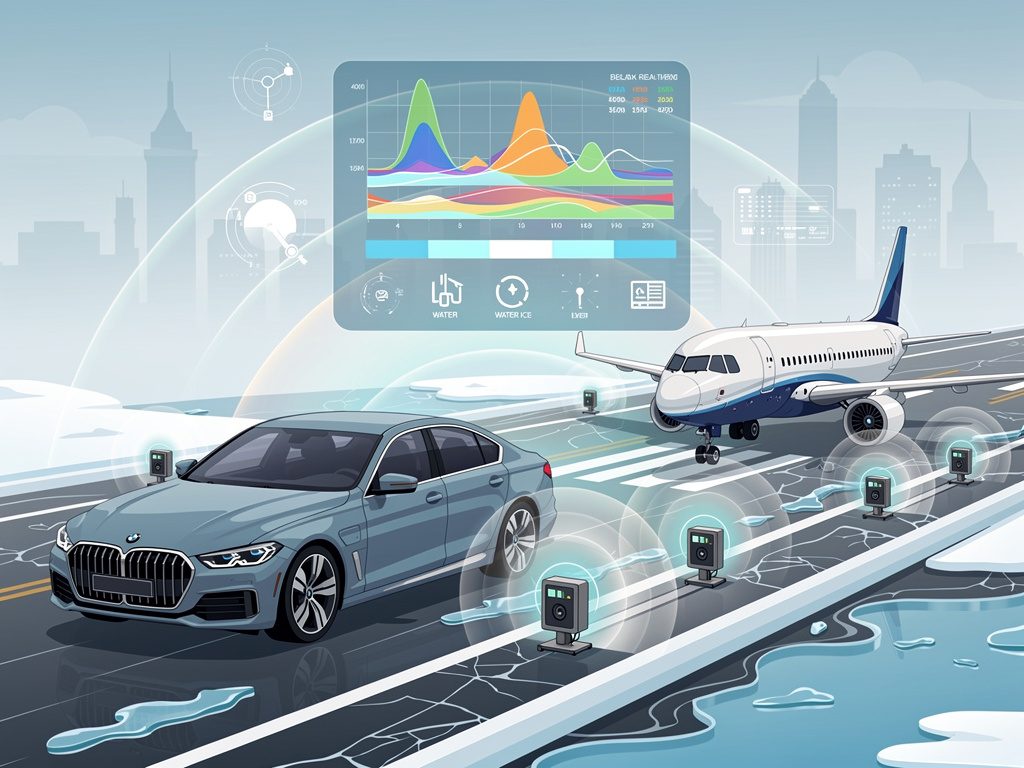
URGENT UPDATE: A breakthrough in road safety technology is here, as researchers at the University of Sheffield unveil innovative sub-terahertz sensors designed to combat the deadly threat of black ice. This critical advancement could drastically change how vehicles detect hazardous conditions, potentially saving thousands of lives each year.
For decades, drivers and pilots alike have faced a perilous blind spot: relying on air temperature readings to gauge road safety. This “black ice gap” allows conditions to become dangerously deceptive, with road surfaces freezing even while ambient temperatures remain mild. The National Highway Traffic Safety Administration (NHTSA) reports that weather-related accidents account for a significant portion of annual crashes. This new sensor technology is poised to close that gap.
The breakthrough technology utilizes sub-terahertz waves to analyze road surfaces in real-time, effectively distinguishing between dry asphalt, water, and the transparent glaze of black ice. Traditional sensors, like LiDAR, often fail to detect transparent hazards. However, the Sheffield team’s sensors interact with water molecules, allowing vehicles to “see” icy conditions before they become a danger.
This advancement transforms vehicles into proactive safety tools. As the sensors measure wave reflection and absorption rates, they predict low-friction conditions milliseconds before tires make contact. This predictive model enables vehicles to adjust handling and braking systems, enhancing safety for both drivers and passengers.
The implications for autonomous vehicles (AVs) are profound. Currently, many AVs are tested in dry conditions, significantly limiting their safety in colder climates. With the integration of sub-terahertz sensors, AVs can recognize the difference between wet and icy roads, allowing them to navigate safely in adverse conditions. By utilizing Vehicle-to-Everything (V2X) communication, these vehicles can also share critical hazard information, creating a dynamic heat map of road conditions.
The aviation industry stands to benefit immensely as well. Runway excursions, where aircraft slide off tarmacs, remain a major safety concern for the Federal Aviation Administration (FAA). Currently, pilots depend on delayed reports of runway conditions. With the deployment of these new sensors, immediate feedback on runway safety could enhance landing precision, reducing accidents and costly delays.
Moreover, these sensors could revolutionize de-icing protocols, potentially saving airlines hundreds of millions of dollars annually. By accurately determining whether wings are merely wet or covered with ice, airlines could avoid unnecessary and costly de-icing procedures, speeding up turnaround times.
The economic ripple effects extend to insurance and municipal infrastructure sectors. As these sensors become standard, liability models may shift significantly. Currently, accidents linked to black ice are often categorized as at-fault incidents. However, with vehicles equipped to detect undetectable hazards, insurance companies may incentivize fleets to adopt this technology to minimize risk.
Cities also stand to gain from this advancement. By embedding sub-terahertz sensors into roadway infrastructure, municipalities can more efficiently deploy resources, applying de-icing treatments only to areas where conditions warrant it. This could reduce the environmental impact of road salt while improving overall roadway safety.
Despite the promise of this technology, challenges remain. The high cost and bulkiness of current sub-terahertz sensors pose hurdles for widespread adoption. However, as the automotive industry advances toward software-defined vehicles, the demand for data-driven solutions could drive investment in making these sensors affordable and durable.
The urgency of this development cannot be overstated. As weather-related accidents continue to pose a serious threat on roads and runways, the deployment of sub-terahertz sensors is a game-changer in the pursuit of safer travel. Expect to see this technology emerge rapidly as the industry races to enhance safety measures for all travelers.
Stay tuned for more updates as these developments unfold.

Urgent Swatting Incident Ties Up Emergency Resources in Alabama

Urgent Tax Alert: Claim Your Deductions Before April 15!

Scientists Investigate Cosmic Defects: Where Are They Now?

Spring Bocce Leagues Open Registration in Rapid City

CALV Offers Essential Communication Class for Real Estate Pros

Samsung Galaxy Watch 9 Set for Larger 435mAh Battery Upgrade

Healthy Choice Wellness Reports Earnings, Stock Sees Uptick

Prince Harry Claims to Be ‘Antidote to Andrew’ Amid Royal Crisis

Pet Owners Weigh Kibble Against Fresh Dog Food Options

ALMA Discovers Companion Orbiting Giant Star π 1 Gruis

U.S. Visa Rescheduling Hits H‐1B Applicants as New Vetting Rules Take Effect

University of Hawaiʻi Joins $25.6M AI Project for Disaster Monitoring

F-22 Raptor vs. Su-57 Felon: A 2025 Fighter Jet Comparison

Recent Divorce Judgments from Iberia Parish Court Records

Ohio State Study Uncovers Brain Connectivity and Function Links

Prince Andrew Faces Fallout from Scandals and Allegations

Urgent: Flight Cancellations Loom at Texas Airports Amid Shutdown

Frank Dunn, Esteemed Builder and Community Leader, Passes Away at 89
-
 Science8 months ago
ALMA Discovers Companion Orbiting Giant Star π 1 Gruis
-
 Politics6 months ago
U.S. Visa Rescheduling Hits H‐1B Applicants as New Vetting Rules Take Effect
-
Science8 months ago
University of Hawaiʻi Joins $25.6M AI Project for Disaster Monitoring
-
 World8 months ago
F-22 Raptor vs. Su-57 Felon: A 2025 Fighter Jet Comparison
-
 Politics8 months ago
Recent Divorce Judgments from Iberia Parish Court Records
-
 Science9 months ago
Ohio State Study Uncovers Brain Connectivity and Function Links
-
 World8 months ago
Prince Andrew Faces Fallout from Scandals and Allegations
-
 Top Stories8 months ago
Urgent: Flight Cancellations Loom at Texas Airports Amid Shutdown
-
 Lifestyle8 months ago
Frank Dunn, Esteemed Builder and Community Leader, Passes Away at 89
-

 Business8 months ago
Appian Recognizes 2025 Partner Award Winners for Enterprise Innovation
-

 Entertainment7 months ago
Malachi Barton Tops Google Searches as Disney’s Rising Star of 2025
-
 Science9 months ago
Innovator Captures Light at 2 Billion Frames Per Second