
Top Stories
Maine’s Climate Superfund Bill Advances Amid Urgent Infrastructure Needs

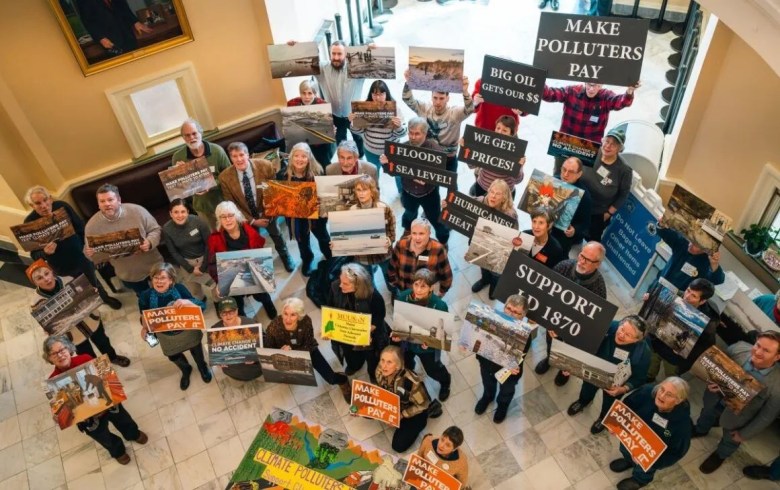
UPDATE: Maine lawmakers are advancing a groundbreaking climate superfund bill, known as L.D. 1870, aimed at holding major fossil fuel companies accountable for over two decades of greenhouse gas emissions. This legislation, which recently passed out of committee, is part of a desperate effort to finance repairs for infrastructure devastated by increasingly severe storms associated with climate change.
The bill proposes significant fines on companies responsible for emitting more than 1 billion metric tons of greenhouse gases from 1995 to 2024. The revenue generated would directly fund critical climate resilience and mitigation projects throughout Maine, reflecting a growing trend as states like Vermont and New York have already enacted similar laws.
Advocates, including Jack Shapiro, climate and clean energy director at the Natural Resources Council of Maine, argue that it is essential for fossil fuel companies to bear the financial burden of damages inflicted by their emissions. Shapiro stated, “The responsible parties contemplated by the bill are really the world’s largest polluters, who understood the impacts of their products.” Stronger storms, coastal flooding, intense heatwaves, and wildfires have all been linked to these emissions, prompting urgent action from lawmakers.
However, the bill’s journey is not without obstacles. Opponents, including the U.S. Chamber of Commerce and the American Petroleum Institute, have already mounted legal challenges against similar legislation in other states, claiming that these laws violate constitutional provisions governing emissions. As lawsuits against Vermont and New York are still unfolding, the future of Maine’s bill hangs in the balance, with opponents arguing it retroactively punishes companies for lawful actions.
As the legal landscape develops, Sean Mahoney, vice president of the Conservation Law Foundation for Maine, emphasized the core question: “Do the states have the authority to seek redress from these companies for the harms associated with the products that they sold?” The outcome of these discussions will have significant implications for how states can hold fossil fuel companies accountable.
Meanwhile, Vermont is taking steps to implement its own climate superfund law, focusing on quantifying the costs of greenhouse gas emissions from 1995 to 2024. This entails assessing damages related to climate impacts, such as infrastructure repairs and adaptation investments. Maine’s proposed legislation is closely mirroring this approach, aiming to establish a clear framework for calculating damages and imposing fines on the largest emitters with business ties to the state.
Shapiro pointed out that companies like ExxonMobil, which operates gas stations in Maine, should be held accountable for their emissions. Conversely, firms like Saudi Aramco, which have no business presence in the state, may not be subject to the same accountability.
As Maine pushes forward with its climate superfund bill, the implications for climate action and infrastructure funding are profound. With climate-related disasters on the rise, the urgency to implement such measures has never been greater. Stay tuned for further developments as this critical issue unfolds, impacting not just Maine but potentially setting a precedent for states nationwide.

Urgent Swatting Incident Ties Up Emergency Resources in Alabama

Urgent Tax Alert: Claim Your Deductions Before April 15!

Scientists Investigate Cosmic Defects: Where Are They Now?

Spring Bocce Leagues Open Registration in Rapid City

CALV Offers Essential Communication Class for Real Estate Pros

Samsung Galaxy Watch 9 Set for Larger 435mAh Battery Upgrade

Healthy Choice Wellness Reports Earnings, Stock Sees Uptick

Prince Harry Claims to Be ‘Antidote to Andrew’ Amid Royal Crisis

Pet Owners Weigh Kibble Against Fresh Dog Food Options

ALMA Discovers Companion Orbiting Giant Star π 1 Gruis

U.S. Visa Rescheduling Hits H‐1B Applicants as New Vetting Rules Take Effect

University of Hawaiʻi Joins $25.6M AI Project for Disaster Monitoring

F-22 Raptor vs. Su-57 Felon: A 2025 Fighter Jet Comparison

Recent Divorce Judgments from Iberia Parish Court Records

Ohio State Study Uncovers Brain Connectivity and Function Links

Prince Andrew Faces Fallout from Scandals and Allegations

Urgent: Flight Cancellations Loom at Texas Airports Amid Shutdown

Frank Dunn, Esteemed Builder and Community Leader, Passes Away at 89
-
 Science8 months ago
ALMA Discovers Companion Orbiting Giant Star π 1 Gruis
-
 Politics6 months ago
U.S. Visa Rescheduling Hits H‐1B Applicants as New Vetting Rules Take Effect
-
Science8 months ago
University of Hawaiʻi Joins $25.6M AI Project for Disaster Monitoring
-
 World8 months ago
F-22 Raptor vs. Su-57 Felon: A 2025 Fighter Jet Comparison
-
 Politics8 months ago
Recent Divorce Judgments from Iberia Parish Court Records
-
 Science9 months ago
Ohio State Study Uncovers Brain Connectivity and Function Links
-
 World8 months ago
Prince Andrew Faces Fallout from Scandals and Allegations
-
 Top Stories8 months ago
Urgent: Flight Cancellations Loom at Texas Airports Amid Shutdown
-
 Lifestyle8 months ago
Frank Dunn, Esteemed Builder and Community Leader, Passes Away at 89
-

 Business8 months ago
Appian Recognizes 2025 Partner Award Winners for Enterprise Innovation
-

 Entertainment6 months ago
Malachi Barton Tops Google Searches as Disney’s Rising Star of 2025
-

 Science9 months ago
Innovator Captures Light at 2 Billion Frames Per Second