
Science
Ukraine Innovates to Overcome Starlink’s Bandwidth Limitations

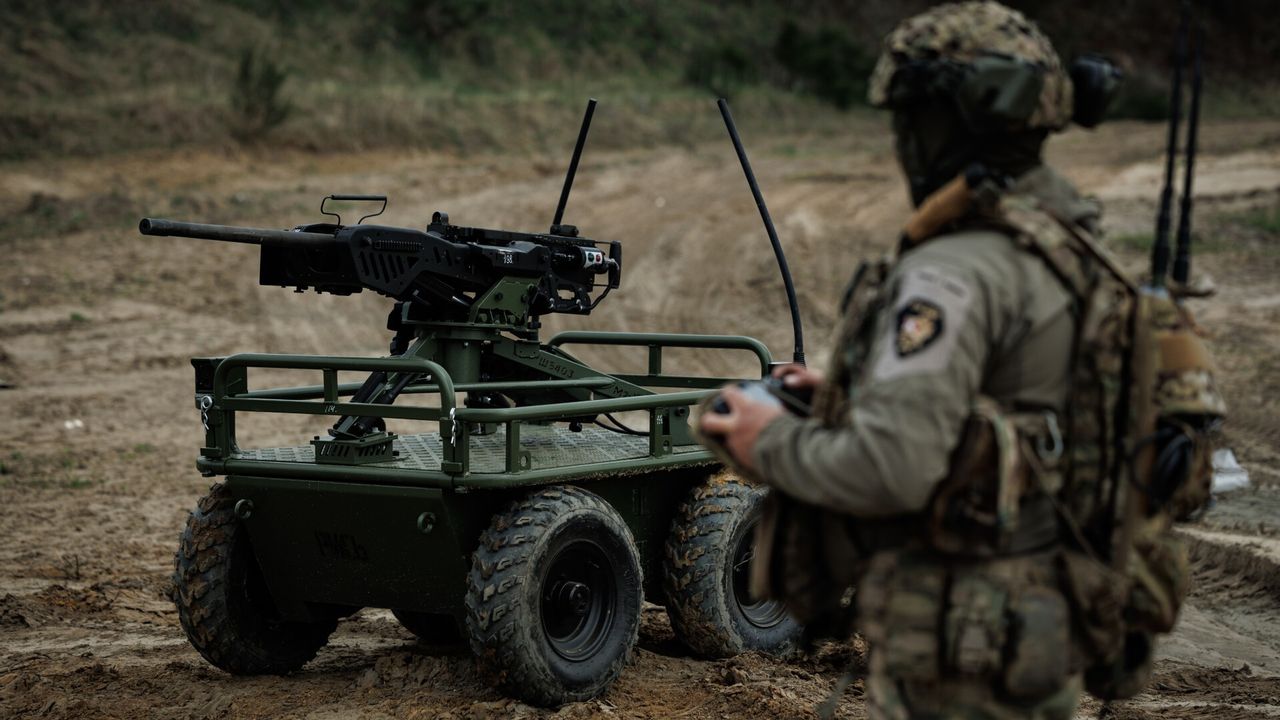
Ukraine is facing significant challenges in utilizing ground robots effectively in its ongoing conflict with Russia due to limitations imposed by the bandwidth of SpaceX’s Starlink satellite internet. The country’s tech innovators are now seeking innovative solutions to enhance the operational capabilities of these robots on the battlefield.
Over the past year, Ukraine has deployed thousands of unmanned ground vehicles (UGVs) to frontline military units. These robots assist in various tasks, including supply delivery, evacuation of the wounded, and even direct engagements with Russian forces. However, the bandwidth provided by Starlink often restricts individual terminals mounted on the UGVs to a mere 10 megabits per second. This low data rate severely impacts the quality of the video feeds required for effective control, especially during fast maneuvers.
Vadym Burukin, the CEO of drone start-up Huless, highlighted the critical need for speed in controlling these robots. “If you want to drive fast, you need a frame rate of at least 30 frames per second to be able to control the robot,” Burukin explained. Operating at reduced frame rates increases the risk of accidents, such as colliding with obstacles or entering minefields.
The high demand for Starlink services in Ukraine has led to approximately 200,000 terminals being active, making it the largest user of Starlink in Europe. This extensive usage, particularly in frontline areas, limits the speed of the UGVs to around 6 miles per hour (10 kilometers per hour). As noted by Andriy Dovbenko, CEO of the Ukrainian Tech Exchange, this slow pace can result in prolonged exposure to threats, particularly in the 12-mile-wide (20-kilometer) grey zone where both troops and equipment are vulnerable to attacks from Russian drones.
Moreover, Starlink terminals are prone to disruptions caused by vibrations from traversing rugged terrain, as well as environmental factors like clouds and rain, which can further weaken the signal. In response to these challenges, Ukrainian tech innovators have begun exploring alternatives to enhance the robots’ operational effectiveness.
One promising solution involves the use of tethered drones equipped with signal repeaters. These drones can ascend to heights of 500 feet (150 meters) and extend the range of radio signals significantly. Burukin noted, “With a repeater in the air, this range extends to 40 plus kilometers (25 miles).”
The airborne repeaters not only improve ground-to-ground communication but also allow for greater operational distances for flying drones, which can reach up to 48 miles (80 kilometers) from their controllers. This capability enables Ukrainian forces to conduct exploratory missions deep into Russian-controlled areas without the constant fear of losing their Starlink connection. “Recently, we were able to get all the way to the Donbas arena, a big stadium in the center of Donetsk,” Burukin stated, showcasing the effectiveness of their new technology.
Despite the innovations, Starlink remains a crucial asset for Ukraine. Dovbenko emphasized its importance, stating, “There are many uses for Starlink in the war, but it’s not been developed specifically as a military technology, so it has its limitations.” He acknowledged the challenges in producing a viable alternative to Starlink at scale, suggesting that while innovations are essential, the capabilities of existing technology are still necessary for military operations.
Furthermore, advancements in AI-powered autonomous navigation systems are being explored to mitigate issues related to signal jamming and disruptions. These systems aim to reduce reliance on real-time human oversight, thereby making military robots less vulnerable to radio jamming and potential Starlink signal loss. Although fully autonomous machines may not completely replace human soldiers, they could significantly minimize the personnel required in high-risk frontline situations.
As Ukraine continues to adapt to the challenges posed by its ongoing conflict, the integration of innovative technologies and alternative solutions will play a crucial role in enhancing its military capabilities. The efforts of Ukrainian innovators reflect a broader commitment to leveraging technology in the face of adversity, ensuring the nation remains resilient in its fight for sovereignty.

Urgent Swatting Incident Ties Up Emergency Resources in Alabama

Urgent Tax Alert: Claim Your Deductions Before April 15!

Scientists Investigate Cosmic Defects: Where Are They Now?

Spring Bocce Leagues Open Registration in Rapid City

CALV Offers Essential Communication Class for Real Estate Pros

Samsung Galaxy Watch 9 Set for Larger 435mAh Battery Upgrade

Healthy Choice Wellness Reports Earnings, Stock Sees Uptick

Prince Harry Claims to Be ‘Antidote to Andrew’ Amid Royal Crisis

Pet Owners Weigh Kibble Against Fresh Dog Food Options

ALMA Discovers Companion Orbiting Giant Star π 1 Gruis

U.S. Visa Rescheduling Hits H‐1B Applicants as New Vetting Rules Take Effect

University of Hawaiʻi Joins $25.6M AI Project for Disaster Monitoring

F-22 Raptor vs. Su-57 Felon: A 2025 Fighter Jet Comparison

Recent Divorce Judgments from Iberia Parish Court Records

Urgent: Flight Cancellations Loom at Texas Airports Amid Shutdown

Ohio State Study Uncovers Brain Connectivity and Function Links

Frank Dunn, Esteemed Builder and Community Leader, Passes Away at 89

Appian Recognizes 2025 Partner Award Winners for Enterprise Innovation
-
 Science9 months ago
ALMA Discovers Companion Orbiting Giant Star π 1 Gruis
-
 Politics7 months ago
U.S. Visa Rescheduling Hits H‐1B Applicants as New Vetting Rules Take Effect
-
Science10 months ago
University of Hawaiʻi Joins $25.6M AI Project for Disaster Monitoring
-
 World10 months ago
F-22 Raptor vs. Su-57 Felon: A 2025 Fighter Jet Comparison
-
 Politics9 months ago
Recent Divorce Judgments from Iberia Parish Court Records
-
 Top Stories10 months ago
Urgent: Flight Cancellations Loom at Texas Airports Amid Shutdown
-
 Science10 months ago
Ohio State Study Uncovers Brain Connectivity and Function Links
-
 Lifestyle10 months ago
Frank Dunn, Esteemed Builder and Community Leader, Passes Away at 89
-
 Business9 months ago
Appian Recognizes 2025 Partner Award Winners for Enterprise Innovation
-

 World10 months ago
Prince Andrew Faces Fallout from Scandals and Allegations
-

 Entertainment8 months ago
Malachi Barton Tops Google Searches as Disney’s Rising Star of 2025
-

 Top Stories9 months ago
Republican Matt Van Epps Wins Tennessee Special Election