
Science
Tiny T. Rex Relative Identified as New Species in North America

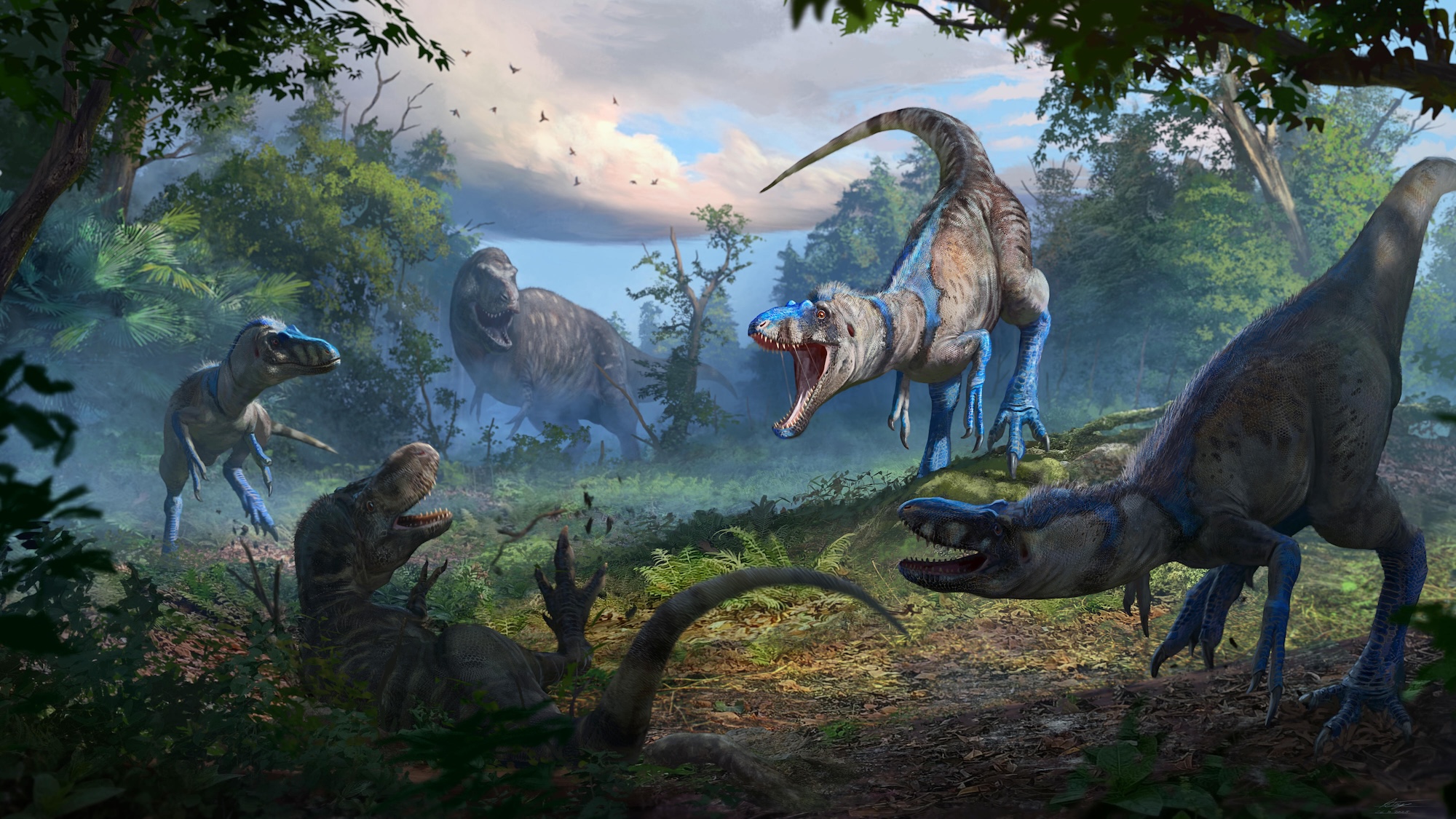
Paleontologists have confirmed the existence of a new dinosaur species closely related to the iconic Tyrannosaurus rex. Researchers from North Carolina State University and Ohio University have established that fossils found in Montana, previously debated as juvenile T. rex specimens, actually belong to a distinct species named Nanotyrannus lancensis. This finding, published on October 30, 2023, in the journal Nature, provides significant insights into the diversity of predators during the late Cretaceous period.
The debate surrounding the classification of these fossils has spanned decades, primarily focusing on a skull discovered in 1946 at the Hell Creek Formation. Initially classified as a species of Gorgosaurus, some researchers later postulated that it might instead represent a juvenile T. rex. This contention created a divide within the paleontological community, as some argued that the skull exhibited features common to both juvenile tyrannosaurids and adult T. rex.
In their study, paleontologists Lindsay Zanno and Lawrence Witmer outlined their findings from a recent expedition to the Hell Creek Formation, where their team unearthed a remarkably preserved and skeletally complete tyrannosauroid specimen. Their analysis of the approximately 67-million-year-old remains confirmed that both this recent discovery and the 1946 skull belonged to Nanotyrannus.
A crucial factor in their conclusion was the age of the new specimen. The researchers conducted a morphological analysis indicating that the bones were nearly fully grown, suggesting they did not belong to a juvenile. Additional modeling revealed that Nanotyrannus exhibited different bone growth patterns compared to T. rex, reinforcing their classification as a separate genus. As a result, the study identifies at least two species within the Nanotyrannus genus: Nanotyrannus lancensis and Nanotyrannus lethaeus.
In terms of size, adult Nanotyrannus reached approximately 18 feet in length and weighed around 1,550 pounds, significantly smaller than its larger cousin, which could grow over 42 feet long and weigh more than nine tons. While T. rex evolved to dominate with brute strength, featuring thick legs and a powerful bite, Nanotyrannus developed longer legs and strong arms, allowing it to be agile and swift in its hunting techniques.
The recognition of Nanotyrannus indicates that T. rex likely coexisted with this smaller relative for at least one million years leading up to the Cretaceous-Paleogene extinction event. This discovery challenges the prevailing notion that dinosaurs were in decline before their eventual extinction, suggesting instead that they were thriving and exhibited greater diversity than previously understood.
The study’s authors assert, “Our results undermine a nearly uniform consensus among theropod specialists and rectify a significant taxonomic error underpinning decades of research.” They emphasize the broader implications of their findings for understanding dinosaur evolution and diversity during this period.
As the debate surrounding Nanotyrannus continues, this new classification has the potential to reshape paleontological perspectives on the ecosystems of the late Cretaceous and the evolutionary paths of its formidable predators.

Urgent Swatting Incident Ties Up Emergency Resources in Alabama

Urgent Tax Alert: Claim Your Deductions Before April 15!

Scientists Investigate Cosmic Defects: Where Are They Now?

Spring Bocce Leagues Open Registration in Rapid City

CALV Offers Essential Communication Class for Real Estate Pros

Samsung Galaxy Watch 9 Set for Larger 435mAh Battery Upgrade

Healthy Choice Wellness Reports Earnings, Stock Sees Uptick

Prince Harry Claims to Be ‘Antidote to Andrew’ Amid Royal Crisis

Pet Owners Weigh Kibble Against Fresh Dog Food Options

ALMA Discovers Companion Orbiting Giant Star π 1 Gruis

U.S. Visa Rescheduling Hits H‐1B Applicants as New Vetting Rules Take Effect

University of Hawaiʻi Joins $25.6M AI Project for Disaster Monitoring

F-22 Raptor vs. Su-57 Felon: A 2025 Fighter Jet Comparison

Recent Divorce Judgments from Iberia Parish Court Records

Ohio State Study Uncovers Brain Connectivity and Function Links

Prince Andrew Faces Fallout from Scandals and Allegations

Urgent: Flight Cancellations Loom at Texas Airports Amid Shutdown

Frank Dunn, Esteemed Builder and Community Leader, Passes Away at 89
-
 Science8 months ago
ALMA Discovers Companion Orbiting Giant Star π 1 Gruis
-
 Politics6 months ago
U.S. Visa Rescheduling Hits H‐1B Applicants as New Vetting Rules Take Effect
-
Science8 months ago
University of Hawaiʻi Joins $25.6M AI Project for Disaster Monitoring
-
 World8 months ago
F-22 Raptor vs. Su-57 Felon: A 2025 Fighter Jet Comparison
-
 Politics8 months ago
Recent Divorce Judgments from Iberia Parish Court Records
-
 Science8 months ago
Ohio State Study Uncovers Brain Connectivity and Function Links
-
 World8 months ago
Prince Andrew Faces Fallout from Scandals and Allegations
-
 Top Stories8 months ago
Urgent: Flight Cancellations Loom at Texas Airports Amid Shutdown
-
 Lifestyle8 months ago
Frank Dunn, Esteemed Builder and Community Leader, Passes Away at 89
-

 Business8 months ago
Appian Recognizes 2025 Partner Award Winners for Enterprise Innovation
-

 Entertainment6 months ago
Malachi Barton Tops Google Searches as Disney’s Rising Star of 2025
-

 Science9 months ago
Innovator Captures Light at 2 Billion Frames Per Second