
Science
New Resource Links LDLR Gene Variants to Heart Disease Risk

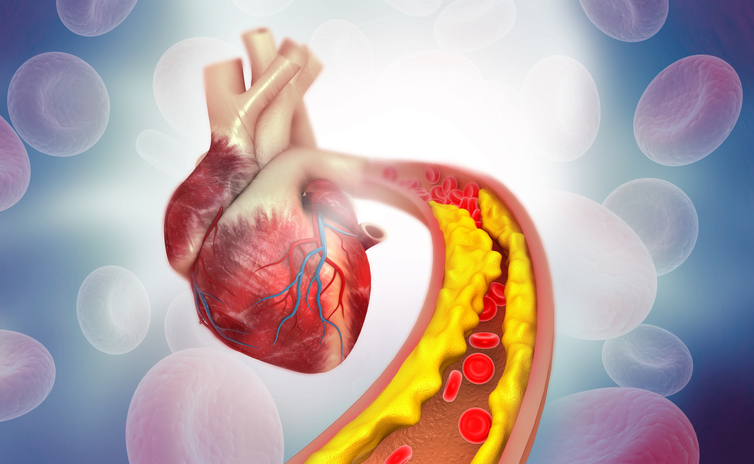
An international research team led by scientists from the University of Toronto and the University of Pittsburgh School of Medicine has developed a groundbreaking resource aimed at identifying individuals at genetic risk for elevated levels of low-density lipoprotein (LDL) cholesterol, often referred to as “bad” cholesterol. This cholesterol type is a significant contributor to heart disease, with the team classifying nearly 17,000 missense coding variants of the LDL receptor (LDLR) gene.
The researchers created detailed maps that correlate specific genetic sequences with their functional consequences, offering insights into LDL receptor protein structure and its uptake. This resource is expected to assist clinicians in predicting a patient’s risk for heart attacks and strokes, potentially allowing for timely preventive measures and treatments.
Frederick Roth, PhD, professor and chair of computational and systems biology at the University of Pittsburgh, emphasized the importance of this research. He noted that individuals with normal LDL levels could still face an increased risk of heart attacks due to damaging variants in the LDL receptor. “By identifying damaging LDL receptor variants, clinicians can initiate preventive treatment early on and mitigate risks,” Roth stated.
The findings were published in the journal Science in March 2024, in a paper titled “The functional landscape of coding variation in the familial hypercholesterolemia gene LDLR.” The study outlines how the team assessed the impact of about 17,000 LDLR missense coding variants on both LDL receptor cell-surface abundance and LDL uptake. This resulted in sequence-function maps that reflect established biochemistry and provide valuable insights into clinical variant interpretation.
Heart disease continues to be the leading cause of death in the United States, claiming nearly 700,000 lives annually. While lifestyle factors such as diet and exercise contribute to heart health, genetic predispositions play a crucial role in the development of conditions like atherosclerosis. The research highlights how minor variations in the LDLR gene can significantly increase the risk of heart disease.
The authors of the study explained that variants in the LDLR gene, which is a critical genetic driver of cardiovascular disease, can elevate LDL cholesterol levels and lead to premature atherosclerosis. They pointed out that heterozygous familial hypercholesterolemia (HeFH), characterized by increased LDL cholesterol, is one of the most common genetic causes of cardiovascular disease. The study also noted that genetic variants in LDLR account for approximately 80% of molecularly diagnosed HeFH cases.
In healthy blood vessels, LDL acts as a carrier for “good” cholesterol, essential for cell membranes and the production of hormones and vitamins. Conversely, genetic mutations that impair LDL receptor function can result in dangerously high LDL levels. The identification of pathogenic LDLR variants is crucial for accurate diagnosis and management of heart disease, surpassing traditional lipid profiling methods.
Despite advancements in gene sequencing technologies that can decode a person’s genetic makeup from small tissue samples in a matter of hours, interpreting this data remains a challenge. Most LDLR coding variants currently lack definitive clinical classification, limiting opportunities for early diagnosis and patient risk stratification for HeFH.
The research team classified nearly 17,000 modifications of the LDL receptor gene and their effects on LDL receptor functionality. Their approach measured each protein variant according to its mechanism of action and its impact on LDL clearance efficiency. The resulting sequence-function maps not only reflect the current understanding of LDLR function but also reveal unexpected biochemical insights.
Dan Roden, MD, a clinician-scientist at Vanderbilt University Medical Center and co-author of the study, remarked on the potential impact of these findings. “New unclassified variants are seen all the time in the clinic, and we often don’t have the evidence we need to inform patient care. These variant impact scores have the potential to increase the number of diagnoses of familial high cholesterol for those with unclassified variants by a factor of ten.”
The study also uncovered a subset of LDL receptor variants whose uptake of LDL was inhibited by high levels of very low-density lipoprotein (VLDL), a precursor to LDL. This unexpected finding opens new avenues for research into the implications for human health, as noted by first author Daniel Tabet, PhD, at the University of Toronto.
This cholesterol-focused research forms part of a larger initiative, the Atlas of Variant Effects Alliance, co-founded by Roth, which aims to map the functional impacts of genetic variants across various inherited disorders. This collaboration now includes over 500 scientists from 50 countries, all working to create comprehensive maps that evaluate gene variants affecting numerous diseases on a global scale.

Urgent Swatting Incident Ties Up Emergency Resources in Alabama

Urgent Tax Alert: Claim Your Deductions Before April 15!

Scientists Investigate Cosmic Defects: Where Are They Now?

Spring Bocce Leagues Open Registration in Rapid City

CALV Offers Essential Communication Class for Real Estate Pros

Samsung Galaxy Watch 9 Set for Larger 435mAh Battery Upgrade

Healthy Choice Wellness Reports Earnings, Stock Sees Uptick

Prince Harry Claims to Be ‘Antidote to Andrew’ Amid Royal Crisis

Pet Owners Weigh Kibble Against Fresh Dog Food Options

ALMA Discovers Companion Orbiting Giant Star π 1 Gruis

U.S. Visa Rescheduling Hits H‐1B Applicants as New Vetting Rules Take Effect

University of Hawaiʻi Joins $25.6M AI Project for Disaster Monitoring

F-22 Raptor vs. Su-57 Felon: A 2025 Fighter Jet Comparison

Recent Divorce Judgments from Iberia Parish Court Records

Urgent: Flight Cancellations Loom at Texas Airports Amid Shutdown

Ohio State Study Uncovers Brain Connectivity and Function Links

Frank Dunn, Esteemed Builder and Community Leader, Passes Away at 89

Appian Recognizes 2025 Partner Award Winners for Enterprise Innovation
-
 Science9 months ago
ALMA Discovers Companion Orbiting Giant Star π 1 Gruis
-
 Politics7 months ago
U.S. Visa Rescheduling Hits H‐1B Applicants as New Vetting Rules Take Effect
-
Science10 months ago
University of Hawaiʻi Joins $25.6M AI Project for Disaster Monitoring
-
 World10 months ago
F-22 Raptor vs. Su-57 Felon: A 2025 Fighter Jet Comparison
-
 Politics9 months ago
Recent Divorce Judgments from Iberia Parish Court Records
-
 Top Stories10 months ago
Urgent: Flight Cancellations Loom at Texas Airports Amid Shutdown
-
 Science10 months ago
Ohio State Study Uncovers Brain Connectivity and Function Links
-
 Lifestyle10 months ago
Frank Dunn, Esteemed Builder and Community Leader, Passes Away at 89
-
 Business9 months ago
Appian Recognizes 2025 Partner Award Winners for Enterprise Innovation
-

 World10 months ago
Prince Andrew Faces Fallout from Scandals and Allegations
-

 Entertainment8 months ago
Malachi Barton Tops Google Searches as Disney’s Rising Star of 2025
-

 Top Stories9 months ago
Republican Matt Van Epps Wins Tennessee Special Election