
Science
Robots Learn 1,000 Tasks in a Day, Revolutionizing Automation

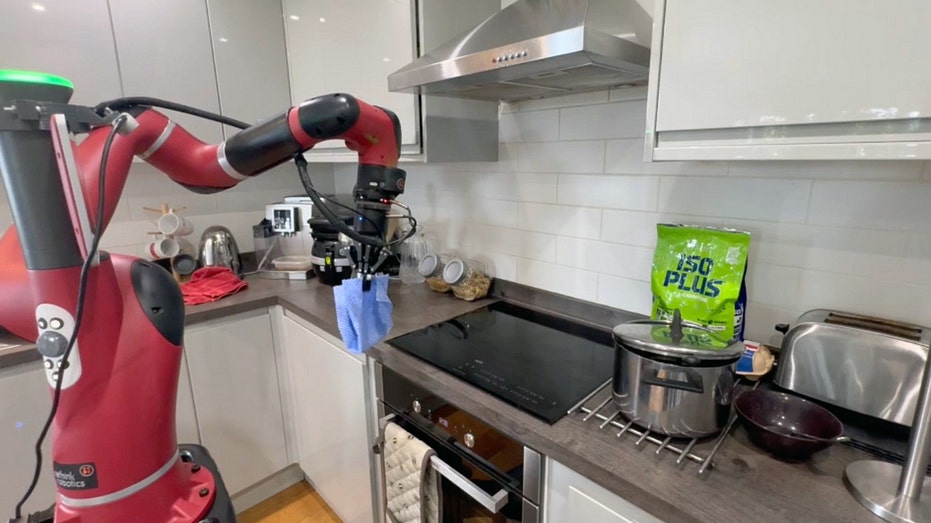
A groundbreaking study published in Science Robotics reveals that a robot has learned an astonishing 1,000 different physical tasks in just one day, using only a single demonstration for each task. This achievement marks a significant advancement in the field of robotics and artificial intelligence, addressing a long-standing challenge of inefficient learning in machines.
Historically, teaching robots to perform physical tasks has been a labor-intensive process requiring numerous demonstrations—often hundreds or even thousands. This inefficiency has limited robots to repetitive actions in controlled environments, making them less adaptable to changes in their surroundings. The research team aimed to bridge the gap between human learning capabilities and machine learning.
Transformative Learning Techniques
The breakthrough stems from a novel teaching methodology that allows robots to learn from demonstrations more effectively. Instead of requiring the robot to memorize entire movements, the system deconstructs tasks into simpler phases. One phase focuses on aligning with the object, while another manages the interaction itself. This approach employs an artificial intelligence technique known as imitation learning, enabling robots to learn physical tasks based on human demonstrations.
The researchers utilized a technique called Multi-Task Trajectory Transfer to train a real robotic arm on 1,000 distinct everyday tasks within 24 hours of human demonstration time. Notably, this training occurred in a real-world setting with actual objects and constraints, rather than in a simulation.
A Step Towards Adaptability
What sets this research apart from previous studies is its emphasis on real-world applications. Many robotics papers present promising results in theory but fail to deliver under practical conditions. This study’s approach was tested through thousands of real-world scenarios, demonstrating the robot’s ability to handle new objects it had never encountered before. The capacity to generalize knowledge is a crucial development, enabling machines to adapt rather than simply repeat learned tasks.
This advancement addresses a significant bottleneck in robotics, improving data efficiency by an order of magnitude compared to traditional methods. The implications of such progress are profound, suggesting that the future filled with capable robots may be closer than previously anticipated.
The ability for robots to learn faster and with less programming could lead to reduced costs and increased flexibility. This shift could pave the way for home robots that learn new tasks from simple demonstrations, rather than relying on specialized programming. Additionally, this progress has potential applications across various sectors, including healthcare, logistics, and manufacturing.
In summary, while the prospect of robots learning 1,000 tasks in a day does not imply immediate humanoid assistants in homes, it signifies a notable progression in overcoming the limitations that have hindered robotics for decades. As robots begin to learn in ways more akin to humans, the landscape of automation is poised for significant transformation. The conversation is shifting from what robots can repeat to what they can adapt to next, raising intriguing questions about their role in our daily lives.

Urgent Swatting Incident Ties Up Emergency Resources in Alabama

Urgent Tax Alert: Claim Your Deductions Before April 15!

Scientists Investigate Cosmic Defects: Where Are They Now?

Spring Bocce Leagues Open Registration in Rapid City

CALV Offers Essential Communication Class for Real Estate Pros

Samsung Galaxy Watch 9 Set for Larger 435mAh Battery Upgrade

Healthy Choice Wellness Reports Earnings, Stock Sees Uptick

Prince Harry Claims to Be ‘Antidote to Andrew’ Amid Royal Crisis

Pet Owners Weigh Kibble Against Fresh Dog Food Options

ALMA Discovers Companion Orbiting Giant Star π 1 Gruis

U.S. Visa Rescheduling Hits H‐1B Applicants as New Vetting Rules Take Effect

University of Hawaiʻi Joins $25.6M AI Project for Disaster Monitoring

F-22 Raptor vs. Su-57 Felon: A 2025 Fighter Jet Comparison

Recent Divorce Judgments from Iberia Parish Court Records

Urgent: Flight Cancellations Loom at Texas Airports Amid Shutdown

Ohio State Study Uncovers Brain Connectivity and Function Links

Frank Dunn, Esteemed Builder and Community Leader, Passes Away at 89

Appian Recognizes 2025 Partner Award Winners for Enterprise Innovation
-
 Science10 months ago
ALMA Discovers Companion Orbiting Giant Star π 1 Gruis
-
 Politics8 months ago
U.S. Visa Rescheduling Hits H‐1B Applicants as New Vetting Rules Take Effect
-
Science10 months ago
University of Hawaiʻi Joins $25.6M AI Project for Disaster Monitoring
-
 World10 months ago
F-22 Raptor vs. Su-57 Felon: A 2025 Fighter Jet Comparison
-
 Politics9 months ago
Recent Divorce Judgments from Iberia Parish Court Records
-
 Top Stories10 months ago
Urgent: Flight Cancellations Loom at Texas Airports Amid Shutdown
-
 Science10 months ago
Ohio State Study Uncovers Brain Connectivity and Function Links
-
 Lifestyle10 months ago
Frank Dunn, Esteemed Builder and Community Leader, Passes Away at 89
-
 Business10 months ago
Appian Recognizes 2025 Partner Award Winners for Enterprise Innovation
-

 World10 months ago
Prince Andrew Faces Fallout from Scandals and Allegations
-

 Entertainment8 months ago
Malachi Barton Tops Google Searches as Disney’s Rising Star of 2025
-

 Top Stories9 months ago
Republican Matt Van Epps Wins Tennessee Special Election