
Science
NASA Concludes Historic Era with Demolition of Test Stands

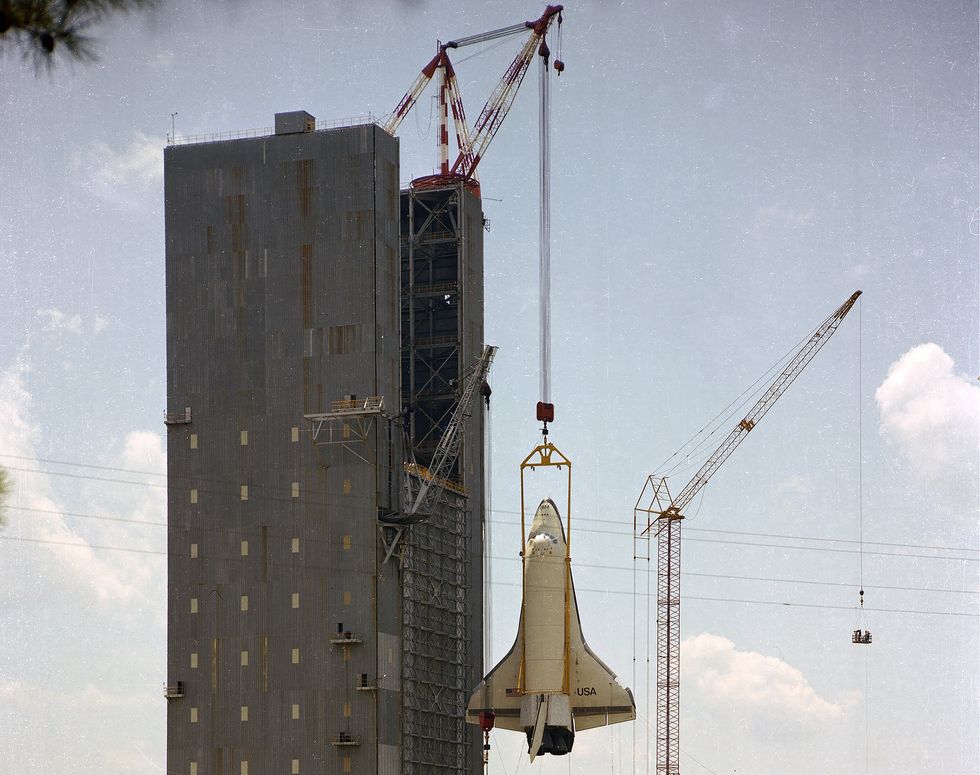
On January 10, 2024, NASA marked the end of a significant era in space exploration with the demolition of two iconic test stands at the Marshall Space Flight Center in Huntsville, Alabama. The carefully executed implosions of the Dynamic Test Stand and the Propulsion and Structural Test Facility, commonly known as the T-tower, brought down structures that had played pivotal roles in human spaceflight for decades.
The Legacy of the T-tower and Dynamic Test Stand
The T-tower, constructed in 1957 by the Army Ballistic Missile Agency prior to NASA’s establishment, was a key facility for static testing. Standing at just over 50 meters, it allowed engineers to fire rockets at full power while tethered to instruments monitoring vibrations, temperatures, and pressure changes. Under the guidance of Wernher von Braun, the T-tower tested components of the Saturn family of launch vehicles, including the powerful F-1 engines that propelled the historic Apollo missions. After its retirement in the 1990s, the T-tower also served as a testing ground for Space Shuttle solid rocket boosters.
In contrast, the Dynamic Test Stand, completed in 1964, was a remarkable 105 meters tall, making it the tallest human-made structure in North Alabama at the time. Unlike static tests, this facility subjected fully assembled Saturn V rockets to the stresses they would endure during actual flight. Engineers recognized that failures at launch could not be tolerated, given the immense power and cost associated with the Saturn V program. The stand later played a vital role in integrating all elements of the Space Shuttle system and was repurposed in the early 2000s for microgravity experiments.
Both test stands were designated as National Historic Landmarks in 1985, acknowledging their invaluable contributions to the advancement of space exploration. The decision to demolish them has been met with mixed emotions, as their historical significance is overshadowed by the pressing need to allocate resources to current missions.
A New Chapter for NASA
According to Rae Ann Meyer, acting director of Marshall Space Flight Center, “These facilities helped NASA make history. While it is hard to let them go, they’ve earned their retirement. The people who built and managed these facilities and empowered our mission of space exploration are the most important part of their legacy.”
As part of a broader transformation initiative, NASA is removing 19 outdated structures to create a modern campus that supports future missions. The organization has made efforts to preserve the legacy of these test stands through comprehensive documentation. Architectural drawings, photographs, and written histories are now housed in the Library of Congress, ensuring their stories are preserved.
In an effort to capture the essence of these engineering marvels, Auburn University employed high-resolution digital modeling techniques, including LiDAR and 360-degree photography. These digital archives provide a detailed record of the structures, allowing future generations to appreciate their scale and the engineering ingenuity behind them.
As the steel from these historic test stands is cleared away, it signifies a shift toward NASA’s next chapter in space exploration. The legacy of the T-tower and Dynamic Test Stand will endure through the stories and innovations they inspired in the fields of science and technology.

Urgent Swatting Incident Ties Up Emergency Resources in Alabama

Urgent Tax Alert: Claim Your Deductions Before April 15!

Scientists Investigate Cosmic Defects: Where Are They Now?

Spring Bocce Leagues Open Registration in Rapid City

CALV Offers Essential Communication Class for Real Estate Pros

Samsung Galaxy Watch 9 Set for Larger 435mAh Battery Upgrade

Healthy Choice Wellness Reports Earnings, Stock Sees Uptick

Prince Harry Claims to Be ‘Antidote to Andrew’ Amid Royal Crisis

Pet Owners Weigh Kibble Against Fresh Dog Food Options

ALMA Discovers Companion Orbiting Giant Star π 1 Gruis

U.S. Visa Rescheduling Hits H‐1B Applicants as New Vetting Rules Take Effect

University of Hawaiʻi Joins $25.6M AI Project for Disaster Monitoring

F-22 Raptor vs. Su-57 Felon: A 2025 Fighter Jet Comparison

Ohio State Study Uncovers Brain Connectivity and Function Links

Recent Divorce Judgments from Iberia Parish Court Records

Prince Andrew Faces Fallout from Scandals and Allegations

Urgent: Flight Cancellations Loom at Texas Airports Amid Shutdown

Frank Dunn, Esteemed Builder and Community Leader, Passes Away at 89
-
 Science8 months ago
ALMA Discovers Companion Orbiting Giant Star π 1 Gruis
-
 Politics6 months ago
U.S. Visa Rescheduling Hits H‐1B Applicants as New Vetting Rules Take Effect
-
Science8 months ago
University of Hawaiʻi Joins $25.6M AI Project for Disaster Monitoring
-
 World8 months ago
F-22 Raptor vs. Su-57 Felon: A 2025 Fighter Jet Comparison
-
 Science8 months ago
Ohio State Study Uncovers Brain Connectivity and Function Links
-
 Politics8 months ago
Recent Divorce Judgments from Iberia Parish Court Records
-
 World8 months ago
Prince Andrew Faces Fallout from Scandals and Allegations
-
 Top Stories8 months ago
Urgent: Flight Cancellations Loom at Texas Airports Amid Shutdown
-
 Lifestyle8 months ago
Frank Dunn, Esteemed Builder and Community Leader, Passes Away at 89
-

 Business8 months ago
Appian Recognizes 2025 Partner Award Winners for Enterprise Innovation
-

 Entertainment6 months ago
Malachi Barton Tops Google Searches as Disney’s Rising Star of 2025
-

 Science9 months ago
Innovator Captures Light at 2 Billion Frames Per Second