
Science
Jellyfish and Sea Anemones Display Sleep Patterns Similar to Humans

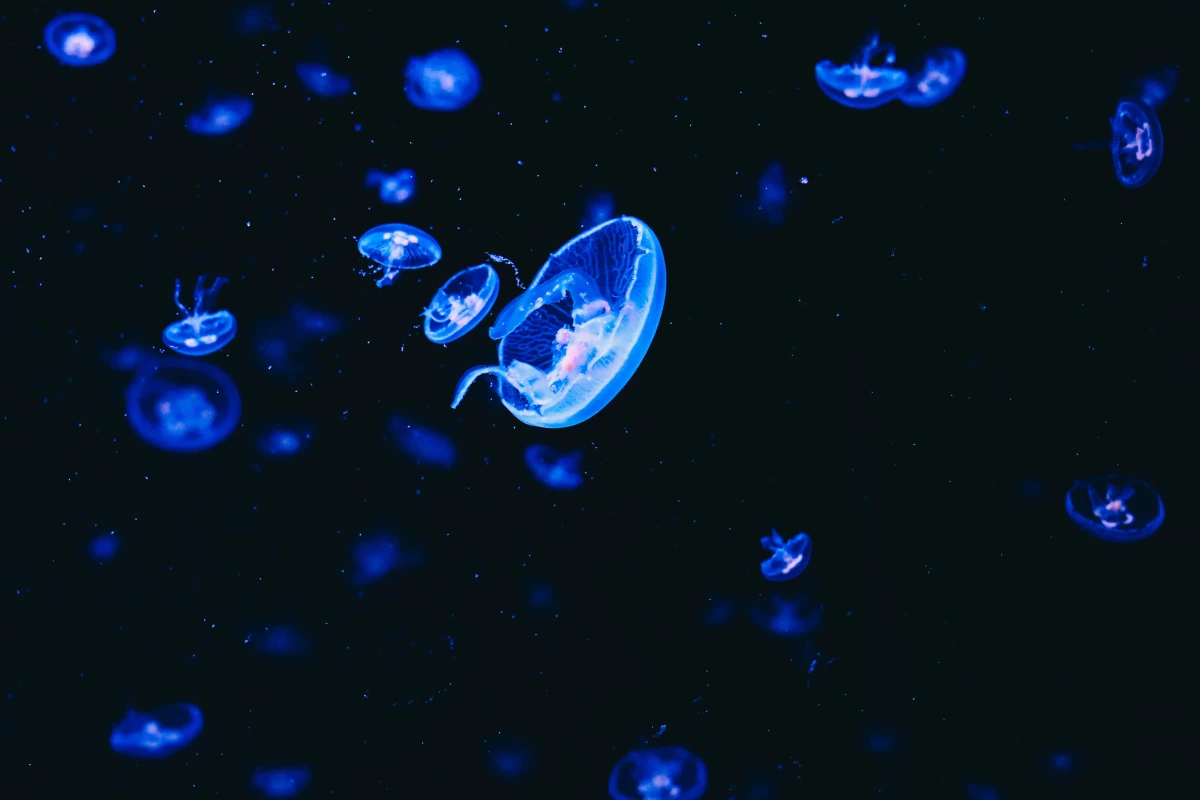
A recent study published in Nature Communications reveals that jellyfish and sea anemones exhibit sleep patterns strikingly similar to humans. The research, led by neurobiologist Lior Appelbaum from Bar-Ilan University, indicates that these ancient creatures, despite lacking a brain, spend approximately one-third of their day sleeping, just like humans.
The study focused on the upside-down jellyfish (*Cassiopea andromeda*) and the starlet sea anemone (*Nematostella vectensis*). Researchers employed infrared cameras and movement-tracking software to observe the sleep behaviors of these cnidarians. Following a standard 24-hour cycle of 12 hours of light and 12 hours of darkness, the team found that jellyfish are primarily active during the day and sleep mainly at night, occasionally indulging in midday naps. In contrast, the sea anemones showed more activity at night and rested in the early morning hours.
To confirm these animals were genuinely sleeping rather than merely resting, the researchers measured their responses to stimuli such as light or food during inactive periods. Appelbaum defined a sleep-like state in jellyfish as pulsing fewer than 37 times per minute for over three minutes, while for sea anemones, it involved eight minutes or more of stillness. “What was surprising was that both animals sleep approximately eight hours, which is interesting because we also sleep approximately one-third of our lives, and they have more or less the same part,” Appelbaum noted.
The study also delved into the underlying reasons for this sleep. Previous research has indicated that DNA damage in nerve cells can promote sleep in zebrafish. Building on this foundation, the team exposed jellyfish and sea anemones to ultraviolet (UV) radiation and specific chemicals that damage DNA. Additionally, they deprived the animals of sleep through gentle water pulses. The findings suggested that DNA damage increased during wakefulness and was cleared away during nighttime sleep. Notably, both jellyfish and sea anemones responded to DNA damage by increasing their sleep duration, indicating that sleep plays a crucial role in essential cellular repairs.
“Sleep evolved way before the brain – it’s essential for cells, cellular maintenance, and neurons,” Appelbaum explained, highlighting the evolutionary significance of sleep in organisms that predate the development of advanced nervous systems.
These insights expand our understanding of sleep and its vital functions across the animal kingdom, raising further questions about its purpose in species lacking complex brains. As researchers continue to explore the evolutionary implications of sleep, this study provides an important perspective on the biological necessity of rest for creatures as diverse as jellyfish, sea anemones, and humans.

Urgent Swatting Incident Ties Up Emergency Resources in Alabama

Urgent Tax Alert: Claim Your Deductions Before April 15!

Scientists Investigate Cosmic Defects: Where Are They Now?

Spring Bocce Leagues Open Registration in Rapid City

CALV Offers Essential Communication Class for Real Estate Pros

Samsung Galaxy Watch 9 Set for Larger 435mAh Battery Upgrade

Healthy Choice Wellness Reports Earnings, Stock Sees Uptick

Prince Harry Claims to Be ‘Antidote to Andrew’ Amid Royal Crisis

Pet Owners Weigh Kibble Against Fresh Dog Food Options

ALMA Discovers Companion Orbiting Giant Star π 1 Gruis

U.S. Visa Rescheduling Hits H‐1B Applicants as New Vetting Rules Take Effect

University of Hawaiʻi Joins $25.6M AI Project for Disaster Monitoring

F-22 Raptor vs. Su-57 Felon: A 2025 Fighter Jet Comparison

Recent Divorce Judgments from Iberia Parish Court Records

Urgent: Flight Cancellations Loom at Texas Airports Amid Shutdown

Ohio State Study Uncovers Brain Connectivity and Function Links

Frank Dunn, Esteemed Builder and Community Leader, Passes Away at 89

Appian Recognizes 2025 Partner Award Winners for Enterprise Innovation
-
 Science9 months ago
ALMA Discovers Companion Orbiting Giant Star π 1 Gruis
-
 Politics7 months ago
U.S. Visa Rescheduling Hits H‐1B Applicants as New Vetting Rules Take Effect
-
Science10 months ago
University of Hawaiʻi Joins $25.6M AI Project for Disaster Monitoring
-
 World10 months ago
F-22 Raptor vs. Su-57 Felon: A 2025 Fighter Jet Comparison
-
 Politics9 months ago
Recent Divorce Judgments from Iberia Parish Court Records
-
 Top Stories10 months ago
Urgent: Flight Cancellations Loom at Texas Airports Amid Shutdown
-
 Science10 months ago
Ohio State Study Uncovers Brain Connectivity and Function Links
-
 Lifestyle10 months ago
Frank Dunn, Esteemed Builder and Community Leader, Passes Away at 89
-
 Business9 months ago
Appian Recognizes 2025 Partner Award Winners for Enterprise Innovation
-

 World10 months ago
Prince Andrew Faces Fallout from Scandals and Allegations
-

 Entertainment8 months ago
Malachi Barton Tops Google Searches as Disney’s Rising Star of 2025
-

 Top Stories9 months ago
Republican Matt Van Epps Wins Tennessee Special Election