
Science
ETRI Unveils No-Code AI Development Tools to Boost Industries

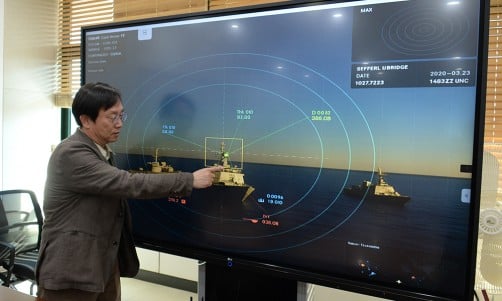
Researchers from the Electronics and Telecommunications Research Institute (ETRI) have launched a no-code machine learning development tool designed to simplify the process for users with limited artificial intelligence expertise. This initiative, which began in 2021, aims to support various industrial sectors, including manufacturing, healthcare, and shipbuilding. The core technology of the MLOps tool, which automates the generation of neural networks and streamlines deployment, has now been made available as open source on GitHub.
Launch Event and Framework Details
On November 6, 2023, ETRI hosted its fourth public seminar at the Science and Technology Center in Gangnam-gu, Seoul, to promote the TANGO GitHub community. The TANGO framework enables automatic development of application software that incorporates artificial intelligence and deploys it effectively across various hardware environments such as cloud platforms and on-premises systems.
For instance, while detecting defects in steel during quality inspections is straightforward, implementing AI solutions has been challenging. Similarly, although doctors can identify tuberculosis from X-ray images, developing AI-based predictive models has proven difficult. The TANGO framework addresses these challenges by providing a user-friendly platform that requires minimal neural network knowledge.
Traditionally, data labeling was performed by domain experts, while software developers managed the AI model development and deployment processes. However, the increasing demand for AI solutions across industries has highlighted a significant shortage of qualified AI and software specialists. In response, ETRI has developed an optimized neural network automation algorithm tailored for object recognition, which it has officially introduced.
Commercialization and Collaborations
In addition to the TANGO framework, ETRI has also released tools to support the development of generative AI, known as LLMOps. The development of TANGO has led to the filing of 24 domestic and international patents, the publication of three papers at NeurIPS, and 13 papers in SCI journals, along with technology transfers that generated approximately KRW 10 billion in revenue.
One notable success stemming from this initiative is the selection of Avenotics for the “Public Research Outcome Expansion and Commercialization Project,” supported by the Ministry of Science and ICT. This project aims to commercialize innovative research outcomes from government-funded institutes through technology transfers. Avenotics received an investment of KRW 1.3 billion from various sources, including Korea Science and Technology Holdings and Korea Credit Guarantee Fund. The company is now working on commercializing on-device AI that automatically generates contextual information for navigators.
The research team at ETRI is committed to promoting wider adoption of the TANGO technology through pilot demonstrations in collaboration with partner research institutions. For example, Weda Co., Ltd. has developed an AI service for on-site employees in the steel and automotive parts sectors, focusing on vision-based exterior inspections of complex shapes, such as automotive bumper rolls. Meanwhile, Lablup Inc. and KT Cloud have launched a service that optimizes deployment for Rebellion’s AI acceleration engine.
Additionally, Seoul National University Hospital is advancing AI technology to analyze large-scale chest CT images, aiming to automatically generate diagnostic reports. This technology will undergo evaluation in four hospitals, ultimately contributing to a cardiopulmonary disease prediction service based on clinical data.
The LLMOps tool, which facilitates generative AI development, is also on track for commercialization through collaboration with Acryl Inc.. The source code for Acryl’s commercial product, Jonathan, is fully accessible on GitHub, with ongoing enhancements to core algorithms and the establishment of a standard operating environment for industry-specific applications.
According to Kim Tae-ho, Software Project Manager at the Institute of Information & Communications Technology Planning & Evaluation (IITP), “TANGO technology is truly the best open source project in Korea and is contributing greatly to enhancing the competitiveness of the domestic software industry in the field of artificial intelligence development tools.”
Jo Chang Sik, Principal Researcher at ETRI, expressed plans to broaden the TANGO project’s scope, focusing on LLMOps tools for generative AI. The research team intends to share their development expertise and provide solutions that can be directly commercialized by the industry.
ETRI has committed to releasing new versions of the source code on GitHub every six months and will host an annual public seminar in the second half of each year. The previous seminars attracted a total of 944 participants from 552 institutions, facilitating discussions on advancements in AI technology.
This initiative has been supported by the Ministry of Science and ICT and the IITP through projects aimed at automating neural network applications and developing a generative AI support system framework.
Since its establishment in 1976, ETRI has played a pivotal role in advancing Korea’s position in the global ICT industry, continually working to innovate and provide cutting-edge technologies.

Urgent Swatting Incident Ties Up Emergency Resources in Alabama

Urgent Tax Alert: Claim Your Deductions Before April 15!

Scientists Investigate Cosmic Defects: Where Are They Now?

Spring Bocce Leagues Open Registration in Rapid City

CALV Offers Essential Communication Class for Real Estate Pros

Samsung Galaxy Watch 9 Set for Larger 435mAh Battery Upgrade

Healthy Choice Wellness Reports Earnings, Stock Sees Uptick

Prince Harry Claims to Be ‘Antidote to Andrew’ Amid Royal Crisis

Pet Owners Weigh Kibble Against Fresh Dog Food Options

ALMA Discovers Companion Orbiting Giant Star π 1 Gruis

U.S. Visa Rescheduling Hits H‐1B Applicants as New Vetting Rules Take Effect

University of Hawaiʻi Joins $25.6M AI Project for Disaster Monitoring

F-22 Raptor vs. Su-57 Felon: A 2025 Fighter Jet Comparison

Recent Divorce Judgments from Iberia Parish Court Records

Urgent: Flight Cancellations Loom at Texas Airports Amid Shutdown

Ohio State Study Uncovers Brain Connectivity and Function Links

Frank Dunn, Esteemed Builder and Community Leader, Passes Away at 89

Appian Recognizes 2025 Partner Award Winners for Enterprise Innovation
-
 Science10 months ago
ALMA Discovers Companion Orbiting Giant Star π 1 Gruis
-
 Politics8 months ago
U.S. Visa Rescheduling Hits H‐1B Applicants as New Vetting Rules Take Effect
-
Science10 months ago
University of Hawaiʻi Joins $25.6M AI Project for Disaster Monitoring
-
 World10 months ago
F-22 Raptor vs. Su-57 Felon: A 2025 Fighter Jet Comparison
-
 Politics9 months ago
Recent Divorce Judgments from Iberia Parish Court Records
-
 Top Stories10 months ago
Urgent: Flight Cancellations Loom at Texas Airports Amid Shutdown
-
 Science10 months ago
Ohio State Study Uncovers Brain Connectivity and Function Links
-
 Lifestyle10 months ago
Frank Dunn, Esteemed Builder and Community Leader, Passes Away at 89
-
 Business10 months ago
Appian Recognizes 2025 Partner Award Winners for Enterprise Innovation
-

 World10 months ago
Prince Andrew Faces Fallout from Scandals and Allegations
-

 Entertainment8 months ago
Malachi Barton Tops Google Searches as Disney’s Rising Star of 2025
-

 Top Stories9 months ago
Republican Matt Van Epps Wins Tennessee Special Election