
Science
Astronomers Discover Massive Lava Tube Cave on Venus

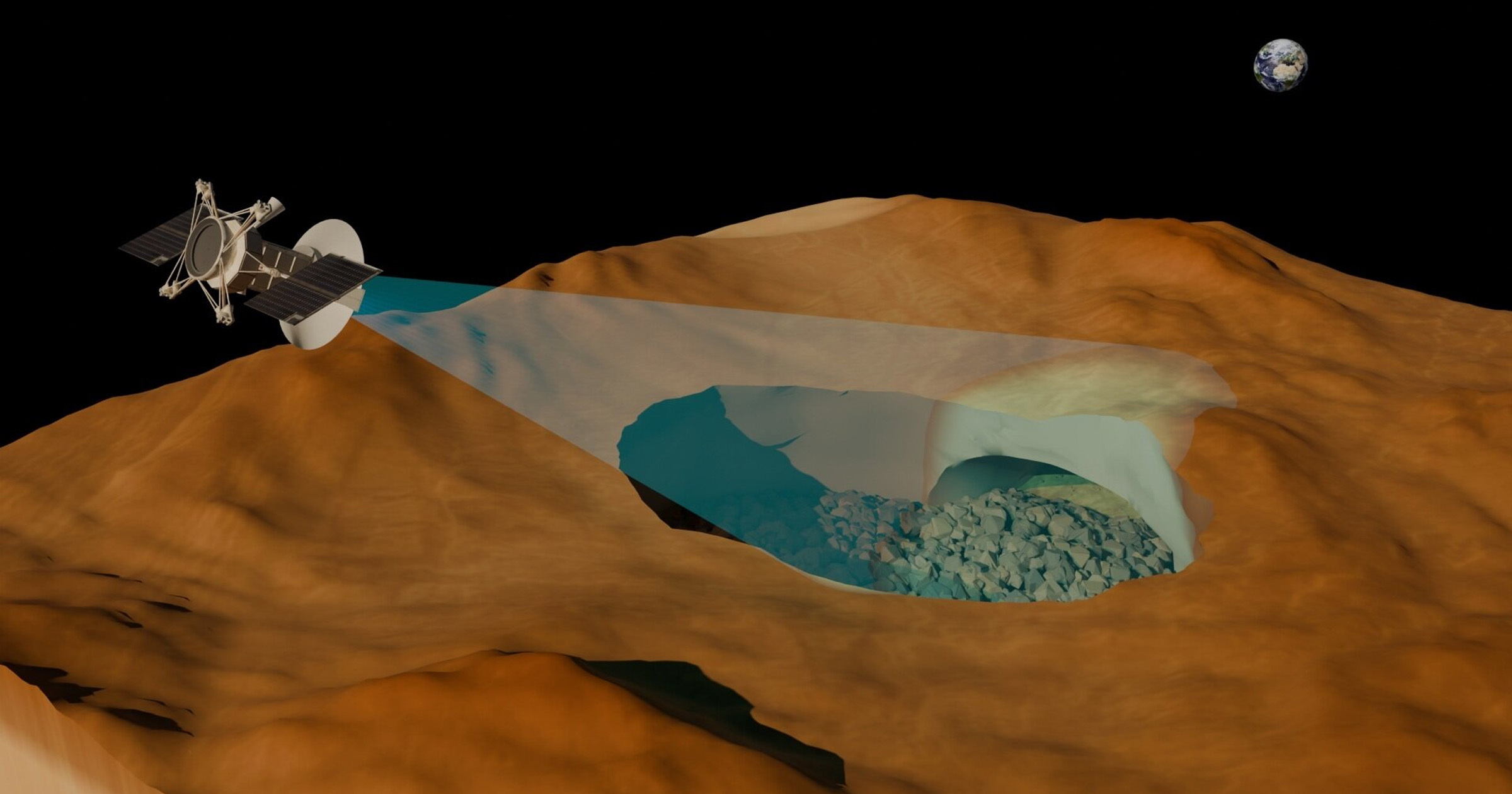
Astronomers have identified a significant cave beneath the surface of Venus, marking a substantial advancement in our understanding of the planet’s geological history. This discovery, detailed in a recent study published in Nature Communications, offers compelling evidence that Venus is crisscrossed with lava tubes, also known as pyroducts.
Lorenzo Bruzzone, a coauthor and researcher at the University of Trento, emphasized the importance of this finding: “Our knowledge of Venus is still limited, and until now we have never had the opportunity to directly observe processes occurring beneath the surface of Earth’s twin planet.” The identification of this volcanic cavity provides validation for theories that have long suggested the existence of lava tubes on Venus.
The surface of Venus is dotted with an estimated tens of thousands of volcanoes, characterized by expansive volcanic plains and intricate lava channels. Previous studies have indicated signs of recent volcanic activity, suggesting that the planet’s history has been heavily influenced by volcanism. Despite these insights, direct evidence of lava tubes had remained elusive, particularly due to uncertainty about how Venus’s weaker gravity and denser atmosphere might impact their formation.
Observing the underground features of Venus poses significant challenges. The planet is perpetually enveloped in a thick cloud cover composed of sulfur and carbon dioxide, which traps heat and contributes to its extreme surface temperature of over 870 degrees Fahrenheit. While optical observations are nearly impossible, radar technology offers a solution. The research team utilized data collected by NASA’s Magellan spacecraft between 1990 and 1992, employing its Synthetic Aperture Radar (SAR) to penetrate the planet’s dense atmosphere.
“SAR works by transmitting radio waves towards the surface and measuring the time it takes for the waves to bounce back after interacting with the terrain,” the authors explained in their study. By analyzing the returned radar signals, they created a detailed map of the Venusian surface.
The team focused on areas displaying signs of localized surface collapses, utilizing a unique imaging technique developed to detect and characterize underground conduits near skylights—openings formed when the roof of a lava tube collapses. Their analysis led to the identification of a “large subsurface conduit in the region of Nyx Mons,” a shield volcano that spans approximately 225 miles in width. This conduit is interpreted as a lava tube, estimated to have a diameter of around one kilometer, which surpasses similar structures found on Earth and Mars.
Bruzzone noted, “The available data allow us to confirm and measure only the portion of the cavity close to the skylight.” Their findings suggest that these subsurface conduits may extend for at least 45 kilometers based on the morphology and elevation of the surrounding terrain, along with the presence of other similar pits.
To further explore these subterranean features and confirm their extent, the team advocates for the acquisition of new, higher-resolution images and data from radar systems capable of penetrating Venus’s surface. The prospect of uncovering more about the planet’s geological past holds significant implications for our understanding of not only Venus but also the processes that shape terrestrial planets.
As researchers continue to investigate the mysteries of our neighboring planet, this discovery reinforces the notion that Venus, often viewed as an inhospitable environment, holds secrets that could reshape our understanding of planetary formation and volcanic activity.

Urgent Swatting Incident Ties Up Emergency Resources in Alabama

Urgent Tax Alert: Claim Your Deductions Before April 15!

Scientists Investigate Cosmic Defects: Where Are They Now?

Spring Bocce Leagues Open Registration in Rapid City

CALV Offers Essential Communication Class for Real Estate Pros

Samsung Galaxy Watch 9 Set for Larger 435mAh Battery Upgrade

Healthy Choice Wellness Reports Earnings, Stock Sees Uptick

Prince Harry Claims to Be ‘Antidote to Andrew’ Amid Royal Crisis

Pet Owners Weigh Kibble Against Fresh Dog Food Options

ALMA Discovers Companion Orbiting Giant Star π 1 Gruis

U.S. Visa Rescheduling Hits H‐1B Applicants as New Vetting Rules Take Effect

University of Hawaiʻi Joins $25.6M AI Project for Disaster Monitoring

F-22 Raptor vs. Su-57 Felon: A 2025 Fighter Jet Comparison

Ohio State Study Uncovers Brain Connectivity and Function Links

Recent Divorce Judgments from Iberia Parish Court Records

Urgent: Flight Cancellations Loom at Texas Airports Amid Shutdown

Frank Dunn, Esteemed Builder and Community Leader, Passes Away at 89

Prince Andrew Faces Fallout from Scandals and Allegations
-
 Science9 months ago
ALMA Discovers Companion Orbiting Giant Star π 1 Gruis
-
 Politics7 months ago
U.S. Visa Rescheduling Hits H‐1B Applicants as New Vetting Rules Take Effect
-
Science9 months ago
University of Hawaiʻi Joins $25.6M AI Project for Disaster Monitoring
-
 World9 months ago
F-22 Raptor vs. Su-57 Felon: A 2025 Fighter Jet Comparison
-
 Science9 months ago
Ohio State Study Uncovers Brain Connectivity and Function Links
-
 Politics9 months ago
Recent Divorce Judgments from Iberia Parish Court Records
-
 Top Stories9 months ago
Urgent: Flight Cancellations Loom at Texas Airports Amid Shutdown
-
 Lifestyle9 months ago
Frank Dunn, Esteemed Builder and Community Leader, Passes Away at 89
-
 World9 months ago
Prince Andrew Faces Fallout from Scandals and Allegations
-

 Business9 months ago
Appian Recognizes 2025 Partner Award Winners for Enterprise Innovation
-

 Entertainment7 months ago
Malachi Barton Tops Google Searches as Disney’s Rising Star of 2025
-

 Top Stories8 months ago
Republican Matt Van Epps Wins Tennessee Special Election