
Science
Revolutionary AI Framework GRAPE-LM Transforms RNA Aptamer Evolution

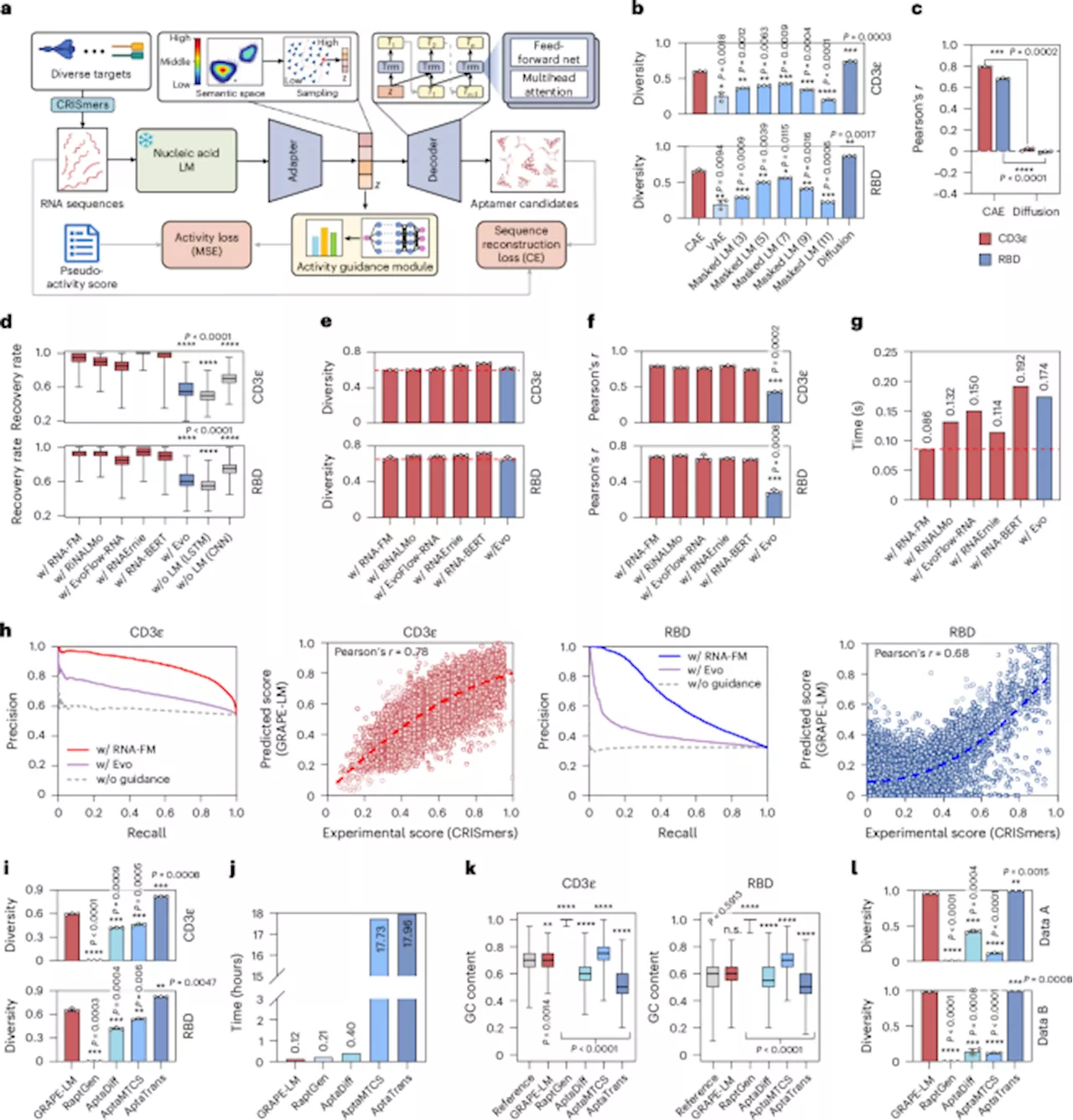
Researchers have unveiled a groundbreaking approach to the evolution of RNA aptamers through a novel artificial intelligence framework known as GRAPE-LM. This development significantly enhances the efficiency of RNA evolution, which has posed challenges for scientists due to the traditional reliance on labor-intensive multi-round screening methods.
The directed evolution of biomolecules is typically an iterative process, yet advancements in technology have not fully bridged the gap for RNA. Conventional methods often require extensive rounds of screening, making the process cumbersome. GRAPE-LM addresses this issue by enabling the one-round evolution of RNA aptamers, thus streamlining the selection process.
How GRAPE-LM Works
GRAPE-LM integrates a transformer-based conditional autoencoder with nucleic acid language models. It is informed by data from CRISPR−Cas-based aptamer screening, which is derived from intracellular environments. This innovative approach allows researchers to generate RNA aptamers that demonstrate superior binding properties without the need for multiple optimization rounds.
The efficacy of GRAPE-LM was validated through tests on three distinct targets: the human T cell receptor CD3ε, the receptor-binding domain of the SARS-CoV-2 spike protein, and the human oncogenic transcription factor c-Myc. In these experiments, RNA aptamers developed using GRAPE-LM consistently outperformed those obtained through traditional multi-round human selection methods.
Significance of the Research
This breakthrough has profound implications for various fields, including therapeutic development and disease detection. Aptamers, which are short RNA or DNA molecules, can specifically bind to target proteins, making them valuable in therapeutics and diagnostics. The ability to evolve them rapidly and effectively could accelerate the development of new treatments for a range of diseases, including cancer and viral infections.
The research was conducted by a team from the Shenzhen Institute of Advanced Technology and the Chinese Academy of Sciences. Their work was supported by several funding bodies, including the National Key Research and Development Program of China and the National Natural Science Foundation of China. The team emphasized the importance of collaboration, stating that contributions from various colleagues were instrumental in achieving these results.
The introduction of GRAPE-LM not only represents a significant technological leap in RNA aptamer evolution but also opens new avenues for research in synthetic biology and therapeutic development. The implications of this research extend beyond academic interest; they could lead to transformative changes in how scientists approach drug discovery and the creation of targeted therapies.
As research continues, the potential for GRAPE-LM to reshape the landscape of molecular biology remains an exciting prospect for scientists and healthcare professionals alike.

Urgent Swatting Incident Ties Up Emergency Resources in Alabama

Urgent Tax Alert: Claim Your Deductions Before April 15!

Scientists Investigate Cosmic Defects: Where Are They Now?

Spring Bocce Leagues Open Registration in Rapid City

CALV Offers Essential Communication Class for Real Estate Pros

Samsung Galaxy Watch 9 Set for Larger 435mAh Battery Upgrade

Healthy Choice Wellness Reports Earnings, Stock Sees Uptick

Prince Harry Claims to Be ‘Antidote to Andrew’ Amid Royal Crisis

Pet Owners Weigh Kibble Against Fresh Dog Food Options

ALMA Discovers Companion Orbiting Giant Star π 1 Gruis

U.S. Visa Rescheduling Hits H‐1B Applicants as New Vetting Rules Take Effect

University of Hawaiʻi Joins $25.6M AI Project for Disaster Monitoring

F-22 Raptor vs. Su-57 Felon: A 2025 Fighter Jet Comparison

Recent Divorce Judgments from Iberia Parish Court Records

Ohio State Study Uncovers Brain Connectivity and Function Links

Urgent: Flight Cancellations Loom at Texas Airports Amid Shutdown

Frank Dunn, Esteemed Builder and Community Leader, Passes Away at 89

Prince Andrew Faces Fallout from Scandals and Allegations
-
 Science9 months ago
ALMA Discovers Companion Orbiting Giant Star π 1 Gruis
-
 Politics7 months ago
U.S. Visa Rescheduling Hits H‐1B Applicants as New Vetting Rules Take Effect
-
Science9 months ago
University of Hawaiʻi Joins $25.6M AI Project for Disaster Monitoring
-
 World9 months ago
F-22 Raptor vs. Su-57 Felon: A 2025 Fighter Jet Comparison
-
 Politics9 months ago
Recent Divorce Judgments from Iberia Parish Court Records
-
 Science9 months ago
Ohio State Study Uncovers Brain Connectivity and Function Links
-
 Top Stories9 months ago
Urgent: Flight Cancellations Loom at Texas Airports Amid Shutdown
-
 Lifestyle9 months ago
Frank Dunn, Esteemed Builder and Community Leader, Passes Away at 89
-
 World9 months ago
Prince Andrew Faces Fallout from Scandals and Allegations
-

 Business9 months ago
Appian Recognizes 2025 Partner Award Winners for Enterprise Innovation
-

 Entertainment7 months ago
Malachi Barton Tops Google Searches as Disney’s Rising Star of 2025
-

 Top Stories8 months ago
Republican Matt Van Epps Wins Tennessee Special Election