
Science
NASA Prepares for Artemis II Launch with Key Fueling Tests

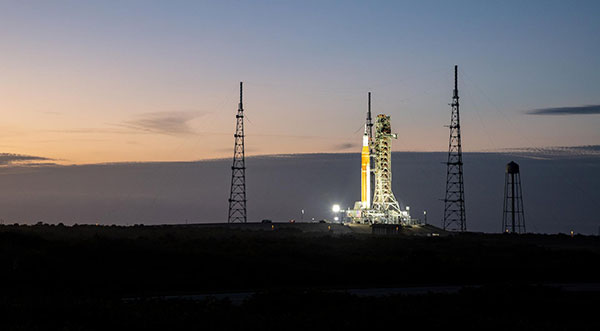
NASA is progressing towards the Artemis II test flight with significant preparations underway at the Kennedy Space Center in Florida. The teams are focusing on the Space Launch System (SLS) rocket and the Orion spacecraft, with a crucial wet dress rehearsal scheduled to take place as early as January 31, 2024.
This upcoming rehearsal is a vital prelaunch test that involves fueling the rocket with over 700,000 gallons of cryogenic propellants. During this process, the teams will conduct a launch countdown and practice safely removing fuel without any crew members inside the spacecraft. The rehearsal will assess the launch team’s ability to hold, resume, and recycle countdown sequences during the final ten minutes before a simulated launch.
Key Rehearsal Details and Timeline
The wet dress rehearsal will culminate in a simulated launch at 9 p.m. EST, with the possibility of extending the countdown to around 1 a.m. if necessary. The first run will commence approximately 49 hours before the simulated launch, with countdown activities continuing until 1 minute 30 seconds prior to launch. Following this, there will be a planned three-minute hold before resuming the countdown to 33 seconds before launch, where the rocket’s automated systems will take control.
If further adjustments are required, NASA may roll back the SLS and Orion to the Vehicle Assembly Building for additional work following the wet dress rehearsal. Recently, teams successfully serviced the SLS rocket boosters, including the loading of hydrazine into the aft skirts of the boosters.
Continued Preparations and Challenges
As the test preparations continue, the Orion crew remains in quarantine in Houston, having entered on January 23, 2024. The team is working diligently to ensure all systems are ready for flight. This includes stowing necessary items inside the spacecraft and performing essential checks on the launch abort system.
Technicians have verified the functionality of the core stage’s four RS-25 engines and pressurized a crucial tank in the spacecraft’s propulsion system. With cold weather affecting many regions, including Florida, steps are being taken to maintain optimal environmental control for both the Orion and SLS components.
Engineers are also addressing issues identified during the evaluation of the emergency egress system. Adjustments were made to the system’s brakes to ensure that the transport baskets used for crew evacuation fully descend to the designated area within the launch pad perimeter. Furthermore, technicians will conduct additional testing of Orion’s potable water system to confirm the safety of the crew’s drinking water, as initial samples indicated higher levels of total organic carbon than anticipated.
As the countdown to the Artemis II launch approaches, NASA’s preparations reflect both the complexity and the excitement surrounding this pivotal mission in the Artemis program.

Urgent Swatting Incident Ties Up Emergency Resources in Alabama

Urgent Tax Alert: Claim Your Deductions Before April 15!

Scientists Investigate Cosmic Defects: Where Are They Now?

Spring Bocce Leagues Open Registration in Rapid City

CALV Offers Essential Communication Class for Real Estate Pros

Samsung Galaxy Watch 9 Set for Larger 435mAh Battery Upgrade

Healthy Choice Wellness Reports Earnings, Stock Sees Uptick

Prince Harry Claims to Be ‘Antidote to Andrew’ Amid Royal Crisis

Pet Owners Weigh Kibble Against Fresh Dog Food Options

ALMA Discovers Companion Orbiting Giant Star π 1 Gruis

U.S. Visa Rescheduling Hits H‐1B Applicants as New Vetting Rules Take Effect

University of Hawaiʻi Joins $25.6M AI Project for Disaster Monitoring

F-22 Raptor vs. Su-57 Felon: A 2025 Fighter Jet Comparison

Recent Divorce Judgments from Iberia Parish Court Records

Ohio State Study Uncovers Brain Connectivity and Function Links

Prince Andrew Faces Fallout from Scandals and Allegations

Urgent: Flight Cancellations Loom at Texas Airports Amid Shutdown

Frank Dunn, Esteemed Builder and Community Leader, Passes Away at 89
-
 Science8 months ago
ALMA Discovers Companion Orbiting Giant Star π 1 Gruis
-
 Politics6 months ago
U.S. Visa Rescheduling Hits H‐1B Applicants as New Vetting Rules Take Effect
-
Science8 months ago
University of Hawaiʻi Joins $25.6M AI Project for Disaster Monitoring
-
 World8 months ago
F-22 Raptor vs. Su-57 Felon: A 2025 Fighter Jet Comparison
-
 Politics8 months ago
Recent Divorce Judgments from Iberia Parish Court Records
-
 Science9 months ago
Ohio State Study Uncovers Brain Connectivity and Function Links
-
 World8 months ago
Prince Andrew Faces Fallout from Scandals and Allegations
-
 Top Stories8 months ago
Urgent: Flight Cancellations Loom at Texas Airports Amid Shutdown
-
 Lifestyle8 months ago
Frank Dunn, Esteemed Builder and Community Leader, Passes Away at 89
-

 Business8 months ago
Appian Recognizes 2025 Partner Award Winners for Enterprise Innovation
-

 Entertainment6 months ago
Malachi Barton Tops Google Searches as Disney’s Rising Star of 2025
-

 Science9 months ago
Innovator Captures Light at 2 Billion Frames Per Second