
Science
Scientists Uncover New RNA Capping Mechanism in Gene Transcription

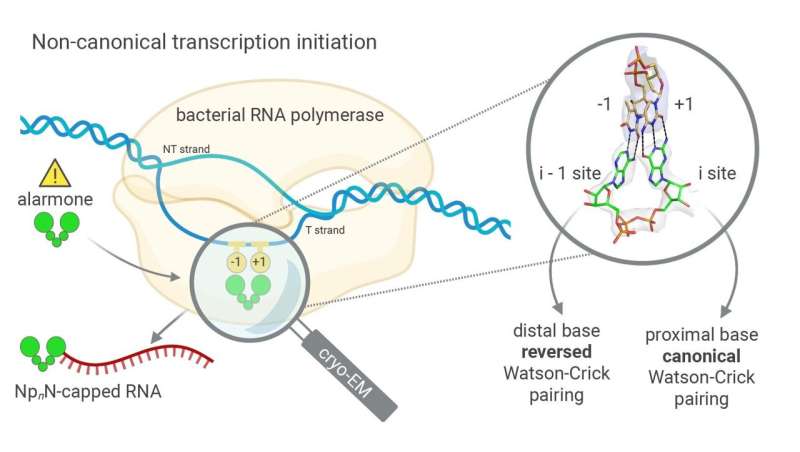
Research from the Institute of Organic Chemistry and Biochemistry of the CAS in Prague has revealed a previously unknown mechanism governing the genetic transcription process. The team has identified how transcription of genetic information from deoxyribonucleic acid (DNA) to ribonucleic acid (RNA) can be initiated using non-standard RNA caps. Their findings were published in the journal Nature Chemical Biology on January 29, 2026.
Understanding RNA Caps
RNA molecules can undergo various chemical modifications at their ends, termed caps. In eukaryotic organisms, including humans, the most recognized cap is vital for RNA stability and regulation. Recent studies have shown the existence of alternative, non-canonical RNA caps. These include alarmone caps formed by dinucleoside polyphosphate molecules, which help protect cellular RNA during times of stress.
The research team, led by Dr. Hana Cahová, investigated how bacterial RNA polymerase initiates transcription using dinucleoside polyphosphates (NpNs) as opposed to the traditional RNA building blocks. This study marks the first time scientists have described, at an atomic level, the generation of RNA bearing an alarmone cap directly at the start of gene transcription.
Significant Contributions
Key contributions came from Valentina Serianni, who demonstrated the capability of dinucleoside polyphosphates to initiate gene transcription, and Jana Škerlová, who conducted structural analyses of RNA polymerase. By using cryogenic electron microscopy data, Škerlová illustrated how dinucleoside polyphosphate molecules bind within the active site of RNA polymerase, where genetic information is transcribed.
Cahová emphasized the importance of their findings, stating, “We’re describing something that truly occurs in cells and that we’re now able to observe directly at the level of individual molecules. This allows us to answer fundamental questions about cellular processes, such as how cells adapt to stress.”
Cryogenic Electron Microscopy
The use of cryogenic electron microscopy (cryo-EM) was pivotal in the research. Dr. Tomáš Kouba, involved in this aspect of the project, explained, “Cryogenic electron microscopy allows us to freeze biological molecules in a state very close to their natural form and then determine their three-dimensional structure. This makes it possible to look directly into the active centers of enzymes and observe their function down to the atomic level.”
This innovative approach not only sheds light on the mechanisms of gene transcription but also enhances our understanding of how cells respond to stressors such as nutrient deprivation and temperature fluctuations. The discovery of these alarmone caps may have significant implications for future research in cellular biology and genetic regulation.
The research team continues to explore the complexities of RNA modifications, aiming to unravel more secrets of genetic transcription and the broader implications for cellular health and disease.

Urgent Swatting Incident Ties Up Emergency Resources in Alabama

Urgent Tax Alert: Claim Your Deductions Before April 15!

Scientists Investigate Cosmic Defects: Where Are They Now?

Spring Bocce Leagues Open Registration in Rapid City

CALV Offers Essential Communication Class for Real Estate Pros

Samsung Galaxy Watch 9 Set for Larger 435mAh Battery Upgrade

Healthy Choice Wellness Reports Earnings, Stock Sees Uptick

Prince Harry Claims to Be ‘Antidote to Andrew’ Amid Royal Crisis

Pet Owners Weigh Kibble Against Fresh Dog Food Options

ALMA Discovers Companion Orbiting Giant Star π 1 Gruis

U.S. Visa Rescheduling Hits H‐1B Applicants as New Vetting Rules Take Effect

University of Hawaiʻi Joins $25.6M AI Project for Disaster Monitoring

F-22 Raptor vs. Su-57 Felon: A 2025 Fighter Jet Comparison

Recent Divorce Judgments from Iberia Parish Court Records

Ohio State Study Uncovers Brain Connectivity and Function Links

Prince Andrew Faces Fallout from Scandals and Allegations

Urgent: Flight Cancellations Loom at Texas Airports Amid Shutdown

Frank Dunn, Esteemed Builder and Community Leader, Passes Away at 89
-
 Science8 months ago
ALMA Discovers Companion Orbiting Giant Star π 1 Gruis
-
 Politics6 months ago
U.S. Visa Rescheduling Hits H‐1B Applicants as New Vetting Rules Take Effect
-
Science8 months ago
University of Hawaiʻi Joins $25.6M AI Project for Disaster Monitoring
-
 World8 months ago
F-22 Raptor vs. Su-57 Felon: A 2025 Fighter Jet Comparison
-
 Politics8 months ago
Recent Divorce Judgments from Iberia Parish Court Records
-
 Science9 months ago
Ohio State Study Uncovers Brain Connectivity and Function Links
-
 World8 months ago
Prince Andrew Faces Fallout from Scandals and Allegations
-
 Top Stories8 months ago
Urgent: Flight Cancellations Loom at Texas Airports Amid Shutdown
-
 Lifestyle8 months ago
Frank Dunn, Esteemed Builder and Community Leader, Passes Away at 89
-

 Business8 months ago
Appian Recognizes 2025 Partner Award Winners for Enterprise Innovation
-

 Entertainment6 months ago
Malachi Barton Tops Google Searches as Disney’s Rising Star of 2025
-

 Science9 months ago
Innovator Captures Light at 2 Billion Frames Per Second