
Sports
Discover the Hidden Lives of Bobcats in Minnesota’s Wild

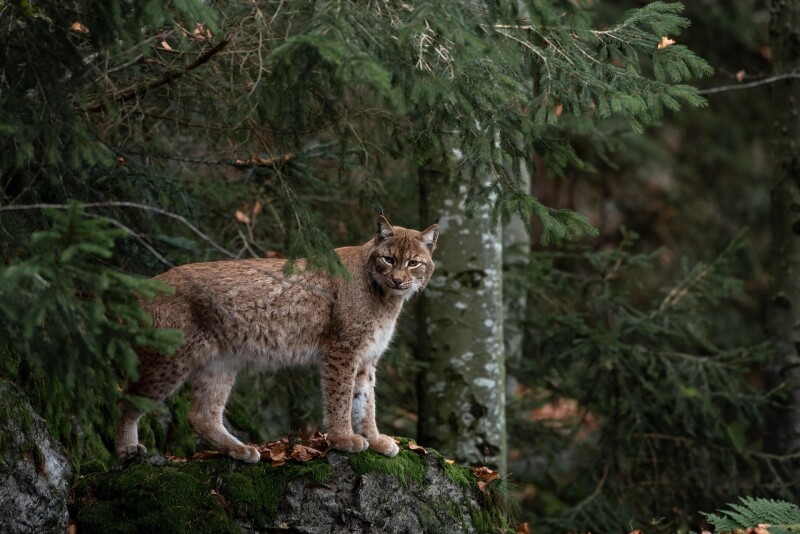
Bobcats are thriving in Minnesota’s wilderness, yet they often go unnoticed. These elusive felines, native to North America, inhabit a range of environments, including forests, woodlands, and increasingly, agricultural areas. Despite their presence, many residents are unaware that bobcats are living and hunting right in their backyards.
Characteristics and Habits of Bobcats
The bobcat, named for its distinctively short tail, weighs between 20 and 30 pounds and can stretch up to three feet in length. Its spotted coat resembles that of a leopard, a feature that remains even in adulthood, unlike the mountain lion, which loses its spots as it matures. Bobcats are robust predators, feeding on a diverse diet that includes small rodents, birds, and even deer fawns. They are skilled hunters, often lying in wait before launching a powerful pounce to catch their prey.
Bobcats are primarily nocturnal, making them difficult to spot. They typically roam during dusk and dawn, which is when their hunting skills are most effective. Their vocalizations, similar to those of domestic cats, include growls, hisses, and purrs. During the mating season, which occurs in late winter, these solitary creatures form temporary pair-bonds and become more vocal.
Female bobcats typically give birth in the spring, from February to April, to litters of three to six kittens. The mother is solely responsible for teaching her young the essential skills needed for survival in the wild.
Bobcats and Their Habitat in Minnesota
While bobcats are not considered endangered, their populations vary across different states. In Minnesota, licensed hunters and trappers harvest several hundred bobcats each year during regulated hunting seasons. The state’s forests and woodlands provide ideal habitats for these animals, but they are also adapting to agricultural landscapes, indicating a growing presence in varied environments.
Bobcats are often confused with their close relative, the Canada lynx. Although both species share similar features, there are significant differences. The lynx is larger, with long legs and large feet adapted for navigating through deep snow, primarily hunting snowshoe hares. In contrast, bobcats have shorter legs and a tail that is white underneath—a distinguishing feature from the lynx, which has a fully black-tipped tail.
Interestingly, some observers have noted bobcats exhibiting playful behavior in water, something not commonly seen in domestic cats. Reports describe sightings of bobcats swimming and hunting for frogs and fish in rivers and wetlands, showcasing their adaptability to diverse environments.
In conclusion, bobcats play a crucial role in maintaining ecological balance by controlling populations of prey species. Their secretive nature and adaptability make them fascinating subjects for wildlife enthusiasts. As residents of Minnesota venture into the great outdoors, they may be fortunate enough to catch a glimpse of these remarkable predators thriving in their natural habitats.

Urgent Swatting Incident Ties Up Emergency Resources in Alabama

Urgent Tax Alert: Claim Your Deductions Before April 15!

Scientists Investigate Cosmic Defects: Where Are They Now?

Spring Bocce Leagues Open Registration in Rapid City

CALV Offers Essential Communication Class for Real Estate Pros

Samsung Galaxy Watch 9 Set for Larger 435mAh Battery Upgrade

Healthy Choice Wellness Reports Earnings, Stock Sees Uptick

Prince Harry Claims to Be ‘Antidote to Andrew’ Amid Royal Crisis

Pet Owners Weigh Kibble Against Fresh Dog Food Options

ALMA Discovers Companion Orbiting Giant Star π 1 Gruis

U.S. Visa Rescheduling Hits H‐1B Applicants as New Vetting Rules Take Effect

University of Hawaiʻi Joins $25.6M AI Project for Disaster Monitoring

F-22 Raptor vs. Su-57 Felon: A 2025 Fighter Jet Comparison

Recent Divorce Judgments from Iberia Parish Court Records

Ohio State Study Uncovers Brain Connectivity and Function Links

Prince Andrew Faces Fallout from Scandals and Allegations

Urgent: Flight Cancellations Loom at Texas Airports Amid Shutdown

Frank Dunn, Esteemed Builder and Community Leader, Passes Away at 89
-
 Science8 months ago
ALMA Discovers Companion Orbiting Giant Star π 1 Gruis
-
 Politics6 months ago
U.S. Visa Rescheduling Hits H‐1B Applicants as New Vetting Rules Take Effect
-
Science8 months ago
University of Hawaiʻi Joins $25.6M AI Project for Disaster Monitoring
-
 World8 months ago
F-22 Raptor vs. Su-57 Felon: A 2025 Fighter Jet Comparison
-
 Politics8 months ago
Recent Divorce Judgments from Iberia Parish Court Records
-
 Science9 months ago
Ohio State Study Uncovers Brain Connectivity and Function Links
-
 World8 months ago
Prince Andrew Faces Fallout from Scandals and Allegations
-
 Top Stories8 months ago
Urgent: Flight Cancellations Loom at Texas Airports Amid Shutdown
-
 Lifestyle8 months ago
Frank Dunn, Esteemed Builder and Community Leader, Passes Away at 89
-

 Business8 months ago
Appian Recognizes 2025 Partner Award Winners for Enterprise Innovation
-

 Entertainment6 months ago
Malachi Barton Tops Google Searches as Disney’s Rising Star of 2025
-

 Science9 months ago
Innovator Captures Light at 2 Billion Frames Per Second