
World
UK Protest Restrictions Criticized for Undermining Democracy

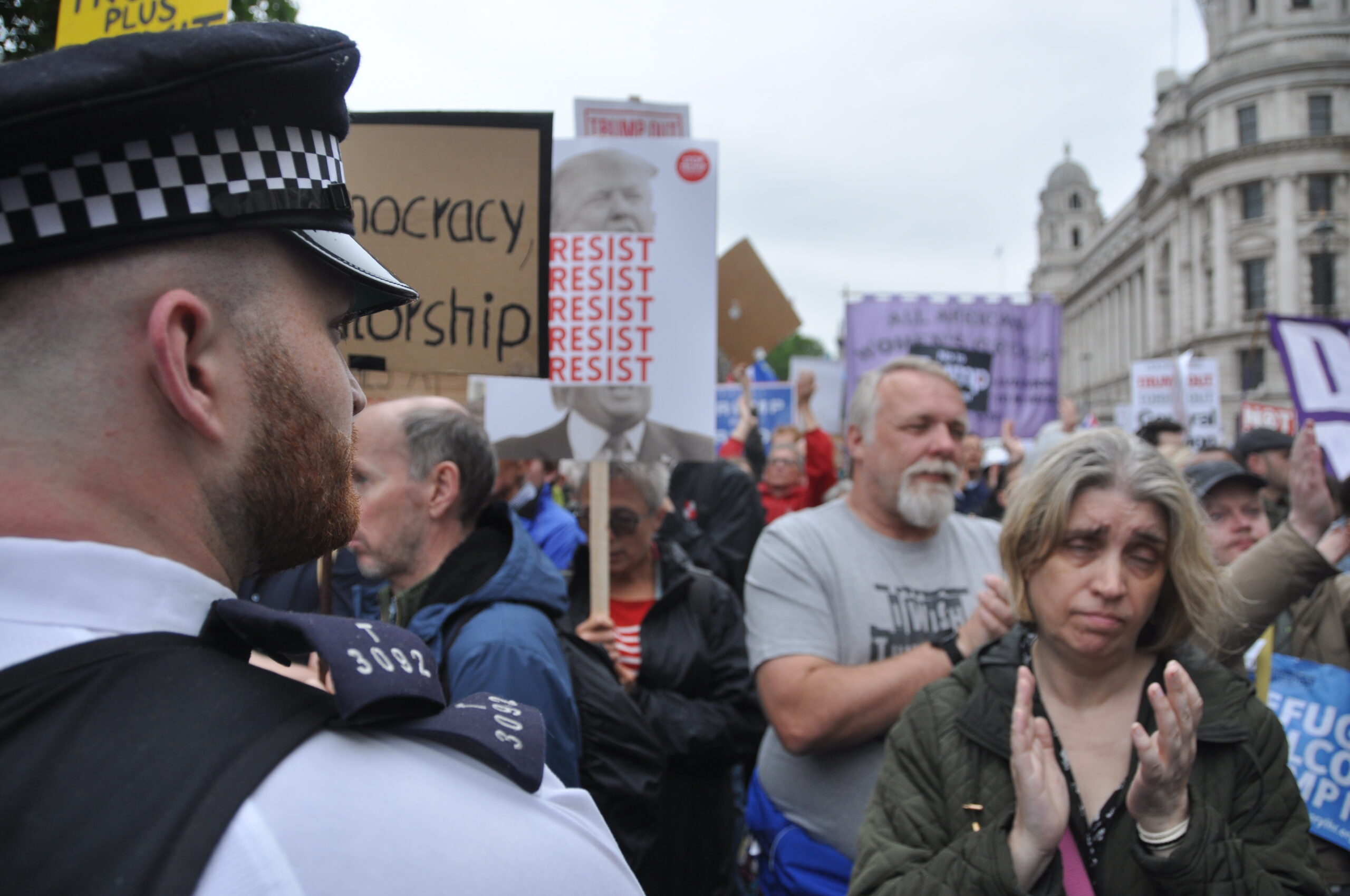
Human Rights Watch (HRW) has raised serious concerns regarding the UK government’s recent restrictions on the right to protest. In a report published on Wednesday, HRW stated that these measures severely contravene international human rights obligations, fostering an environment where peaceful dissent is treated as a criminal act.
The report highlights that the current Labour government has not reversed extensive anti-protest laws established by the previous Conservative administration. Key pieces of legislation, such as the Police, Crime, Sentencing and Courts Act and the Public Order Act, have not only remained in effect but have been expanded under the proposed Crime and Policing Bill. HRW notes that these laws create vague definitions that allow police to impose arbitrary restrictions on protests.
Concerns Over Police Discretion and Public Trust
Lydia Gall, a senior researcher for HRW focusing on Europe and Central Asia, emphasized the troubling trend of adopting protest-control tactics characteristic of nations experiencing democratic decline. She stated, “The UK should oppose such measures, not replicate and endorse them. The government should be protecting the right to protest instead of stripping away people’s rights.”
The report also flags concerns about the vague wording of provisions within these laws, which grant police the authority to ban protests before they occur or to impose “unnecessary and disproportionate conditions.” This has led to subjective and arbitrary police decisions, resulting in increased arrests and diminished public trust in protest as a legitimate form of political engagement.
HRW argues that by treating protests as a threat rather than a right to be safeguarded, the UK is not only neglecting its international obligations but is also undermining the core principles of democracy. The UK is bound by the International Covenant on Civil and Political Rights and the European Convention on Human Rights, both of which enshrine the rights to freedom of expression and peaceful assembly.
Legal Experts Call for Revisions and Inquiries
Laura O’Brien, a prominent civil liberties lawyer, expressed concerns regarding the current approach taken by law enforcement. She noted that police appear confused about what constitutes a criminal offense, leading to an exercise of discretion that can seem excessive. O’Brien referred to pro-Palestinian protests highlighted in the HRW report, stating, “We are talking about people with placards, not about direct action in the sense of ‘you have broken this, or you have blocked this, or you have caused a disruption.’ It’s about the message.”
The HRW report criticizes the police’s tendency to arrest first and assess the situation later. Historical examples include the treatment of environmental protesters, who received probation typically reserved for serious offenders, and faced potential sentences of up to ten years’ imprisonment.
HRW is calling for the UK government to repeal or revise the contentious pieces of legislation and to initiate a public inquiry into the policing of protests. This inquiry would aim to ensure compliance with international human rights law, addressing the concerns raised by various civil rights organizations.
The Crime and Policing Bill is currently pending and is scheduled for debate in the House of Lords in January 2026. As discussions around the bill continue, the implications of these restrictions on democratic principles and human rights remain a critical point of contention within the UK.

Urgent Swatting Incident Ties Up Emergency Resources in Alabama

Urgent Tax Alert: Claim Your Deductions Before April 15!

Scientists Investigate Cosmic Defects: Where Are They Now?

Spring Bocce Leagues Open Registration in Rapid City

CALV Offers Essential Communication Class for Real Estate Pros

Samsung Galaxy Watch 9 Set for Larger 435mAh Battery Upgrade

Healthy Choice Wellness Reports Earnings, Stock Sees Uptick

Prince Harry Claims to Be ‘Antidote to Andrew’ Amid Royal Crisis

Pet Owners Weigh Kibble Against Fresh Dog Food Options

ALMA Discovers Companion Orbiting Giant Star π 1 Gruis

U.S. Visa Rescheduling Hits H‐1B Applicants as New Vetting Rules Take Effect

University of Hawaiʻi Joins $25.6M AI Project for Disaster Monitoring

F-22 Raptor vs. Su-57 Felon: A 2025 Fighter Jet Comparison

Recent Divorce Judgments from Iberia Parish Court Records

Ohio State Study Uncovers Brain Connectivity and Function Links

Urgent: Flight Cancellations Loom at Texas Airports Amid Shutdown

Frank Dunn, Esteemed Builder and Community Leader, Passes Away at 89

Prince Andrew Faces Fallout from Scandals and Allegations
-
 Science10 months ago
ALMA Discovers Companion Orbiting Giant Star π 1 Gruis
-
 Politics8 months ago
U.S. Visa Rescheduling Hits H‐1B Applicants as New Vetting Rules Take Effect
-
Science10 months ago
University of Hawaiʻi Joins $25.6M AI Project for Disaster Monitoring
-
 World10 months ago
F-22 Raptor vs. Su-57 Felon: A 2025 Fighter Jet Comparison
-
 Politics9 months ago
Recent Divorce Judgments from Iberia Parish Court Records
-
 Science10 months ago
Ohio State Study Uncovers Brain Connectivity and Function Links
-
 Top Stories10 months ago
Urgent: Flight Cancellations Loom at Texas Airports Amid Shutdown
-
 Lifestyle10 months ago
Frank Dunn, Esteemed Builder and Community Leader, Passes Away at 89
-
 World10 months ago
Prince Andrew Faces Fallout from Scandals and Allegations
-

 Business10 months ago
Appian Recognizes 2025 Partner Award Winners for Enterprise Innovation
-

 Entertainment8 months ago
Malachi Barton Tops Google Searches as Disney’s Rising Star of 2025
-

 Top Stories9 months ago
Republican Matt Van Epps Wins Tennessee Special Election