
World
U.S. Military Gears Up for Potential Extended Operations Against Iran

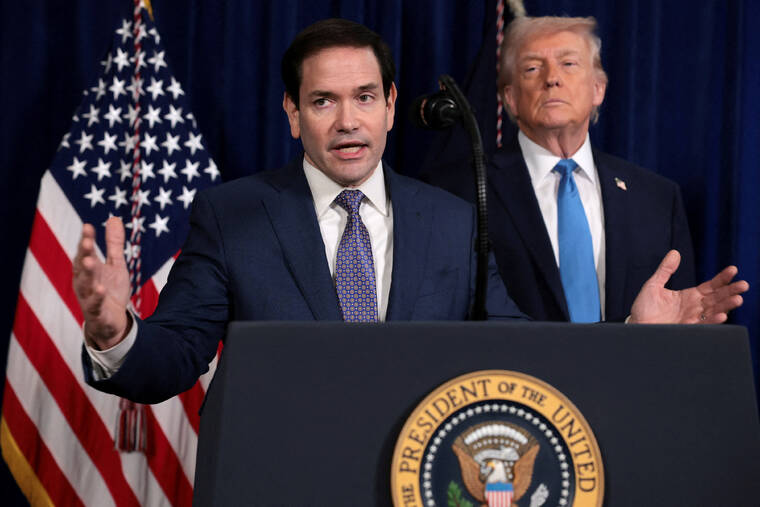
The U.S. military is preparing for the possibility of sustained operations against Iran that could last for several weeks, according to two U.S. officials speaking to Reuters. This development follows increasing tensions between the two nations and may escalate the conflict beyond previous encounters. The officials, who requested anonymity due to the sensitive nature of the discussions, indicated that the ongoing diplomatic efforts will be challenged by these military preparations.
Negotiations are set to take place in Geneva on Tuesday between U.S. envoys Steve Witkoff and Jared Kushner, with representatives from Oman serving as mediators. Marco Rubio, the U.S. Secretary of State, highlighted the difficulties of achieving a diplomatic resolution with Iran, stating, “that’s very hard to do.”
As military tensions rise, President Donald Trump has amassed additional forces in the region, including sending another aircraft carrier and thousands of troops, alongside fighter aircraft and guided-missile destroyers. These forces are equipped for both offensive strikes and defensive operations. During a military event at Fort Bragg in North Carolina, Trump suggested that changing the Iranian government could be beneficial, remarking, “it seems like that would be the best thing that could happen.”
Despite his aggressive stance, Trump has expressed skepticism about deploying ground troops into Iran, previously stating that “the last thing you want to do is ground forces.” Current military deployments suggest a focus on air and naval operations rather than large-scale ground engagements. The Pentagon has not provided specific comments regarding these preparations.
The U.S. military’s planning for a potential extended operation is reportedly more intricate than previous actions, which included last year’s strikes against Iranian nuclear sites. The June operation, dubbed “Midnight Hammer,” involved stealth bombers targeting Iranian facilities but was a limited engagement. This time, military strategies could include attacks on Iranian state and security facilities in addition to nuclear infrastructure, although specific details remain undisclosed.
Experts warn that the risks for U.S. forces could be significantly elevated in any sustained operation against Iran, which possesses a substantial missile arsenal. The potential for Iranian retaliatory strikes raises the specter of a broader regional conflict. One official indicated that the U.S. anticipates Iran would respond, leading to an ongoing cycle of strikes and counter-strikes.
While the White House did not elaborate on the risks associated with potential retaliation, Trump has consistently threatened military action in response to Iran’s nuclear ambitions and its crackdown on domestic dissent. He recently cautioned that failure to reach a diplomatic agreement could result in “very traumatic” consequences.
Iran’s Revolutionary Guard has stated that any strikes on Iranian territory could provoke retaliation against U.S. military bases throughout the region, which include installations in countries such as Jordan, Kuwait, Saudi Arabia, Qatar, Bahrain, the United Arab Emirates, and Turkey.
In a related context, Israeli Prime Minister Benjamin Netanyahu met with Trump earlier this week, emphasizing that any agreement with Iran must address critical security concerns for Israel. Iran has expressed willingness to discuss curbing its nuclear program in exchange for the lifting of sanctions, but it has explicitly rejected linking nuclear negotiations to its missile program.
Adding to the complexity of the situation, Iranian opposition figure Reza Pahlavi has called for U.S. military intervention, arguing it could save lives and expedite regime change in Iran. Pahlavi, who has lived in exile since before the 1979 Islamic Revolution, indicated that the Iranian government may be on the verge of collapse. He stated, “We are hoping that this attack will expedite the process and the people can be finally back in the streets and take it all the way to the ultimate regime’s downfall.”
As diplomatic negotiations continue amidst these military preparations, the situation remains fluid, with significant implications for both U.S. and Iranian interests in the region.

Urgent Swatting Incident Ties Up Emergency Resources in Alabama

Urgent Tax Alert: Claim Your Deductions Before April 15!

Scientists Investigate Cosmic Defects: Where Are They Now?

Spring Bocce Leagues Open Registration in Rapid City

CALV Offers Essential Communication Class for Real Estate Pros

Samsung Galaxy Watch 9 Set for Larger 435mAh Battery Upgrade

Healthy Choice Wellness Reports Earnings, Stock Sees Uptick

Prince Harry Claims to Be ‘Antidote to Andrew’ Amid Royal Crisis

Pet Owners Weigh Kibble Against Fresh Dog Food Options

ALMA Discovers Companion Orbiting Giant Star π 1 Gruis

U.S. Visa Rescheduling Hits H‐1B Applicants as New Vetting Rules Take Effect

University of Hawaiʻi Joins $25.6M AI Project for Disaster Monitoring

F-22 Raptor vs. Su-57 Felon: A 2025 Fighter Jet Comparison

Recent Divorce Judgments from Iberia Parish Court Records

Urgent: Flight Cancellations Loom at Texas Airports Amid Shutdown

Ohio State Study Uncovers Brain Connectivity and Function Links

Frank Dunn, Esteemed Builder and Community Leader, Passes Away at 89

Appian Recognizes 2025 Partner Award Winners for Enterprise Innovation
-
 Science9 months ago
ALMA Discovers Companion Orbiting Giant Star π 1 Gruis
-
 Politics7 months ago
U.S. Visa Rescheduling Hits H‐1B Applicants as New Vetting Rules Take Effect
-
Science10 months ago
University of Hawaiʻi Joins $25.6M AI Project for Disaster Monitoring
-
 World10 months ago
F-22 Raptor vs. Su-57 Felon: A 2025 Fighter Jet Comparison
-
 Politics9 months ago
Recent Divorce Judgments from Iberia Parish Court Records
-
 Top Stories10 months ago
Urgent: Flight Cancellations Loom at Texas Airports Amid Shutdown
-
 Science10 months ago
Ohio State Study Uncovers Brain Connectivity and Function Links
-
 Lifestyle10 months ago
Frank Dunn, Esteemed Builder and Community Leader, Passes Away at 89
-
 Business9 months ago
Appian Recognizes 2025 Partner Award Winners for Enterprise Innovation
-

 World10 months ago
Prince Andrew Faces Fallout from Scandals and Allegations
-

 Entertainment8 months ago
Malachi Barton Tops Google Searches as Disney’s Rising Star of 2025
-

 Top Stories9 months ago
Republican Matt Van Epps Wins Tennessee Special Election