
World
Trump and Xi Reach Temporary Agreement on Rare Earth Exports

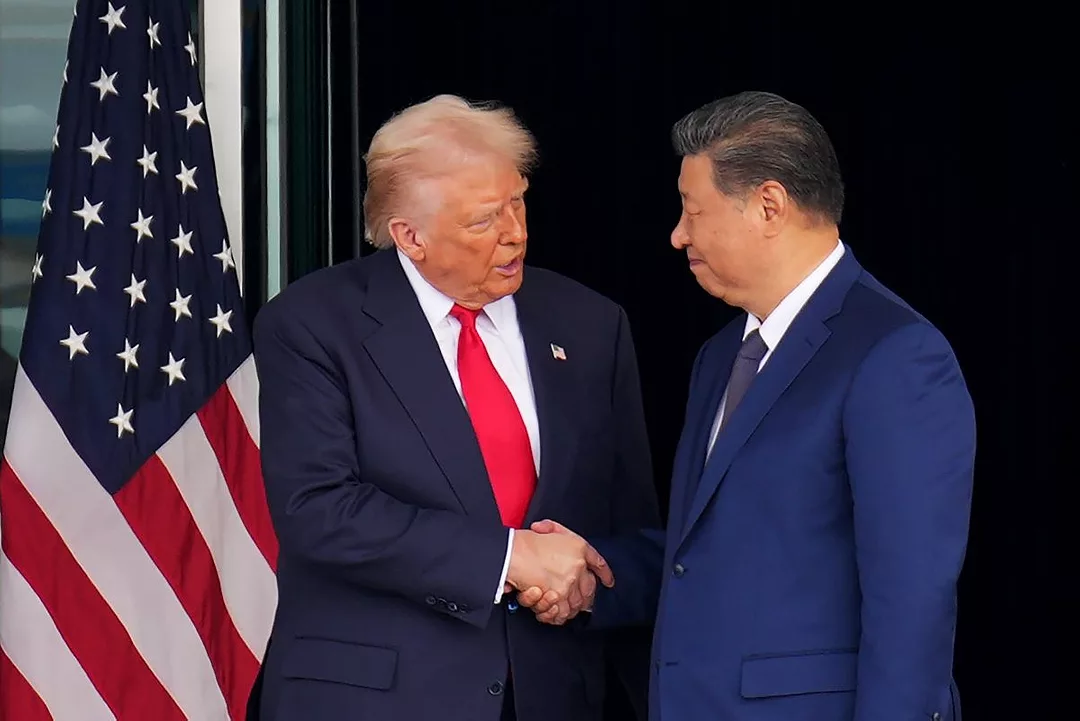
U.S. President Donald Trump and Chinese President Xi Jinping recently engaged in high-stakes discussions that led to a temporary agreement over the contentious issue of rare earth exports. Following their meeting, Trump expressed optimism, stating the two leaders had “settled” their differences regarding access to China’s vital rare earth minerals. During a flight aboard Air Force One, he remarked, “There’s no roadblock at all on rare earth. That will hopefully disappear from our vocabulary for a little while.”
This agreement allows China to delay implementing new export controls on critical minerals for a period of one year. These minerals are essential for various industries, including electronics and defense. Despite Trump labeling this a win for global economic stability, the situation remains precarious, as existing export restrictions from China continue to impact U.S. and international companies reliant on these materials for manufacturing fighter jets, semiconductors, and electric vehicles.
The negotiations highlighted a significant shift in bargaining power. To secure China’s concession, the U.S. agreed to postpone the expansion of its export blacklist, which would have affected thousands of Chinese firms. More than 24 hours post-meeting, the White House had yet to release a detailed account of the discussions, while the Chinese commerce ministry provided documentation outlining the agreement.
U.S. Trade Representative Jamieson Greer acknowledged that the negotiations did not lead to a reduction in China’s existing export controls. He indicated that the deal primarily serves as a continuation of prior commitments, which have been inconsistently honored by Beijing. “We expect there to be more of a Chinese general approach,” Greer stated.
Concerns Over Long-Term Implications
Critics of the negotiations express skepticism regarding the effectiveness of this temporary pause. They argue that the U.S. has inadvertently accepted a negotiating link between its own restrictions on high-tech exports, such as artificial intelligence chips, and China’s rare earth policies. Chris McGuire, a former National Security Council member, warned that this could set a “dangerous precedent,” as it illustrates a retreat from previously established positions.
The U.S. has been navigating a delicate balance in its trade relations with China, especially following Beijing’s introduction of new export restrictions for rare earth magnets in April 2025 and the announcement of broader controls in early October. This backdrop of tit-for-tat exchanges has complicated the trade landscape leading up to the recent meeting.
Although Trump sought to leverage the situation by suggesting aggressive measures like a 100% tariff increase, he ultimately retreated from that stance. In addition to postponing the expanded blacklist, the U.S. has also halted tariffs imposed due to China’s involvement in the fentanyl trade, providing further concessions to Beijing.
Evaluating Industry Impact
The ramifications of these negotiations extend beyond mere political maneuvering. Industries reliant on rare earth elements are left in a vulnerable position. Wade Senti, president of Advanced Magnet Lab Inc., emphasized that despite the ceasefire on new controls, the fundamental landscape for industries dependent on these resources remains unchanged. He noted, “The risk for the military I don’t think, quite frankly, has changed since the beginning of June.”
As companies continue to navigate a complex approval process for rare earth exports, the impact is felt internationally. Firms in countries such as Germany are facing similar bureaucratic hurdles, as Beijing requires extensive documentation for export licenses. The recent delay in China’s more stringent controls may provide temporary relief, but the underlying issues persist.
While the U.S. administration has framed this agreement as a victory for the global supply chain, experts caution that the concessions made could benefit China more in the long run. The temporary nature of the pause raises questions about its effectiveness in ensuring a stable supply of critical resources.
The evolving relationship between the U.S. and China in the realm of rare earth exports reflects broader economic and political dynamics that will continue to shape global trade. As both nations prepare for further discussions in 2026, the outcome of these negotiations will be closely scrutinized by industry leaders and policymakers alike.

Urgent Swatting Incident Ties Up Emergency Resources in Alabama

Urgent Tax Alert: Claim Your Deductions Before April 15!

Scientists Investigate Cosmic Defects: Where Are They Now?

Spring Bocce Leagues Open Registration in Rapid City

CALV Offers Essential Communication Class for Real Estate Pros

Samsung Galaxy Watch 9 Set for Larger 435mAh Battery Upgrade

Healthy Choice Wellness Reports Earnings, Stock Sees Uptick

Prince Harry Claims to Be ‘Antidote to Andrew’ Amid Royal Crisis

Pet Owners Weigh Kibble Against Fresh Dog Food Options

ALMA Discovers Companion Orbiting Giant Star π 1 Gruis

U.S. Visa Rescheduling Hits H‐1B Applicants as New Vetting Rules Take Effect

University of Hawaiʻi Joins $25.6M AI Project for Disaster Monitoring

F-22 Raptor vs. Su-57 Felon: A 2025 Fighter Jet Comparison

Recent Divorce Judgments from Iberia Parish Court Records

Urgent: Flight Cancellations Loom at Texas Airports Amid Shutdown

Ohio State Study Uncovers Brain Connectivity and Function Links

Frank Dunn, Esteemed Builder and Community Leader, Passes Away at 89

Appian Recognizes 2025 Partner Award Winners for Enterprise Innovation
-
 Science9 months ago
ALMA Discovers Companion Orbiting Giant Star π 1 Gruis
-
 Politics7 months ago
U.S. Visa Rescheduling Hits H‐1B Applicants as New Vetting Rules Take Effect
-
Science10 months ago
University of Hawaiʻi Joins $25.6M AI Project for Disaster Monitoring
-
 World10 months ago
F-22 Raptor vs. Su-57 Felon: A 2025 Fighter Jet Comparison
-
 Politics9 months ago
Recent Divorce Judgments from Iberia Parish Court Records
-
 Top Stories10 months ago
Urgent: Flight Cancellations Loom at Texas Airports Amid Shutdown
-
 Science10 months ago
Ohio State Study Uncovers Brain Connectivity and Function Links
-
 Lifestyle10 months ago
Frank Dunn, Esteemed Builder and Community Leader, Passes Away at 89
-
 Business9 months ago
Appian Recognizes 2025 Partner Award Winners for Enterprise Innovation
-

 World10 months ago
Prince Andrew Faces Fallout from Scandals and Allegations
-

 Entertainment8 months ago
Malachi Barton Tops Google Searches as Disney’s Rising Star of 2025
-

 Top Stories9 months ago
Republican Matt Van Epps Wins Tennessee Special Election