
World
Supreme Court Limits Dual Convictions in Gun Offense Cases

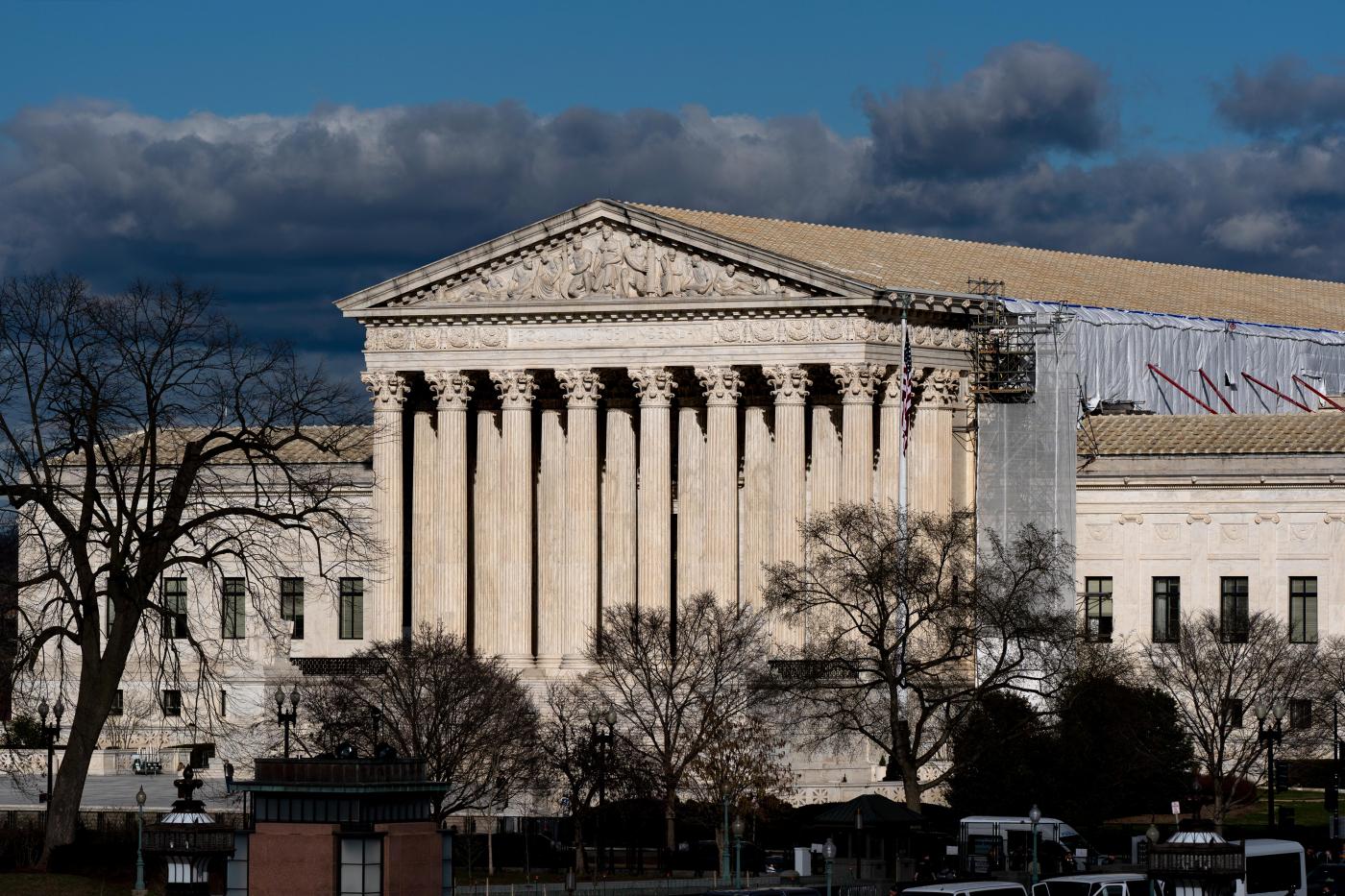
The U.S. Supreme Court clarified the application of federal gun statutes on October 4, 2023, determining that prosecutors cannot secure separate convictions under overlapping provisions when a single act meets identical criminal elements. This ruling in the case of Barrett v. United States (No. 24-5774) reverses part of a lower court’s judgment and significantly restricts the government’s capacity to impose cumulative punishments for actions involving firearms.
The case originated from the prosecution of Dwayne Barrett, who was convicted in federal district court for robbery and related gun offenses. Court documents reveal that Barrett committed a series of robberies from August 2011 to January 2012. During one robbery, Gamar Dafalla was fatally shot. In March 2013, the Department of Justice announced that Barrett and a co-defendant were convicted of murder, robbery, and gun charges after a two-week jury trial.
Barrett’s actions during the crime involved the use of a firearm, which prosecutors charged under two federal statutes. One provision criminalizes the use or carrying of a firearm during a violent crime or drug trafficking, while the other increases penalties if a death occurs during the commission of the offense. This second provision could expose a defendant to life imprisonment or even the death penalty.
At both trial and appeal phases, the government maintained that Barrett could be convicted under both statutes for the same crime, using the gun involved in Dafalla’s death as the basis for two separate convictions. The Supreme Court, however, rejected this approach, asserting that Barrett’s conduct, while triggering multiple statutory provisions, constituted the same offense under the legal test for distinct crimes.
The justices ruled that two offenses are only distinct if each statute requires proof of an element that the other does not. The court concluded that the statutes do not provide clear authorization for separate convictions when one act fulfills both provisions. The ruling indicates that Congress did not intend to allow dual punishments under these overlapping statutes, leading to the decision that only one conviction can be upheld for a defendant’s conduct that violates both sections.
This decision addresses a growing divide among federal appellate courts regarding the permissibility of dual convictions based on identical conduct. Legal analysts suggest that the ruling reinforces a fundamental principle in criminal law that limits cumulative punishments. When statutes overlap and Congress has not explicitly expressed an intent to permit multiple penalties, courts must treat the overlapping offenses as a single crime for sentencing purposes.
Supporters of the ruling argue that it restores predictability and fairness to federal sentencing, while critics express concern that it may weaken prosecutors’ ability to charge complex violent crimes involving firearms. Lower courts are now tasked with applying the Supreme Court’s guidance in Barrett and reevaluating previous cases where defendants faced multiple convictions under overlapping gun provisions for the same conduct.
The Supreme Court’s ruling marks a significant development in federal criminal jurisprudence, influencing how prosecutors charge and judges sentence gun-related offenses in the future. The decision is likely to have lasting implications on the legal landscape surrounding firearm offenses in the United States.

Urgent Swatting Incident Ties Up Emergency Resources in Alabama

Urgent Tax Alert: Claim Your Deductions Before April 15!

Scientists Investigate Cosmic Defects: Where Are They Now?

Spring Bocce Leagues Open Registration in Rapid City

CALV Offers Essential Communication Class for Real Estate Pros

Samsung Galaxy Watch 9 Set for Larger 435mAh Battery Upgrade

Healthy Choice Wellness Reports Earnings, Stock Sees Uptick

Prince Harry Claims to Be ‘Antidote to Andrew’ Amid Royal Crisis

Pet Owners Weigh Kibble Against Fresh Dog Food Options

ALMA Discovers Companion Orbiting Giant Star π 1 Gruis

U.S. Visa Rescheduling Hits H‐1B Applicants as New Vetting Rules Take Effect

University of Hawaiʻi Joins $25.6M AI Project for Disaster Monitoring

F-22 Raptor vs. Su-57 Felon: A 2025 Fighter Jet Comparison

Ohio State Study Uncovers Brain Connectivity and Function Links

Recent Divorce Judgments from Iberia Parish Court Records

Prince Andrew Faces Fallout from Scandals and Allegations

Urgent: Flight Cancellations Loom at Texas Airports Amid Shutdown

Frank Dunn, Esteemed Builder and Community Leader, Passes Away at 89
-
 Science8 months ago
ALMA Discovers Companion Orbiting Giant Star π 1 Gruis
-
 Politics6 months ago
U.S. Visa Rescheduling Hits H‐1B Applicants as New Vetting Rules Take Effect
-
Science8 months ago
University of Hawaiʻi Joins $25.6M AI Project for Disaster Monitoring
-
 World8 months ago
F-22 Raptor vs. Su-57 Felon: A 2025 Fighter Jet Comparison
-
 Science8 months ago
Ohio State Study Uncovers Brain Connectivity and Function Links
-
 Politics8 months ago
Recent Divorce Judgments from Iberia Parish Court Records
-
 World8 months ago
Prince Andrew Faces Fallout from Scandals and Allegations
-
 Top Stories8 months ago
Urgent: Flight Cancellations Loom at Texas Airports Amid Shutdown
-
 Lifestyle8 months ago
Frank Dunn, Esteemed Builder and Community Leader, Passes Away at 89
-

 Business8 months ago
Appian Recognizes 2025 Partner Award Winners for Enterprise Innovation
-

 Entertainment6 months ago
Malachi Barton Tops Google Searches as Disney’s Rising Star of 2025
-

 Science9 months ago
Innovator Captures Light at 2 Billion Frames Per Second