
World
New Delhi Faces Hazardous Air Quality Post-Diwali Celebrations

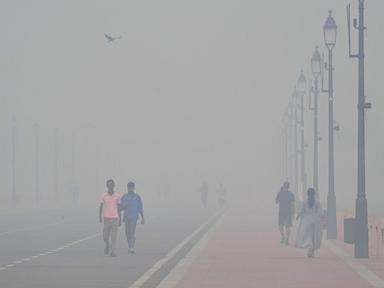
New Delhi experienced a severe decline in air quality following the celebrations of Diwali, the Hindu festival of lights, which took place on November 12, 2023. Millions of revelers filled the night sky with fireworks, resulting in an alarming spike in air pollution levels. By the morning of November 13, the city’s Air Quality Index (AQI) exceeded 350 in several neighborhoods, categorizing it as “severe” and posing significant health risks, according to the World Health Organization’s guidelines.
The celebratory firecrackers released smoke and fine particulate matter into the atmosphere, compounding existing seasonal pollution and stagnant weather conditions. Visibility diminished throughout the city, shrouding streets and historical landmarks in a thick gray haze. “I have never seen anything like this before. We can’t see anything here because of pollution,” remarked Vedant Pachkande, a tourist visiting New Delhi.
Regulatory Challenges and Environmental Impact
In a bid to address the pollution issue, India’s Supreme Court had recently modified a comprehensive ban on firecrackers in New Delhi. The ruling permitted the limited use of “green firecrackers,” which are engineered to produce around 30% less pollution compared to traditional firecrackers. These were allowed during designated hours from November 11 to November 14, but enforcement of these regulations remained lax, similar to previous years.
New Delhi, along with its metropolitan area, is home to over 30 million residents and consistently ranks among the world’s most polluted cities, particularly during winter months. This period coincides with increased firecracker usage during Diwali and the burning of crop residues in nearby states. Despite measures implemented by local authorities, including restrictions on construction activities and diesel generator usage, environmental activists argue that more sustainable solutions are essential. Cleaner energy sources and stringent vehicle emission controls are critical to mitigating ongoing air quality crises.
Sunshine Decline Linked to Rising Pollution Levels
A recent study published in Scientific Reports highlights a troubling trend: rising air pollution has been linked to a significant reduction in the number of sunshine hours across most of India. The research, conducted by scientists at Banaras Hindu University, found that increasing levels of aerosols—tiny particles released from industrial activities, biomass burning, and vehicle emissions—are responsible for this decline.
Manoj K. Srivastava, a scientist and one of the study’s authors, noted, “We see a greater impact in more polluted regions such as northern India.” The reduction in sunlight not only affects solar energy generation but also poses risks to agricultural productivity and public health.
As the situation in New Delhi underscores the urgent need for effective air quality management, it also serves as a reminder of the broader environmental challenges facing India. Continued awareness and action are vital to ensuring a healthier and more sustainable future for its residents.

Urgent Swatting Incident Ties Up Emergency Resources in Alabama

Urgent Tax Alert: Claim Your Deductions Before April 15!

Scientists Investigate Cosmic Defects: Where Are They Now?

Spring Bocce Leagues Open Registration in Rapid City

CALV Offers Essential Communication Class for Real Estate Pros

Samsung Galaxy Watch 9 Set for Larger 435mAh Battery Upgrade

Healthy Choice Wellness Reports Earnings, Stock Sees Uptick

Prince Harry Claims to Be ‘Antidote to Andrew’ Amid Royal Crisis

Pet Owners Weigh Kibble Against Fresh Dog Food Options

ALMA Discovers Companion Orbiting Giant Star π 1 Gruis

U.S. Visa Rescheduling Hits H‐1B Applicants as New Vetting Rules Take Effect

University of Hawaiʻi Joins $25.6M AI Project for Disaster Monitoring

F-22 Raptor vs. Su-57 Felon: A 2025 Fighter Jet Comparison

Recent Divorce Judgments from Iberia Parish Court Records

Urgent: Flight Cancellations Loom at Texas Airports Amid Shutdown

Ohio State Study Uncovers Brain Connectivity and Function Links

Frank Dunn, Esteemed Builder and Community Leader, Passes Away at 89

Appian Recognizes 2025 Partner Award Winners for Enterprise Innovation
-
 Science9 months ago
ALMA Discovers Companion Orbiting Giant Star π 1 Gruis
-
 Politics7 months ago
U.S. Visa Rescheduling Hits H‐1B Applicants as New Vetting Rules Take Effect
-
Science10 months ago
University of Hawaiʻi Joins $25.6M AI Project for Disaster Monitoring
-
 World10 months ago
F-22 Raptor vs. Su-57 Felon: A 2025 Fighter Jet Comparison
-
 Politics9 months ago
Recent Divorce Judgments from Iberia Parish Court Records
-
 Top Stories10 months ago
Urgent: Flight Cancellations Loom at Texas Airports Amid Shutdown
-
 Science10 months ago
Ohio State Study Uncovers Brain Connectivity and Function Links
-
 Lifestyle10 months ago
Frank Dunn, Esteemed Builder and Community Leader, Passes Away at 89
-
 Business9 months ago
Appian Recognizes 2025 Partner Award Winners for Enterprise Innovation
-

 World10 months ago
Prince Andrew Faces Fallout from Scandals and Allegations
-

 Entertainment8 months ago
Malachi Barton Tops Google Searches as Disney’s Rising Star of 2025
-

 Top Stories9 months ago
Republican Matt Van Epps Wins Tennessee Special Election