
World
Military Units Honor Reptilian Resilience on National Reptile Day

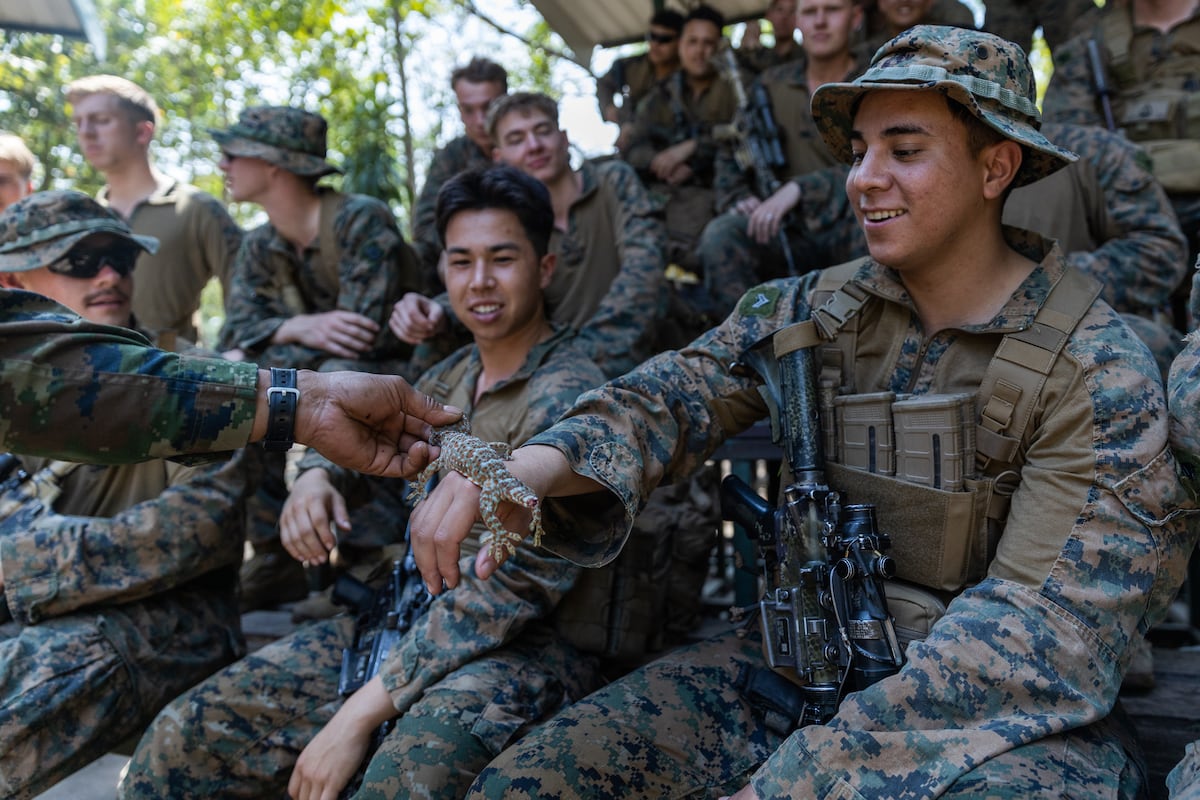
Tuesday, October 17, 2023, marks National Reptile Awareness Day, a celebration that highlights the importance of reptiles in various ecosystems and human history. In the U.S. military, this appreciation transcends mere curiosity. Reptilian mascots and call signs, such as cobras and alligators, are prominent in patches, aircraft, and unit logos. These creatures symbolize values such as patience, precision, and power that resonate with service members.
Reptiles embody a primal toughness that aligns closely with military training. A cobra strikes without warning, while an alligator remains motionless until the opportune moment. This instinct for timing parallels the discipline required of military personnel. For instance, a sniper may hold their breath for hours before taking a shot, much like an alligator waiting underwater to ambush its prey. Both examples highlight the importance of control over chaos.
Historical Ties to Reptilian Symbolism
The connection between reptiles and military identity has shaped unit heritage for generations. During World War II, the U.S. 158th Infantry Regiment earned the nickname “Bushmasters” after repeated encounters with the deadly bushmaster snake in Panama and the Pacific. This designation was not merely for flair; it symbolized resilience in the face of survival challenges. Today, the image of the bushmaster remains part of the regiment’s insignia.
Reptiles thrive in the harsh environments where U.S. forces have engaged in combat, including deserts, swamps, and jungles. This shared toughness has made them natural emblems for military units. For example, Marines in amphibious assault units in Iraq and Afghanistan often referred to themselves as “Gators,” reflecting their versatility in navigating both land and water. This adaptability has become a key aspect of their identity.
The 75th Field Artillery Regiment has formalized this connection through its distinctive unit insignia, which features a gold lizard on a red shield. The design honors the regiment’s roots in Alabama, historically known as the “Lizard State.” This emblem embodies quickness and survival, characteristics that define the artillerymen under its banner.
Practical Applications of Reptilian Names
Reptilian call signs and nicknames serve practical purposes as well. In radio communication, concise names like “Cobra One” or “Viper Six” cut through static and confusion. These names are aggressive, clear, and easy to remember, with sharp consonants that convey decisiveness. Over time, such names become part of a unit’s mythology, fostered by pride and tradition.
The Vietnam War marked a significant evolution in the connection between reptiles and military aviation. The introduction of the Bell AH-1 “Cobra” helicopter in 1967 established a lasting link between the aircraft’s lethal precision and the snake it was named after. The helicopter’s speed and firepower solidified the cobra as a symbol of American air dominance, a legacy that continues with the modernized AH-1Z “Viper.”
Reptilian imagery also finds a place in the Army’s heraldic tradition. The 3rd Armored Cavalry Regiment previously adopted the motto “Brave Rifles, Scales of the Dragon,” merging reptilian symbolism with mythology to convey unity and strength. Similarly, the Marine Corps’ Amphibious Assault Schools in California informally refer to themselves as “the Gator School,” honoring their amphibious heritage linked to World War II landings.
Reptiles have played a role in military symbolism worldwide for millennia. In ancient Egypt, crocodiles represented power and protection, with the crocodile god Sobek invoked for strength in military endeavors. This instinct to channel the strength of reptiles persists in modern military patches, coins, and mottos, conveying a timeless message: be patient, strike hard, and survive.
The term “cold-blooded” has also emerged as a descriptor for service members, denoting the ability to operate without emotion. This characteristic signifies the execution of missions despite fear, fatigue, or doubt. It reflects the focused discipline exhibited by an alligator as it prepares to snap its jaws shut.
When observing a call sign like “Cobra One” or a gator insignia on a uniform, one witnesses more than mere branding. These symbols represent decades of storytelling, myth-making, and tradition. Reptiles, having survived longer than most species on Earth, embody adaptability, endurance, and dominance. It is no surprise that service members, trained to exhibit similar qualities, resonate with these creatures.
From the jungles of the Pacific to the deserts of Iraq, and from the cockpits of attack helicopters to the beaches of Camp Pendleton, reptiles have remained some of the military’s most enduring symbols. They encapsulate readiness, resilience, and survival. When a soldier earns a patch featuring a gator’s jaw or a coiled snake, they join a lineage that spans decades of dedicated service.

Urgent Swatting Incident Ties Up Emergency Resources in Alabama

Urgent Tax Alert: Claim Your Deductions Before April 15!

Scientists Investigate Cosmic Defects: Where Are They Now?

Spring Bocce Leagues Open Registration in Rapid City

CALV Offers Essential Communication Class for Real Estate Pros

Samsung Galaxy Watch 9 Set for Larger 435mAh Battery Upgrade

Healthy Choice Wellness Reports Earnings, Stock Sees Uptick

Prince Harry Claims to Be ‘Antidote to Andrew’ Amid Royal Crisis

Pet Owners Weigh Kibble Against Fresh Dog Food Options

ALMA Discovers Companion Orbiting Giant Star π 1 Gruis

U.S. Visa Rescheduling Hits H‐1B Applicants as New Vetting Rules Take Effect

University of Hawaiʻi Joins $25.6M AI Project for Disaster Monitoring

F-22 Raptor vs. Su-57 Felon: A 2025 Fighter Jet Comparison

Recent Divorce Judgments from Iberia Parish Court Records

Urgent: Flight Cancellations Loom at Texas Airports Amid Shutdown

Ohio State Study Uncovers Brain Connectivity and Function Links

Frank Dunn, Esteemed Builder and Community Leader, Passes Away at 89

Appian Recognizes 2025 Partner Award Winners for Enterprise Innovation
-
 Science9 months ago
ALMA Discovers Companion Orbiting Giant Star π 1 Gruis
-
 Politics7 months ago
U.S. Visa Rescheduling Hits H‐1B Applicants as New Vetting Rules Take Effect
-
Science10 months ago
University of Hawaiʻi Joins $25.6M AI Project for Disaster Monitoring
-
 World10 months ago
F-22 Raptor vs. Su-57 Felon: A 2025 Fighter Jet Comparison
-
 Politics9 months ago
Recent Divorce Judgments from Iberia Parish Court Records
-
 Top Stories10 months ago
Urgent: Flight Cancellations Loom at Texas Airports Amid Shutdown
-
 Science10 months ago
Ohio State Study Uncovers Brain Connectivity and Function Links
-
 Lifestyle10 months ago
Frank Dunn, Esteemed Builder and Community Leader, Passes Away at 89
-
 Business9 months ago
Appian Recognizes 2025 Partner Award Winners for Enterprise Innovation
-

 World10 months ago
Prince Andrew Faces Fallout from Scandals and Allegations
-

 Entertainment8 months ago
Malachi Barton Tops Google Searches as Disney’s Rising Star of 2025
-

 Top Stories9 months ago
Republican Matt Van Epps Wins Tennessee Special Election