
World
Iranian Missile Threat Exposes Israel’s Shelter Shortage Crisis

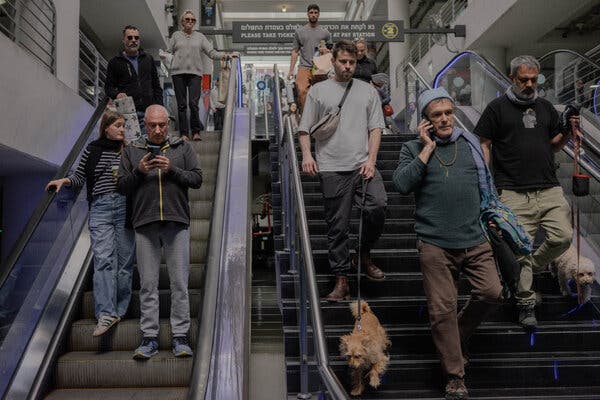
Sirens blaring across Israel have prompted citizens to seek refuge in bomb shelters and fortified rooms as Iranian missile strikes target the region. The recent attacks have drawn attention to a significant shortage of protected spaces in a country that has been preparing for potential conflict with Iran for decades. A report released in January by Israel’s state comptroller reveals that over three million people live in areas lacking “standard protection,” highlighting the vulnerability of nearly a third of the nation’s population.
The situation is particularly alarming in Arab communities, where the availability of public shelters is severely limited. According to the state comptroller’s report, only 37 out of 11,775 public shelters are located in Arab municipalities, and eight of those are deemed unfit for use. “People are facing real danger,” stated Atiya al-Asam, an activist leader in the Bedouin community in southern Israel. “They’re terrified.”
Many Bedouin communities have long suffered from inadequate infrastructure, including a lack of shelters, running water, sewage systems, electricity, and even basic road access. This systemic neglect has exacerbated their vulnerability during times of conflict.
The urgency of the situation became evident during the Israel-Iran war in June 2025, when 32 individuals were killed and thousands were injured, as reported by the Israeli government. Officials noted that the shelters and fortified rooms played a crucial role in saving lives during the conflict.
In response to the growing threats, the Israeli military’s Homefront Command has been engaging in discussions to increase the number of protected spaces available. Two Israeli security officials, speaking on condition of anonymity, confirmed that efforts are underway to work with municipalities to enhance existing facilities. Despite these initiatives, the state comptroller’s report indicates that more than six million people still have access to public and private shelters, as well as fortified rooms.
In Tel Aviv, one of Israel’s largest and most affluent cities, municipal officials express confidence in the adequacy of shelter provisions. “We can always have more,” said Eyal Kedar, an official involved in emergency response efforts. “But in terms of numbers, there’s enough for more than those living here.”
As tensions with Iran continue, the spotlight remains on Israel’s infrastructure and the urgent need for improved safety measures. The ongoing shortage of protected spaces raises concerns about the nation’s preparedness for future conflicts, particularly in underserved communities where access to basic services remains a critical issue.

Urgent Swatting Incident Ties Up Emergency Resources in Alabama

Urgent Tax Alert: Claim Your Deductions Before April 15!

Scientists Investigate Cosmic Defects: Where Are They Now?

Spring Bocce Leagues Open Registration in Rapid City

CALV Offers Essential Communication Class for Real Estate Pros

Samsung Galaxy Watch 9 Set for Larger 435mAh Battery Upgrade

Healthy Choice Wellness Reports Earnings, Stock Sees Uptick

Prince Harry Claims to Be ‘Antidote to Andrew’ Amid Royal Crisis

Pet Owners Weigh Kibble Against Fresh Dog Food Options

ALMA Discovers Companion Orbiting Giant Star π 1 Gruis

U.S. Visa Rescheduling Hits H‐1B Applicants as New Vetting Rules Take Effect

University of Hawaiʻi Joins $25.6M AI Project for Disaster Monitoring

F-22 Raptor vs. Su-57 Felon: A 2025 Fighter Jet Comparison

Recent Divorce Judgments from Iberia Parish Court Records

Urgent: Flight Cancellations Loom at Texas Airports Amid Shutdown

Ohio State Study Uncovers Brain Connectivity and Function Links

Frank Dunn, Esteemed Builder and Community Leader, Passes Away at 89

Appian Recognizes 2025 Partner Award Winners for Enterprise Innovation
-
 Science9 months ago
ALMA Discovers Companion Orbiting Giant Star π 1 Gruis
-
 Politics7 months ago
U.S. Visa Rescheduling Hits H‐1B Applicants as New Vetting Rules Take Effect
-
Science10 months ago
University of Hawaiʻi Joins $25.6M AI Project for Disaster Monitoring
-
 World10 months ago
F-22 Raptor vs. Su-57 Felon: A 2025 Fighter Jet Comparison
-
 Politics9 months ago
Recent Divorce Judgments from Iberia Parish Court Records
-
 Top Stories10 months ago
Urgent: Flight Cancellations Loom at Texas Airports Amid Shutdown
-
 Science10 months ago
Ohio State Study Uncovers Brain Connectivity and Function Links
-
 Lifestyle10 months ago
Frank Dunn, Esteemed Builder and Community Leader, Passes Away at 89
-
 Business9 months ago
Appian Recognizes 2025 Partner Award Winners for Enterprise Innovation
-

 World10 months ago
Prince Andrew Faces Fallout from Scandals and Allegations
-

 Entertainment8 months ago
Malachi Barton Tops Google Searches as Disney’s Rising Star of 2025
-

 Top Stories9 months ago
Republican Matt Van Epps Wins Tennessee Special Election