
World
Immigrants Struggle to Recover Lost Belongings Post-Detention

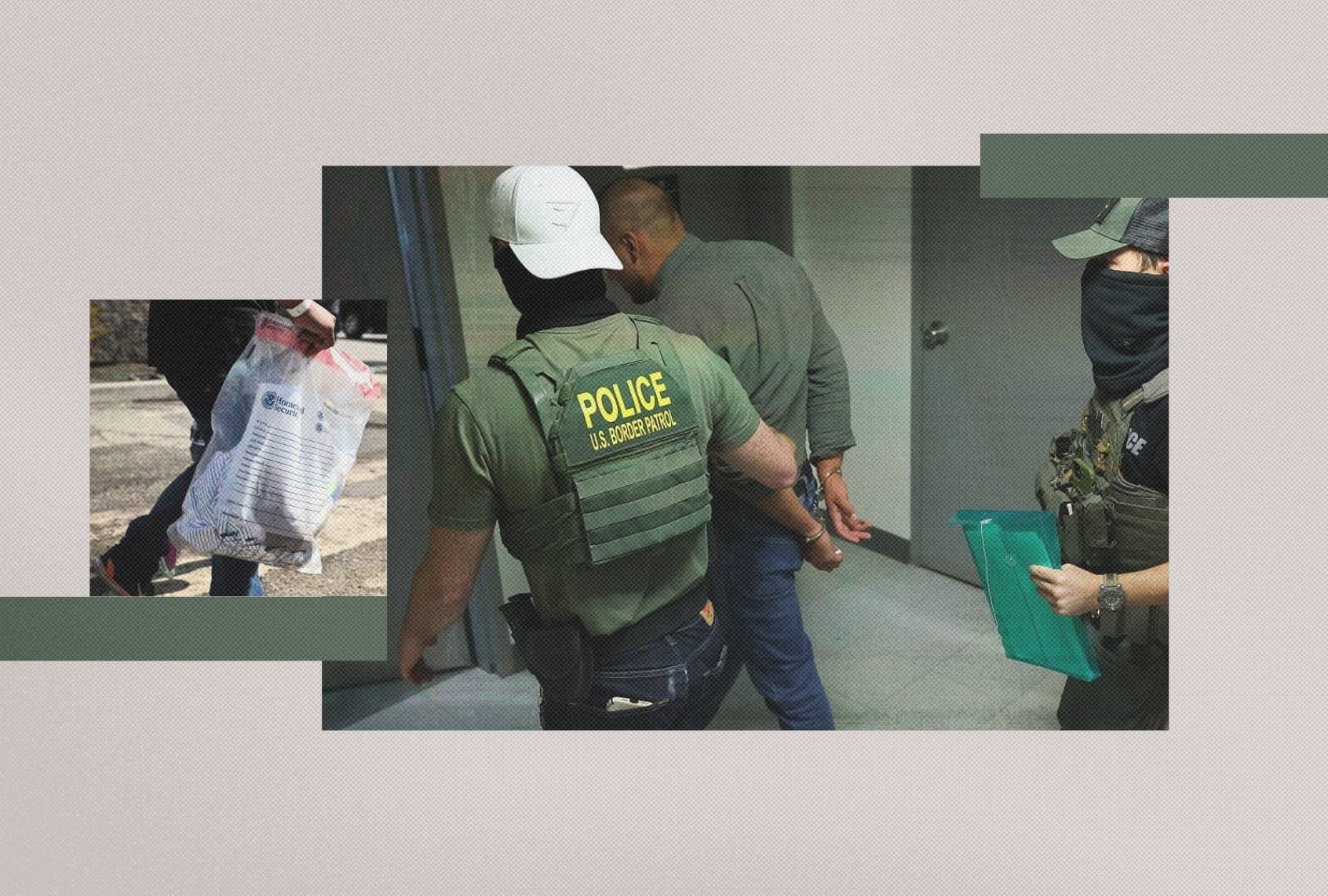
Many immigrants released from detention by Immigration and Customs Enforcement (ICE) or Border Patrol face ongoing challenges as their personal belongings go missing. Once detained, items such as government documents, medical devices, and personal effects are often confiscated, leaving individuals without essential identification and vulnerable to further legal issues.
Lawyers and former detainees report a troubling pattern in which ICE and Border Patrol officers neither acknowledge the loss of these items nor provide satisfactory explanations. According to attorney Mo Goldman, who works with clients in Arizona, the mishandling of belongings has been a longstanding issue that has worsened with recent mass arrests. “The more recent mass arrests have amplified it,” Goldman noted, suggesting that both negligence and possible intentionality could be at play.
For immigrants, the loss of identification is particularly concerning. Federal law mandates that non-citizens carry proof of their lawful status. Without this documentation, individuals can find themselves at a heightened risk for re-arrest. In a troubling example, a recent federal class action lawsuit highlighted the plight of refugees in Minnesota who were arrested and subsequently released in Texas without any means to return home.
The lack of clarity surrounding the handling of personal items has led to a frustrating and often perilous situation. Immigrants may be detained in one state, processed in another, and then transported to a facility far from where they were originally arrested. This convoluted process raises the likelihood that belongings will be lost, discarded, or left behind.
The Department of Homeland Security (DHS) has not responded to inquiries regarding the alleged mishandling of personal property. The last publicly available guidance on the storage of confiscated items dates back to 2011, suggesting that practices may not have evolved alongside the current challenges faced by detainees.
One immigrant, who entered the United States seeking political asylum in 2021, recounted a distressing experience after being detained from August 2025 to February 2026. After officers confiscated his social security card, work permit, and driver’s license, he was told that these items had been lost. His release came with no documentation, leaving him unable to work or navigate daily life without fear of re-arrest.
“I gave them my social security card, work permit, and driver’s license, and they never returned it to me,” he explained. “When I was released, they said, no, we don’t have anything of yours.” It took the intervention of his cousin, who engaged a lawyer, before he finally received his documents.
The implications of losing personal belongings extend beyond inconvenience. For many, the inability to prove their legal status can lead to increased anxiety and financial hardship. Without their identification, individuals face hurdles in obtaining new work permits or even basic necessities. The process of obtaining replacement documents is costly and time-consuming, often involving fees that can reach hundreds of dollars.
In some instances, attorneys have taken legal action against ICE for the unreturned belongings of their clients. Yet, even when courts have ruled in favor of immigrants, compliance from the government has been inconsistent. “One of my clients was trying to get his car back, and that was costing around $4,000 because there’s a $1,200 impound fee plus $600 per day that they held it,” Goldman added, illustrating the financial burden placed on those affected.
As lawyers like Delia Salvatierra point out, the challenges associated with retrieving personal belongings can detract from their primary mission of securing the release of detained immigrants. “If they’re being released in the United States, and the court order determined that their detention was unlawful, it would behoove the government to return them to the status that they had at the time prior to being arrested,” Salvatierra noted.
The situation underscores a pressing need for reform regarding how federal agencies handle the personal belongings of detainees. As immigration attorneys continue to advocate for their clients, the stories of lost items and the adverse effects on individuals’ lives reveal a systemic issue that has yet to be adequately addressed. For many immigrants, the journey to reclaim not only their freedom but also their personal effects is fraught with legal and emotional challenges.

Urgent Swatting Incident Ties Up Emergency Resources in Alabama

Urgent Tax Alert: Claim Your Deductions Before April 15!

Scientists Investigate Cosmic Defects: Where Are They Now?

Spring Bocce Leagues Open Registration in Rapid City

CALV Offers Essential Communication Class for Real Estate Pros

Samsung Galaxy Watch 9 Set for Larger 435mAh Battery Upgrade

Healthy Choice Wellness Reports Earnings, Stock Sees Uptick

Prince Harry Claims to Be ‘Antidote to Andrew’ Amid Royal Crisis

Pet Owners Weigh Kibble Against Fresh Dog Food Options

ALMA Discovers Companion Orbiting Giant Star π 1 Gruis

U.S. Visa Rescheduling Hits H‐1B Applicants as New Vetting Rules Take Effect

University of Hawaiʻi Joins $25.6M AI Project for Disaster Monitoring

F-22 Raptor vs. Su-57 Felon: A 2025 Fighter Jet Comparison

Recent Divorce Judgments from Iberia Parish Court Records

Urgent: Flight Cancellations Loom at Texas Airports Amid Shutdown

Ohio State Study Uncovers Brain Connectivity and Function Links

Frank Dunn, Esteemed Builder and Community Leader, Passes Away at 89

Appian Recognizes 2025 Partner Award Winners for Enterprise Innovation
-
 Science9 months ago
ALMA Discovers Companion Orbiting Giant Star π 1 Gruis
-
 Politics7 months ago
U.S. Visa Rescheduling Hits H‐1B Applicants as New Vetting Rules Take Effect
-
Science10 months ago
University of Hawaiʻi Joins $25.6M AI Project for Disaster Monitoring
-
 World10 months ago
F-22 Raptor vs. Su-57 Felon: A 2025 Fighter Jet Comparison
-
 Politics9 months ago
Recent Divorce Judgments from Iberia Parish Court Records
-
 Top Stories10 months ago
Urgent: Flight Cancellations Loom at Texas Airports Amid Shutdown
-
 Science10 months ago
Ohio State Study Uncovers Brain Connectivity and Function Links
-
 Lifestyle10 months ago
Frank Dunn, Esteemed Builder and Community Leader, Passes Away at 89
-
 Business9 months ago
Appian Recognizes 2025 Partner Award Winners for Enterprise Innovation
-

 World10 months ago
Prince Andrew Faces Fallout from Scandals and Allegations
-

 Entertainment8 months ago
Malachi Barton Tops Google Searches as Disney’s Rising Star of 2025
-

 Top Stories9 months ago
Republican Matt Van Epps Wins Tennessee Special Election