
World
American Airlines Celebrates 100 Years of Aviation Excellence

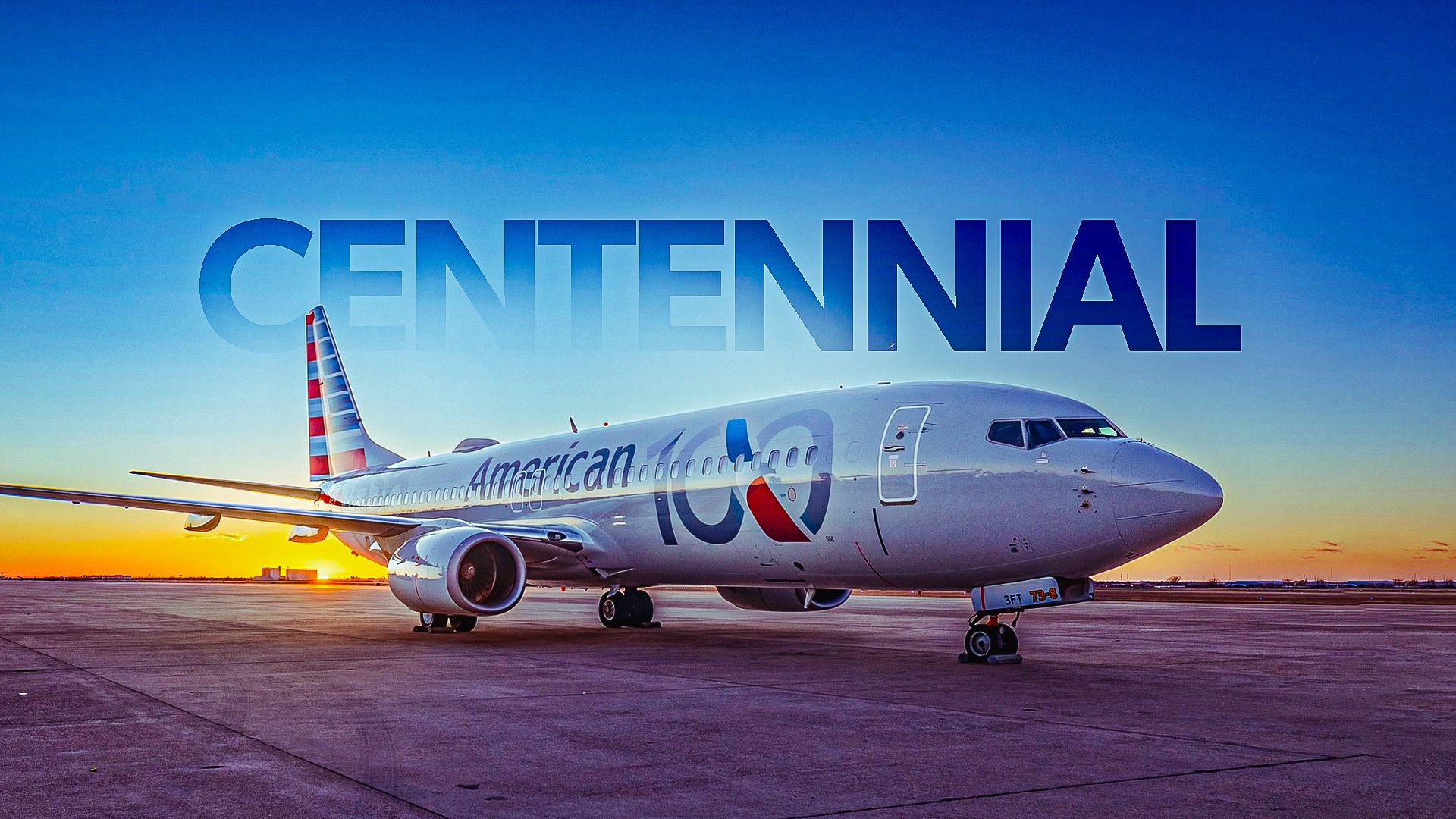
American Airlines, headquartered in Fort Worth, marks its centennial this year, celebrating a legacy as one of the world’s largest airlines by various metrics, including flights and passengers carried. Since its foundation, the airline has undergone significant transformations, evolving from early aviation to a pivotal player during the jet age. It has consistently represented American freedom, particularly during global crises, and remains a major link between the United States and Latin America, with its hub at Miami International Airport (MIA) standing as a testament to its operational strength.
The Origins and Development of American Airlines
American Airlines originated from a 1930 consolidation of numerous small carriers under the name American Airways, led by industry pioneer C.R. Smith. The airline rapidly expanded by standardizing operations and aircraft, notably introducing the Douglas DC-3, which enabled a coast-to-coast network. By focusing on reliability and scheduling, American Airlines established itself as a preferred choice for business travelers. The post-World War II era marked a period of growth, with the introduction of the Boeing 707 and 727 models, positioning the airline as a significant trunk carrier.
A major shift occurred following the deregulation of the airline industry in the United States in 1978. American Airlines capitalized on this change by enhancing its hub operations, particularly at Dallas/Fort Worth International Airport (DFW). The implementation of the Sabre reservations system and innovative yield management tactics allowed the airline to optimize pricing strategies and maintain market share. The introduction of the AAdvantage frequent-flyer program in 1981 further solidified customer loyalty and established a foundation for strategic partnerships, culminating in the formation of the oneworld alliance in 1999.
The 2000s presented challenges, including rising fuel costs and competition from low-cost carriers, leading to American Airlines filing for bankruptcy in 2011. However, the merger with US Airways in 2013 resulted in the creation of the American Airlines Group, marking a new chapter in the airline’s history as it solidified its status as a consolidated powerhouse.
A Century of Innovation and Adaptation
The airline’s early years laid the groundwork for its future, focusing on reliability and standardization as key components of its brand identity. American Airlines traces its beginnings to April 15, 1926, when Charles A. Lindbergh flew mail between Chicago and St. Louis. This focus on punctuality and disciplined routing established the procedural framework essential for scaling passenger services. By 1936, American Airlines became the first to operate the Douglas DC-3 in commercial service, significantly enhancing the viability of scheduled passenger air travel.
Throughout the post-war years, American Airlines transitioned from proving the commercial feasibility of aviation to establishing it as a mainstream industry. In 1944, it launched the world’s first scheduled air cargo service from LaGuardia Airport (LGA), and by 1945, it began transatlantic operations through its subsidiary American Overseas Airlines. The airline also invested in infrastructure, establishing a maintenance base in Tulsa in 1946, further ensuring reliability and cost-effectiveness.
The 1950s were marked by significant advancements, including the introduction of nonstop transcontinental flights and the opening of a dedicated flight-attendant training facility in Fort Worth. The entry into the jet age was solidified with the launch of scheduled transcontinental passenger services using the Boeing 707 in 1959.
In the 1960s and 1970s, American Airlines focused on enhancing the jet-age flying experience while modernizing operations. The airline’s commitment to diversity was highlighted by the hiring of David Harris, often recognized as the first black commercial pilot in the United States in 1964. This period also saw the full operational launch of the Sabre system, which revolutionized seat inventory management on a national scale.
The introduction of SuperSaver fares in 1977 segmented price-sensitive leisure travelers from business customers, setting the stage for competition in the deregulated environment that followed. American Airlines entered the 1980s well-prepared, leveraging its loyalty programs and technological advancements to enhance customer retention and expand its network.
In the 1980s and 1990s, American Airlines continued to expand its reach by launching American Eagle in 1984, connecting smaller markets to larger hubs. The airline celebrated its billionth customer in 1991 and transitioned all flights to nonsmoking by 1997. The establishment of the oneworld alliance in 1999 exemplified the airline’s strategy of building a global network through partnerships.
Today, American Airlines stands as the largest airline in the United States by passenger volume and flights. As it approaches its centennial anniversary, the airline is focusing on enhancing its premium offerings while optimizing its operations. A notable initiative includes an expanded schedule at O’Hare International Airport (ORD) for spring 2026, which will introduce 100 additional daily departures.
American Airlines is also rolling out free high-speed Wi-Fi for AAdvantage members starting in January 2026, reflecting its commitment to improving the passenger experience. With validated emissions-reduction targets, the airline is positioning itself for a sustainable future while continuing to navigate the complexities of the aviation industry. As it celebrates this significant milestone, American Airlines stands as a testament to resilience, innovation, and a commitment to connecting people across the globe.

Urgent Swatting Incident Ties Up Emergency Resources in Alabama

Urgent Tax Alert: Claim Your Deductions Before April 15!

Scientists Investigate Cosmic Defects: Where Are They Now?

Spring Bocce Leagues Open Registration in Rapid City

CALV Offers Essential Communication Class for Real Estate Pros

Samsung Galaxy Watch 9 Set for Larger 435mAh Battery Upgrade

Healthy Choice Wellness Reports Earnings, Stock Sees Uptick

Prince Harry Claims to Be ‘Antidote to Andrew’ Amid Royal Crisis

Pet Owners Weigh Kibble Against Fresh Dog Food Options

ALMA Discovers Companion Orbiting Giant Star π 1 Gruis

U.S. Visa Rescheduling Hits H‐1B Applicants as New Vetting Rules Take Effect

University of Hawaiʻi Joins $25.6M AI Project for Disaster Monitoring

F-22 Raptor vs. Su-57 Felon: A 2025 Fighter Jet Comparison

Recent Divorce Judgments from Iberia Parish Court Records

Urgent: Flight Cancellations Loom at Texas Airports Amid Shutdown

Ohio State Study Uncovers Brain Connectivity and Function Links

Frank Dunn, Esteemed Builder and Community Leader, Passes Away at 89

Appian Recognizes 2025 Partner Award Winners for Enterprise Innovation
-
 Science9 months ago
ALMA Discovers Companion Orbiting Giant Star π 1 Gruis
-
 Politics7 months ago
U.S. Visa Rescheduling Hits H‐1B Applicants as New Vetting Rules Take Effect
-
Science10 months ago
University of Hawaiʻi Joins $25.6M AI Project for Disaster Monitoring
-
 World10 months ago
F-22 Raptor vs. Su-57 Felon: A 2025 Fighter Jet Comparison
-
 Politics9 months ago
Recent Divorce Judgments from Iberia Parish Court Records
-
 Top Stories10 months ago
Urgent: Flight Cancellations Loom at Texas Airports Amid Shutdown
-
 Science10 months ago
Ohio State Study Uncovers Brain Connectivity and Function Links
-
 Lifestyle10 months ago
Frank Dunn, Esteemed Builder and Community Leader, Passes Away at 89
-
 Business9 months ago
Appian Recognizes 2025 Partner Award Winners for Enterprise Innovation
-

 World10 months ago
Prince Andrew Faces Fallout from Scandals and Allegations
-

 Entertainment8 months ago
Malachi Barton Tops Google Searches as Disney’s Rising Star of 2025
-

 Top Stories9 months ago
Republican Matt Van Epps Wins Tennessee Special Election