
Top Stories
Supreme Court Scrutinizes Gun Rights in Urgent Legal Showdown

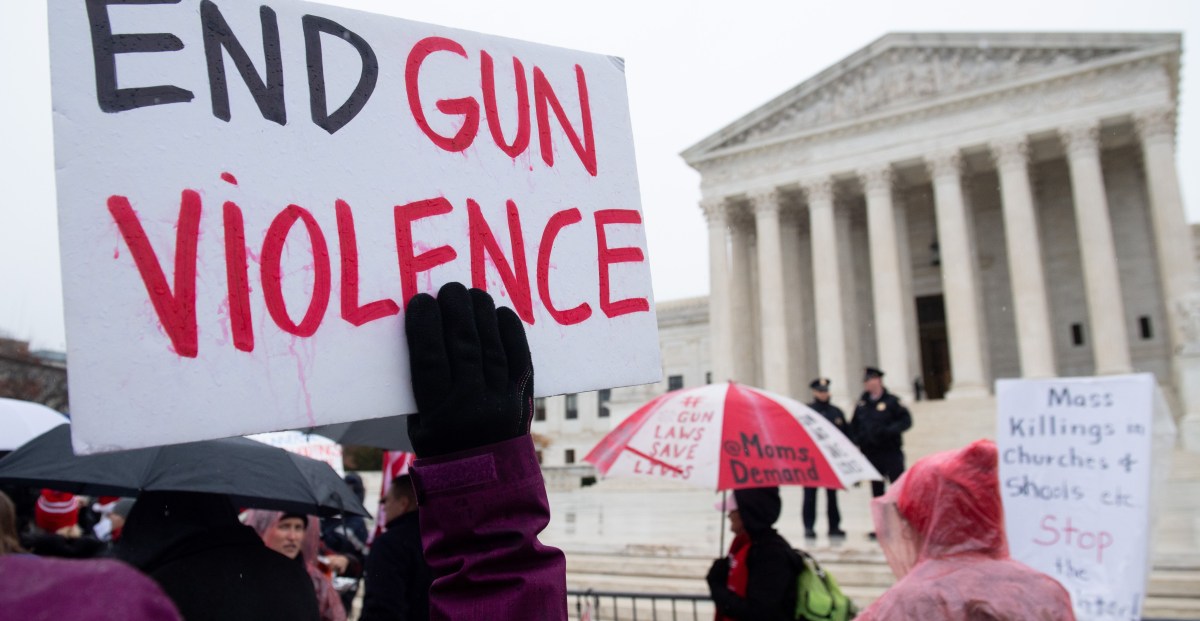
UPDATE: The Supreme Court is currently debating a pivotal challenge to gun rights, as justices examine the implications of Hawaii’s controversial gun regulation in a case known as Wolford v. Lopez. The Court convened earlier today, December 2, 2019, to address how two conflicting legal principles can coexist in Second Amendment cases.
The Republican majority justices are confronting a critical question: Can the right to bear arms be evaluated under a unique legal framework specifically for the Second Amendment, while simultaneously being treated equally with other constitutional rights? This urgent discussion comes four years after the landmark decision in New York State Rifle & Pistol Association v. Bruen, where the Court struck down a century-old New York law requiring individuals to demonstrate “proper cause” for carrying handguns in public.
Today’s arguments center on Hawaii’s law, which appears designed to circumvent the Bruen decision by mandating that gun owners obtain explicit permission from business owners before bringing firearms onto their premises. Legal experts assert that this requirement could effectively ban firearms in most public spaces, as few businesses are likely to grant such permission.
Justice Amy Coney Barrett and her colleagues are grappling with the implications of Bruen’s historical test, which mandates that any gun regulation must align with the nation’s historical tradition of firearm regulation. Critics across the political spectrum have labeled this standard as vague and challenging to apply consistently.
In a compelling argument, Hawaii’s legal team referenced historical laws, such as a 1771 New Jersey statute prohibiting gun carry without permission from landowners. This citation aims to illustrate the historical basis for Hawaii’s law, suggesting that similar regulations existed in the past without violating the Second Amendment. However, the justices appeared skeptical, with Chief Justice John Roberts questioning the application of differing standards for gun laws compared to other constitutional rights.
“If the First Amendment allows a person to knock on a private property owner’s door, why should the Second Amendment permit states to bar an individual from carrying a gun?” – Chief Justice John Roberts
The stakes are high, as a ruling against Hawaii’s law could pave the way for broader interpretations of Second Amendment rights, potentially impacting regulations nationwide. Conversely, a decision to uphold the law could reinforce state-level restrictions on firearm access, raising concerns among advocates for gun rights.
As the Court deliberates, the implications of their decision resonate across the country. Gun control supporters and firearm advocates are closely monitoring the proceedings, aware that this case could set a significant legal precedent. The justices’ apparent inclination to favor a double standard in Second Amendment cases has stirred emotions and heightened tensions surrounding the issue of gun rights.
Looking ahead, the Court’s ruling is expected to be released in the coming months. All eyes will be on how they reconcile the historical context of gun regulation with contemporary rights. Legal experts are urging citizens to stay informed as this case unfolds, as its outcome could redefine the landscape of firearm laws in the United States.
As this story develops, it remains critical for stakeholders on both sides of the gun control debate to advocate for their positions, ensuring their voices are heard in this urgent national conversation.

Urgent Swatting Incident Ties Up Emergency Resources in Alabama

Urgent Tax Alert: Claim Your Deductions Before April 15!

Scientists Investigate Cosmic Defects: Where Are They Now?

Spring Bocce Leagues Open Registration in Rapid City

CALV Offers Essential Communication Class for Real Estate Pros

Samsung Galaxy Watch 9 Set for Larger 435mAh Battery Upgrade

Healthy Choice Wellness Reports Earnings, Stock Sees Uptick

Prince Harry Claims to Be ‘Antidote to Andrew’ Amid Royal Crisis

Pet Owners Weigh Kibble Against Fresh Dog Food Options

ALMA Discovers Companion Orbiting Giant Star π 1 Gruis

U.S. Visa Rescheduling Hits H‐1B Applicants as New Vetting Rules Take Effect

University of Hawaiʻi Joins $25.6M AI Project for Disaster Monitoring

F-22 Raptor vs. Su-57 Felon: A 2025 Fighter Jet Comparison

Recent Divorce Judgments from Iberia Parish Court Records

Ohio State Study Uncovers Brain Connectivity and Function Links

Prince Andrew Faces Fallout from Scandals and Allegations

Urgent: Flight Cancellations Loom at Texas Airports Amid Shutdown

Frank Dunn, Esteemed Builder and Community Leader, Passes Away at 89
-
 Science8 months ago
ALMA Discovers Companion Orbiting Giant Star π 1 Gruis
-
 Politics6 months ago
U.S. Visa Rescheduling Hits H‐1B Applicants as New Vetting Rules Take Effect
-
Science8 months ago
University of Hawaiʻi Joins $25.6M AI Project for Disaster Monitoring
-
 World8 months ago
F-22 Raptor vs. Su-57 Felon: A 2025 Fighter Jet Comparison
-
 Politics8 months ago
Recent Divorce Judgments from Iberia Parish Court Records
-
 Science9 months ago
Ohio State Study Uncovers Brain Connectivity and Function Links
-
 World8 months ago
Prince Andrew Faces Fallout from Scandals and Allegations
-
 Top Stories8 months ago
Urgent: Flight Cancellations Loom at Texas Airports Amid Shutdown
-
 Lifestyle8 months ago
Frank Dunn, Esteemed Builder and Community Leader, Passes Away at 89
-

 Business8 months ago
Appian Recognizes 2025 Partner Award Winners for Enterprise Innovation
-

 Entertainment7 months ago
Malachi Barton Tops Google Searches as Disney’s Rising Star of 2025
-

 Top Stories7 months ago
Republican Matt Van Epps Wins Tennessee Special Election