
Science
Tiny Glass Sphere Achieves Record-Breaking Effective Temperature

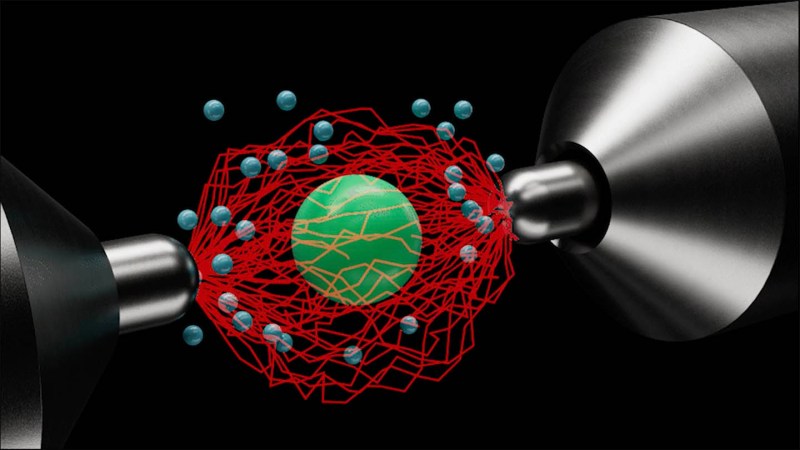
A groundbreaking experiment has unveiled a tiny glass sphere that mimics the behavior of an engine operating at extreme temperatures. Researchers have reported that this 5-micrometer-wide sphere, levitated in a near-vacuum using an electric field, reaches an effective temperature equivalent to a staggering 13 million Celsius. This temperature, nearly as hot as the core of the sun, challenges conventional definitions of an engine.
The findings, published in Physical Review Letters, indicate that despite its extreme effective temperature, touching the glass sphere would not cause burns. The temperature arises from the sphere’s overall motion rather than the kinetic energy of its individual atoms, which is how temperature is typically measured. According to James Millen, a physicist at King’s College London and coauthor of the study, “It is moving as if you had put this object into a gas that was that hot. It moves around like crazy.”
Understanding the mechanics of this tiny engine is significant for the broader field of thermodynamics, which deals with heat and energy. The sphere operates as a heat engine, a device that converts heat into mechanical work by absorbing heat from a high-temperature source and expelling waste heat to a cooler sink. The ratio of hot to cold temperatures directly influences the efficiency of such engines, and the researchers found that this micro-engine boasts a remarkable ratio of about 100, far exceeding the typical efficiency of commercial engines, which averages around 3.
Insights into Microscopic Physics
The research team observed fascinating fluctuations in the engine’s performance. Efficiency varied widely, with measurements ranging from 10 percent to an astonishing 200 percent. There were even instances where the engine appeared to cool down instead of heating up. “Thermodynamics down at the microscale is really, really weird,” Millen noted. “I really think it’s as unintuitive as something like quantum mechanics.”
This discovery holds potential implications for the understanding of biological processes at the microscopic level. The behavior of this glass sphere mirrors the dynamics of minute structures, such as proteins, which are continuously affected by random movements in their surroundings. The researchers aim to leverage this engine to study biological motors like kinesin, which transport cargo within cells.
While the glass sphere does not function as a conventional engine, Millen emphasizes its value as an experimental tool. “No one would really say, ‘Vroom vroom, that’s an engine,’” he remarked. Instead, it serves as a perfect analog for scientists to explore the principles governing tiny engines.
One intriguing aspect of the experiment involves position-dependent diffusion, a phenomenon that alters the effective temperature experienced by the particle as it moves within the electric field. This principle is crucial for understanding biological mechanisms, including protein folding, which can significantly impact cellular functions.
Future Directions in Engine Research
Uroš Delić from TU Wien, who was not involved in the research, highlighted the significance of combining extreme temperature, a large hot-to-cold temperature ratio, and position-dependent diffusion into a single experiment. “Creating an engine with a single one of these attributes would make for a nice experiment,” he stated. “This work combines all three, so that’s quite cool — or hot.”
The findings from this innovative study open avenues for further research into the behavior of engines at micro and nanoscale levels. As scientists continue to unravel these complex dynamics, a deeper understanding of thermodynamics at such small scales could eventually lead to advancements in both technology and biology, paving the way for new applications in various fields.

Urgent Swatting Incident Ties Up Emergency Resources in Alabama

Urgent Tax Alert: Claim Your Deductions Before April 15!

Scientists Investigate Cosmic Defects: Where Are They Now?

Spring Bocce Leagues Open Registration in Rapid City

CALV Offers Essential Communication Class for Real Estate Pros

Samsung Galaxy Watch 9 Set for Larger 435mAh Battery Upgrade

Healthy Choice Wellness Reports Earnings, Stock Sees Uptick

Prince Harry Claims to Be ‘Antidote to Andrew’ Amid Royal Crisis

Pet Owners Weigh Kibble Against Fresh Dog Food Options

ALMA Discovers Companion Orbiting Giant Star π 1 Gruis

U.S. Visa Rescheduling Hits H‐1B Applicants as New Vetting Rules Take Effect

University of Hawaiʻi Joins $25.6M AI Project for Disaster Monitoring

F-22 Raptor vs. Su-57 Felon: A 2025 Fighter Jet Comparison

Ohio State Study Uncovers Brain Connectivity and Function Links

Recent Divorce Judgments from Iberia Parish Court Records

Prince Andrew Faces Fallout from Scandals and Allegations

Urgent: Flight Cancellations Loom at Texas Airports Amid Shutdown

Frank Dunn, Esteemed Builder and Community Leader, Passes Away at 89
-
 Science8 months ago
ALMA Discovers Companion Orbiting Giant Star π 1 Gruis
-
 Politics6 months ago
U.S. Visa Rescheduling Hits H‐1B Applicants as New Vetting Rules Take Effect
-
Science8 months ago
University of Hawaiʻi Joins $25.6M AI Project for Disaster Monitoring
-
 World8 months ago
F-22 Raptor vs. Su-57 Felon: A 2025 Fighter Jet Comparison
-
 Science8 months ago
Ohio State Study Uncovers Brain Connectivity and Function Links
-
 Politics8 months ago
Recent Divorce Judgments from Iberia Parish Court Records
-
 World8 months ago
Prince Andrew Faces Fallout from Scandals and Allegations
-
 Top Stories8 months ago
Urgent: Flight Cancellations Loom at Texas Airports Amid Shutdown
-
 Lifestyle8 months ago
Frank Dunn, Esteemed Builder and Community Leader, Passes Away at 89
-

 Business8 months ago
Appian Recognizes 2025 Partner Award Winners for Enterprise Innovation
-

 Entertainment6 months ago
Malachi Barton Tops Google Searches as Disney’s Rising Star of 2025
-

 Science9 months ago
Innovator Captures Light at 2 Billion Frames Per Second