
Science
Scientists Explore Pretend Play in Apes with Imaginary Juice Experiment

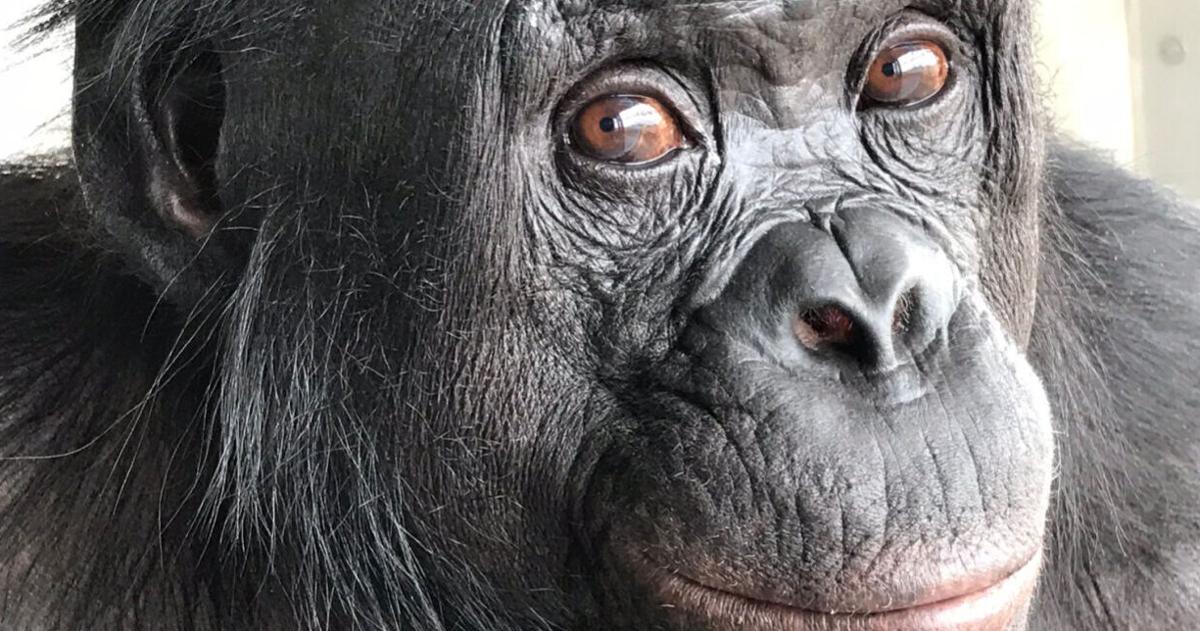
Research conducted by a team from the University of Georgia has revealed fascinating insights into the cognitive abilities of apes, specifically their capacity for pretend play. The study, published in the Journal of Cognitive Science, utilized a novel approach by introducing a concept of “imaginary juice” to determine whether apes can engage in imaginative play similar to human children.
The study’s lead author, Dr. Sarah-Elizabeth Byosiere, and her team designed an experiment with two groups of apes. The first group was shown a container filled with juice, while the second group was given an empty container, representing the concept of pretend play. The researchers observed how the apes interacted with the containers, noting behaviors that suggested an understanding of imagination.
At just two years of age, many human children begin to engage in pretend play, transforming their surroundings into worlds of fantasy. This study aimed to investigate whether similar behaviors could be observed in apes. The results indicated that the apes demonstrated a form of make-believe, suggesting they possess a level of cognitive flexibility.
The implications of this research extend beyond mere curiosity. Understanding the cognitive processes behind pretend play can shed light on the evolutionary roots of human intelligence and social behavior. It highlights not only the similarities between human and ape cognition but also the potential for more complex social interactions in non-human primates.
In their observations, the researchers noted that the apes’ behaviors were not merely instinctual but involved a level of intentionality and creativity. The empty container, while devoid of juice, became a symbol of potential, which the apes interacted with in imaginative ways.
This groundbreaking research contributes to a growing body of knowledge concerning animal cognition and social development. By exploring how different species engage with their environment and each other, scientists can better understand the evolutionary significance of these behaviors.
As the study continues to garner attention, it opens up discussions about the importance of play in both human and animal development. The ability to engage in imaginative activities can foster problem-solving skills, social cohesion, and emotional resilience.
In conclusion, the findings from the University of Georgia provide valuable insights into the cognitive abilities of apes, suggesting that they may share more in common with humans than previously thought. The research not only enhances our understanding of primate behavior but also invites further exploration into the nature of play and its role in cognitive development across species.

Urgent Swatting Incident Ties Up Emergency Resources in Alabama

Urgent Tax Alert: Claim Your Deductions Before April 15!

Scientists Investigate Cosmic Defects: Where Are They Now?

Spring Bocce Leagues Open Registration in Rapid City

CALV Offers Essential Communication Class for Real Estate Pros

Samsung Galaxy Watch 9 Set for Larger 435mAh Battery Upgrade

Healthy Choice Wellness Reports Earnings, Stock Sees Uptick

Prince Harry Claims to Be ‘Antidote to Andrew’ Amid Royal Crisis

Pet Owners Weigh Kibble Against Fresh Dog Food Options

ALMA Discovers Companion Orbiting Giant Star π 1 Gruis

U.S. Visa Rescheduling Hits H‐1B Applicants as New Vetting Rules Take Effect

University of Hawaiʻi Joins $25.6M AI Project for Disaster Monitoring

F-22 Raptor vs. Su-57 Felon: A 2025 Fighter Jet Comparison

Recent Divorce Judgments from Iberia Parish Court Records

Urgent: Flight Cancellations Loom at Texas Airports Amid Shutdown

Ohio State Study Uncovers Brain Connectivity and Function Links

Frank Dunn, Esteemed Builder and Community Leader, Passes Away at 89

Appian Recognizes 2025 Partner Award Winners for Enterprise Innovation
-
 Science9 months ago
ALMA Discovers Companion Orbiting Giant Star π 1 Gruis
-
 Politics7 months ago
U.S. Visa Rescheduling Hits H‐1B Applicants as New Vetting Rules Take Effect
-
Science10 months ago
University of Hawaiʻi Joins $25.6M AI Project for Disaster Monitoring
-
 World10 months ago
F-22 Raptor vs. Su-57 Felon: A 2025 Fighter Jet Comparison
-
 Politics9 months ago
Recent Divorce Judgments from Iberia Parish Court Records
-
 Top Stories10 months ago
Urgent: Flight Cancellations Loom at Texas Airports Amid Shutdown
-
 Science10 months ago
Ohio State Study Uncovers Brain Connectivity and Function Links
-
 Lifestyle10 months ago
Frank Dunn, Esteemed Builder and Community Leader, Passes Away at 89
-
 Business9 months ago
Appian Recognizes 2025 Partner Award Winners for Enterprise Innovation
-

 World10 months ago
Prince Andrew Faces Fallout from Scandals and Allegations
-

 Entertainment8 months ago
Malachi Barton Tops Google Searches as Disney’s Rising Star of 2025
-

 Top Stories9 months ago
Republican Matt Van Epps Wins Tennessee Special Election