
Science
Researchers Unlock Genetic Potential of Sulfolobus islandicus

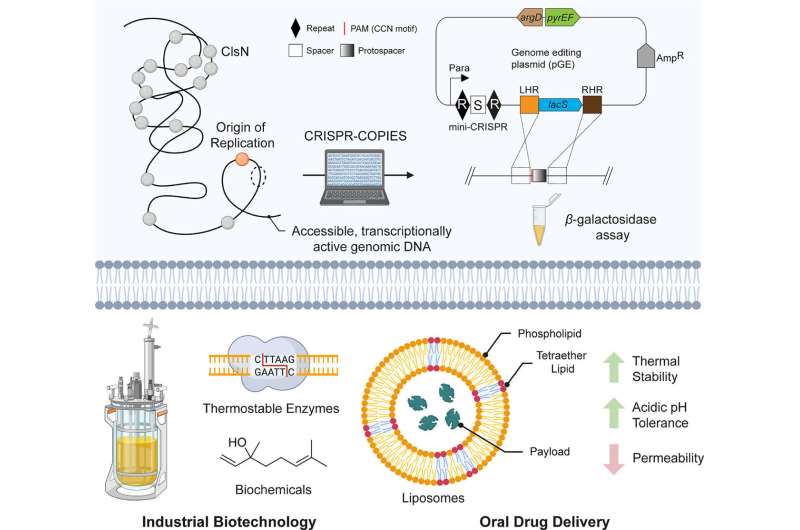
A research team at the University of Illinois at Urbana-Champaign has made significant strides in expanding the genetic toolkit of the archaeal organism Sulfolobus islandicus, enhancing its applications in drug delivery and biotechnology. The study, published in the journal Trends in Biotechnology, addresses the limitations posed by the lack of well-defined chromosomal integration sites, which have hindered the organism’s potential as a cellular factory.
The researchers utilized an innovative approach known as the CRISPR-COPIES pipeline alongside a multi-omics strategy that integrates genomics and epigenomics. This methodology guided the selection of genomic regions suitable for gene integration within Sulfolobus islandicus. By characterizing these candidate sites in vivo, the team employed the endogenous Type I-A CRISPR-Cas system and a lacS reporter system to evaluate their efficacy.
The findings revealed 66 crRNAs targeting 21 intergenic regions with potential for gene integration. Notably, the researchers functionally validated 13 crRNAs corresponding to eight sites using a β-galactosidase activity assay. This validation marks a pivotal development in the organism’s genetic engineering capabilities.
Overexpression of the gene GrsB (glycerol dibiphytanyl glycerol tetraether [GDGT] ring synthase B) at one of the identified integration sites resulted in a significant modulation of lipid ether composition, specifically increasing the number of cyclopentane moieties. This advancement not only demonstrates the viability of Sulfolobus islandicus as a platform for synthetic biology but also paves the way for robust applications in industrial biotechnology.
The implications of this research extend beyond academic curiosity. By enhancing the genetic capabilities of non-conventional hosts like Sulfolobus islandicus, the findings could lead to more efficient production systems in various biotechnology sectors.
As the field of synthetic biology continues to evolve, the contributions made by the research team at the University of Illinois at Urbana-Champaign underscore the importance of genetic tools in developing innovative biotechnological solutions. This work not only broadens the scientific understanding of archaeal organisms but also opens new avenues for their application in real-world scenarios.
For further details, refer to the study titled “Discovery, characterization, and application of chromosomal integration sites in the hyperthermophilic archaeon Sulfolobus islandicus” by Aashutosh Girish Boob and colleagues, published in Trends in Biotechnology in 2025.

Urgent Swatting Incident Ties Up Emergency Resources in Alabama

Urgent Tax Alert: Claim Your Deductions Before April 15!

Scientists Investigate Cosmic Defects: Where Are They Now?

Spring Bocce Leagues Open Registration in Rapid City

CALV Offers Essential Communication Class for Real Estate Pros

Samsung Galaxy Watch 9 Set for Larger 435mAh Battery Upgrade

Healthy Choice Wellness Reports Earnings, Stock Sees Uptick

Prince Harry Claims to Be ‘Antidote to Andrew’ Amid Royal Crisis

Pet Owners Weigh Kibble Against Fresh Dog Food Options

ALMA Discovers Companion Orbiting Giant Star π 1 Gruis

U.S. Visa Rescheduling Hits H‐1B Applicants as New Vetting Rules Take Effect

University of Hawaiʻi Joins $25.6M AI Project for Disaster Monitoring

F-22 Raptor vs. Su-57 Felon: A 2025 Fighter Jet Comparison

Recent Divorce Judgments from Iberia Parish Court Records

Urgent: Flight Cancellations Loom at Texas Airports Amid Shutdown

Ohio State Study Uncovers Brain Connectivity and Function Links

Frank Dunn, Esteemed Builder and Community Leader, Passes Away at 89

Appian Recognizes 2025 Partner Award Winners for Enterprise Innovation
-
 Science10 months ago
ALMA Discovers Companion Orbiting Giant Star π 1 Gruis
-
 Politics8 months ago
U.S. Visa Rescheduling Hits H‐1B Applicants as New Vetting Rules Take Effect
-
Science10 months ago
University of Hawaiʻi Joins $25.6M AI Project for Disaster Monitoring
-
 World10 months ago
F-22 Raptor vs. Su-57 Felon: A 2025 Fighter Jet Comparison
-
 Politics9 months ago
Recent Divorce Judgments from Iberia Parish Court Records
-
 Top Stories10 months ago
Urgent: Flight Cancellations Loom at Texas Airports Amid Shutdown
-
 Science10 months ago
Ohio State Study Uncovers Brain Connectivity and Function Links
-
 Lifestyle10 months ago
Frank Dunn, Esteemed Builder and Community Leader, Passes Away at 89
-
 Business10 months ago
Appian Recognizes 2025 Partner Award Winners for Enterprise Innovation
-

 World10 months ago
Prince Andrew Faces Fallout from Scandals and Allegations
-

 Entertainment8 months ago
Malachi Barton Tops Google Searches as Disney’s Rising Star of 2025
-

 Top Stories9 months ago
Republican Matt Van Epps Wins Tennessee Special Election