
Science
Researchers Develop Groundbreaking Coating for Ammonia-Powered Ships

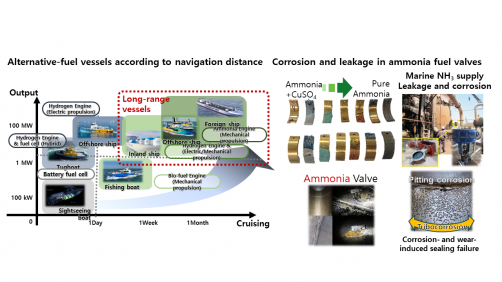
A collaborative research effort led by Dr. Young-Jun Jang and Dr. Jongkuk Kim from the Extreme Materials Research Institute, in partnership with Dr. Sungmo Moon from the Energy and Environment Materials Research Division at the Korea Institute of Materials Science (KIMS), has resulted in the development of Korea’s first high corrosion- and wear-resistant carbon coating technology. This innovation aims to address the significant corrosion and wear challenges associated with ammonia fuel, facilitating the commercialization of eco-friendly ammonia-powered ships.
Marine metallic materials, particularly conventional stainless steel such as 440C, are known to deteriorate when exposed to ammonia. The strong alkalinity and chemical reactivity of ammonia compromise the integrity of surface oxide layers, leading to localized corrosion and wear. Key components in fuel systems, including engines, valves, pumps, and bearings, have shown notable structural vulnerabilities in experimental studies. As a result, there is an urgent need for corrosion-resistant surface technologies for the design and classification certification of ammonia-powered vessels.
The newly developed carbon coating technology, referred to as ta-C:Hx, offers robust protection against corrosion and wear in ammonia environments across a range of temperatures, from cryogenic to medium- and low-temperature conditions. The technology has demonstrated remarkable effectiveness: while conventional marine materials exhibit corrosion current densities of approximately 48 μA/cm2 in ammonia solutions, the ta-C:Hx coating reduces this to just 4 μA/cm2, reflecting a significant 92% reduction. Additionally, the corrosive wear rate has decreased from 1.4 × 10⁻⁶ mm3/N·m for traditional stainless steel to 1.3 × 10⁻⁸ mm3/N·m for the new coating, achieving an impressive 99.1% reduction in tribocorrosion wear tests.
Traditional nitride coatings and wet plating layers used in marine applications are primarily optimized for environments like seawater and atmospheric conditions. However, their long-term reliability in highly alkaline and chemically reactive environments, such as those presented by ammonia fuel, remains unproven. These coatings often suffer from defects such as micropores and thickness non-uniformity, which can serve as initiation sites for corrosion in aggressive conditions.
The innovation behind the ta-C:Hx coating lies in its specialized engineering for ammonia environments. Utilizing pulsed bias control in a filtered arc deposition process, the team minimized defects, enhancing the coating’s durability. Moreover, the introduction of hydrogen during the coating process helped regulate its internal structure, creating a stable carbon framework that effectively suppresses corrosion reactions even in aqueous ammonia solutions.
The technology is currently recognized as the only domestically developed surface coating in South Korea capable of meeting the corrosion resistance requirements necessary for the design and classification certification of ammonia-powered vessels.
The International Maritime Organization (IMO) has set forth the “2023 Greenhouse Gas Reduction Strategy,” mandating that a specified fraction of fuels used in international shipping transition to zero-carbon alternatives by 2030. Furthermore, the Maritime Safety Committee has established interim guidelines for ammonia-fueled ships, necessitating the verification of corrosion resistance for metallic materials in fuel systems.
Countries such as Japan, Norway, and Singapore are actively conducting demonstration projects to assess the corrosion and wear performance of metallic components in ammonia-powered vessels. Recognizing the importance of this sector, South Korea has identified ammonia-powered ships as a strategic area for both the shipbuilding and shipping industries through initiatives like the “2050 Green Shipping National Action Plan” and the “K-Ammonia Eco-Friendly Ship Promotion Strategy.”
Despite domestic shipbuilders receiving Approval in Principle (AiP) for ammonia-powered vessel designs, the absence of locally developed surface coatings that can reliably operate in highly corrosive environments poses a significant barrier to commercialization. The research team at KIMS has built upon its expertise in carbon coating technologies and environmental corrosion evaluation to address these challenges and enhance technological competitiveness.
Dr. Young-Jun Jang, the principal researcher and lead investigator of the project, noted, “If this technology is commercialized, it will provide a practical solution for long-distance operation by significantly improving the efficiency and reliability of key components for eco-friendly shipbuilding and marine vessels.”
Co-researchers Dr. Jongkuk Kim and Dr. Sungmo Moon emphasized the collaborative nature of the project, stating, “A key feature of this work is that the technology was advanced through close collaboration among KIMS’s internal technologies and research infrastructure, rather than relying on external technology adoption. We expect this achievement to contribute not only to strengthening the domestic industrial ecosystem but also to expanding into the global market in the future.”
The research was supported by KIMS’s in-house program, “Development of Practical Tribology Technologies for Cryogenic Environments,” and by the National Research Foundation of Korea (NRF) through the Nano and Materials Technology Development Program funded by the Ministry of Science and ICT. The findings were published online on December 1, 2025, in the internationally renowned journal Carbon (Impact Factor: 11.6).
Currently, the research team is focused on process stabilization and reliability evaluations of the coating technology for ammonia fuel environments. They are also conducting follow-up demonstration studies for its application to actual ship components. Plans for additional patent filings and opportunities for technology transfer and commercialization through industry partnerships are actively being pursued.

Urgent Swatting Incident Ties Up Emergency Resources in Alabama

Urgent Tax Alert: Claim Your Deductions Before April 15!

Scientists Investigate Cosmic Defects: Where Are They Now?

Spring Bocce Leagues Open Registration in Rapid City

CALV Offers Essential Communication Class for Real Estate Pros

Samsung Galaxy Watch 9 Set for Larger 435mAh Battery Upgrade

Healthy Choice Wellness Reports Earnings, Stock Sees Uptick

Prince Harry Claims to Be ‘Antidote to Andrew’ Amid Royal Crisis

Pet Owners Weigh Kibble Against Fresh Dog Food Options

ALMA Discovers Companion Orbiting Giant Star π 1 Gruis

U.S. Visa Rescheduling Hits H‐1B Applicants as New Vetting Rules Take Effect

University of Hawaiʻi Joins $25.6M AI Project for Disaster Monitoring

F-22 Raptor vs. Su-57 Felon: A 2025 Fighter Jet Comparison

Recent Divorce Judgments from Iberia Parish Court Records

Urgent: Flight Cancellations Loom at Texas Airports Amid Shutdown

Ohio State Study Uncovers Brain Connectivity and Function Links

Frank Dunn, Esteemed Builder and Community Leader, Passes Away at 89

Appian Recognizes 2025 Partner Award Winners for Enterprise Innovation
-
 Science9 months ago
ALMA Discovers Companion Orbiting Giant Star π 1 Gruis
-
 Politics7 months ago
U.S. Visa Rescheduling Hits H‐1B Applicants as New Vetting Rules Take Effect
-
Science10 months ago
University of Hawaiʻi Joins $25.6M AI Project for Disaster Monitoring
-
 World10 months ago
F-22 Raptor vs. Su-57 Felon: A 2025 Fighter Jet Comparison
-
 Politics9 months ago
Recent Divorce Judgments from Iberia Parish Court Records
-
 Top Stories10 months ago
Urgent: Flight Cancellations Loom at Texas Airports Amid Shutdown
-
 Science10 months ago
Ohio State Study Uncovers Brain Connectivity and Function Links
-
 Lifestyle10 months ago
Frank Dunn, Esteemed Builder and Community Leader, Passes Away at 89
-
 Business9 months ago
Appian Recognizes 2025 Partner Award Winners for Enterprise Innovation
-

 World10 months ago
Prince Andrew Faces Fallout from Scandals and Allegations
-

 Entertainment8 months ago
Malachi Barton Tops Google Searches as Disney’s Rising Star of 2025
-

 Top Stories9 months ago
Republican Matt Van Epps Wins Tennessee Special Election