
Science
Northwestern Team Develops Innovative Device for Fetal Surgery Monitoring

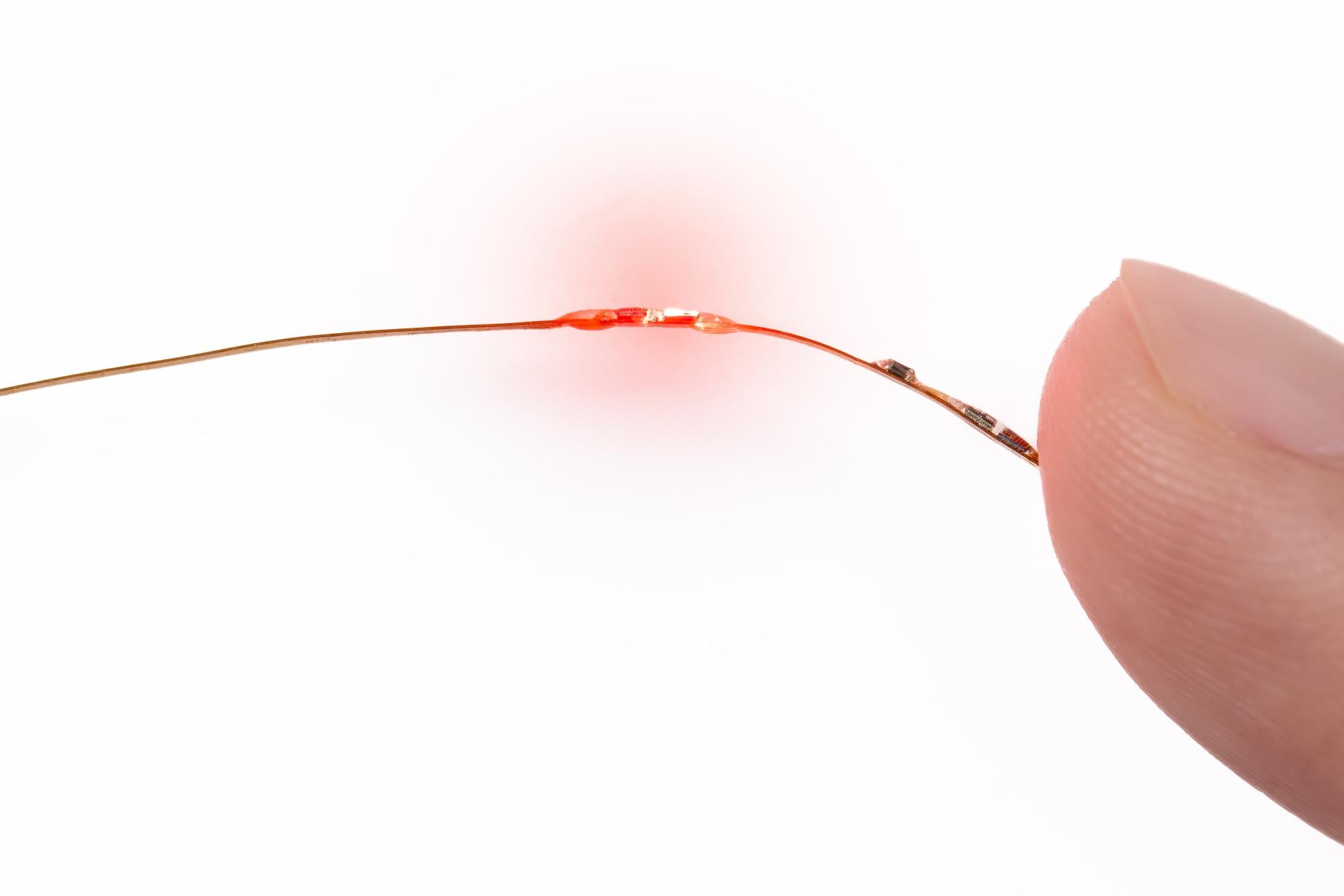
Researchers from Northwestern University have developed a groundbreaking hair-thin device designed to monitor the vital signs of fetuses during surgery. This innovative tool is the result of a collaborative effort with the Ann & Robert H. Lurie Children’s Hospital in Chicago, and details of the study were published in the Nature Biomedical Engineering journal on January 26, 2024.
The newly created device measures key indicators such as heart rate, temperature, blood oxygen levels, and heart rate variability. It is designed to be inserted through small ports in the body that are used during fetal surgery. John Rogers, a professor at McCormick School of Engineering and director of the Querrey Simpson Institute for Bioelectronics, emphasized the absence of continuous monitoring options for fetuses during surgical procedures, in contrast to what is available for adults or infants.
Rogers explained, “You’d like to be able to track the patient’s status throughout the surgery, so that you could detect any kind of adverse effect as soon as possible, so that the surgeon could take corrective action.” He highlighted the device’s use of “extremely miniaturized” sensors, which feature small balloons that help navigate through the body and maintain contact with the fetus.
The need for such a device arises from the limitations of current monitoring methods. Steven Papastefan, a general surgery resident at Northwestern Medicine and co-author of the study, noted that fetal surgeries are rare but can be crucial in certain circumstances. He pointed out that the existing method, transuterine echocardiography, can only assess fetal heart rates every ten minutes. This delay can be problematic during surgery, as it limits the ability to respond to changes in the fetus’s condition.
“This device allows us to continuously monitor the fetus throughout the operation so that we know on a second-by-second basis how it’s doing,” Papastefan stated, underscoring the importance of real-time data to ensure the health of the fetus during delicate procedures.
Many fetal surgeries aim to prevent irreversible damage that could occur during growth, with examples like twin-twin transfusion syndrome and spina bifida. According to Aimen Shaaban, the director of the Chicago Institute for Fetal Health at Lurie Children’s Hospital, spina bifida can lead to severe neurological issues, including paralysis. Closing the spinal opening before birth can significantly reduce the risk of complications.
Shaaban remarked, “The baby can have stronger legs and potentially avoid the severity of hydrocephalus. So those are real benefits to the baby, but they require an operation on the mom in order to do it.” He characterized the development of the device as a result of “good old-fashioned collaboration” between his team and that of Rogers.
The device’s testing process included surgeries on lamb fetuses, where spina bifida was artificially created and then repaired using the device. While human trials have not yet been conducted, Rogers anticipates that the first tests could begin two to three years after the necessary FDA approval process is completed.
Fetal surgeries at Lurie Children’s Hospital occur once or twice a week, and the introduction of this device promises to enhance surgical outcomes. Shaaban expressed optimism about the device’s potential impact, stating, “It’s really going to change the way we care for the patients and give us just a greater insight into what we’re actually doing.” The continuous stream of data will enable surgeons to make informed decisions, ultimately improving care for vulnerable patients.

Urgent Swatting Incident Ties Up Emergency Resources in Alabama

Urgent Tax Alert: Claim Your Deductions Before April 15!

Scientists Investigate Cosmic Defects: Where Are They Now?

Spring Bocce Leagues Open Registration in Rapid City

CALV Offers Essential Communication Class for Real Estate Pros

Samsung Galaxy Watch 9 Set for Larger 435mAh Battery Upgrade

Healthy Choice Wellness Reports Earnings, Stock Sees Uptick

Prince Harry Claims to Be ‘Antidote to Andrew’ Amid Royal Crisis

Pet Owners Weigh Kibble Against Fresh Dog Food Options

ALMA Discovers Companion Orbiting Giant Star π 1 Gruis

U.S. Visa Rescheduling Hits H‐1B Applicants as New Vetting Rules Take Effect

University of Hawaiʻi Joins $25.6M AI Project for Disaster Monitoring

F-22 Raptor vs. Su-57 Felon: A 2025 Fighter Jet Comparison

Recent Divorce Judgments from Iberia Parish Court Records

Urgent: Flight Cancellations Loom at Texas Airports Amid Shutdown

Ohio State Study Uncovers Brain Connectivity and Function Links

Frank Dunn, Esteemed Builder and Community Leader, Passes Away at 89

Appian Recognizes 2025 Partner Award Winners for Enterprise Innovation
-
 Science9 months ago
ALMA Discovers Companion Orbiting Giant Star π 1 Gruis
-
 Politics7 months ago
U.S. Visa Rescheduling Hits H‐1B Applicants as New Vetting Rules Take Effect
-
Science10 months ago
University of Hawaiʻi Joins $25.6M AI Project for Disaster Monitoring
-
 World10 months ago
F-22 Raptor vs. Su-57 Felon: A 2025 Fighter Jet Comparison
-
 Politics9 months ago
Recent Divorce Judgments from Iberia Parish Court Records
-
 Top Stories10 months ago
Urgent: Flight Cancellations Loom at Texas Airports Amid Shutdown
-
 Science10 months ago
Ohio State Study Uncovers Brain Connectivity and Function Links
-
 Lifestyle10 months ago
Frank Dunn, Esteemed Builder and Community Leader, Passes Away at 89
-
 Business9 months ago
Appian Recognizes 2025 Partner Award Winners for Enterprise Innovation
-

 World10 months ago
Prince Andrew Faces Fallout from Scandals and Allegations
-

 Entertainment8 months ago
Malachi Barton Tops Google Searches as Disney’s Rising Star of 2025
-

 Top Stories9 months ago
Republican Matt Van Epps Wins Tennessee Special Election