
Science
New Study Warns of Potential Meteor Risks from Taurids in 2032, 2036

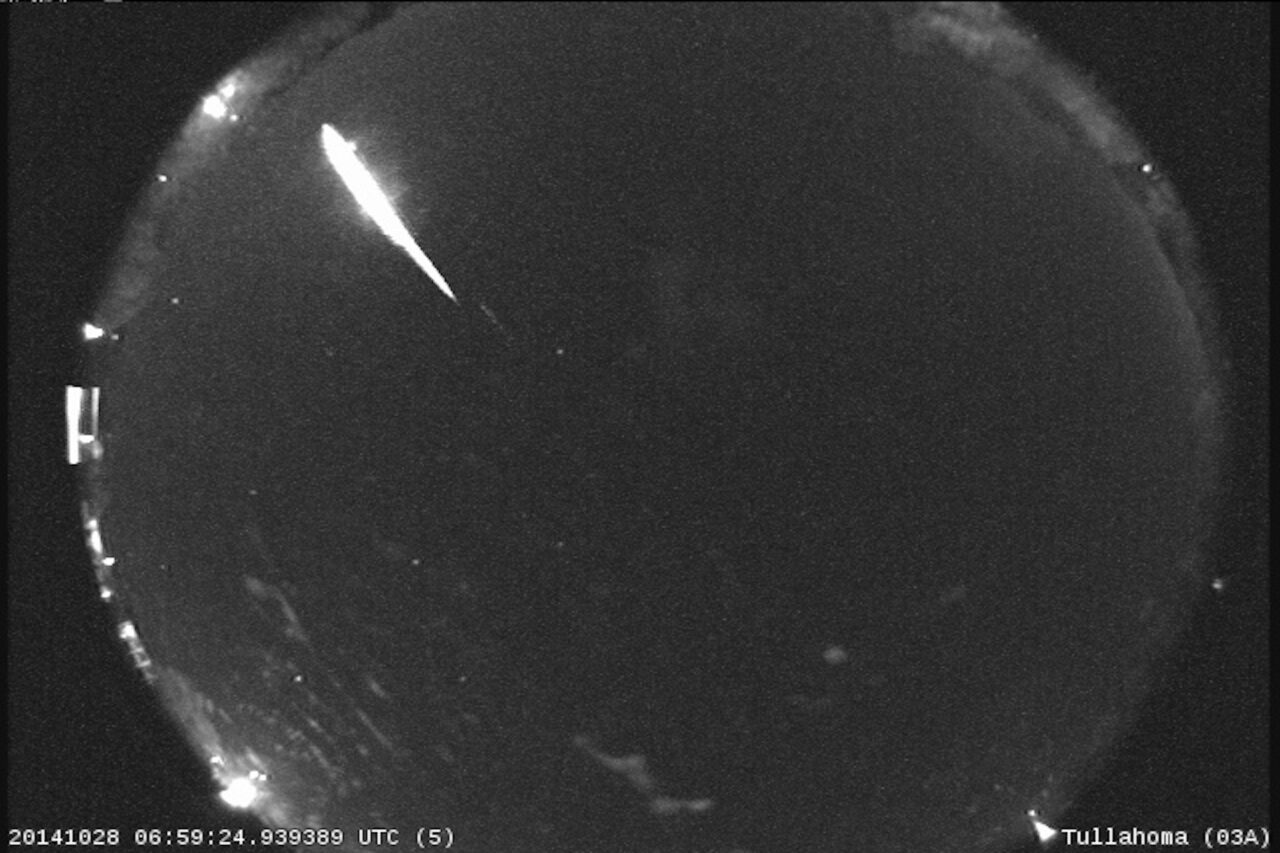
Each autumn, Earth traverses the debris trail left by Comet Encke, resulting in the captivating phenomenon known as the Taurid meteor shower. As the planet encounters fragments from this comet, it often witnesses vibrant fireballs illuminating the night sky. However, a recent study published in Acta Astronautica raises concerns about the potential hazards posed by larger fragments during future meteor showers, particularly in 2032 and 2036.
During its journey around the Sun, Comet Encke sheds rocky and dusty debris, which Earth intersects twice a year. The annual Taurid meteor shower peaks from late October to early November, appearing to radiate from the Taurus constellation. Typically, this shower features a mix of small and larger fragments, leading to spectacular displays. However, every three to seven years, Earth encounters denser clumps of debris, increasing the visibility of these fireballs.
Researchers aimed to assess the risks associated with larger meteors from the Taurid stream. Utilizing observational data and planetary defense modeling, the team found that the risk of air-burst sized Near-Earth Objects (NEOs) is greater than initially believed. These NEOs, while small enough to explode in the atmosphere, can still cause significant damage.
The study highlights the possibility of a Taurid resonant swarm—a theoretical cluster of debris influenced by the gravitational pull of Jupiter. The Taurid stream orbits the Sun seven times for every two orbits of Jupiter, which can lead to the accumulation of debris due to the planet’s massive size.
Mark Boslough, a researcher at the University of New Mexico and lead author of the study, stated, “The resonant swarm is theoretical, but there is some evidence that a sparse swarm of small objects exists because bright fireballs and seismic signatures of impacts on the moon have been observed at times that the theory has predicted.” This suggests that if a resonant swarm does indeed exist, it could closely approach Earth in 2032 and 2036, increasing the risk of impacts.
Looking ahead, Boslough emphasized the need for preparedness: “We have enough time to observe these dense clusters and come up with ways to mitigate the damage from a potential strike.” He pointed out that existing telescopes could be used for targeted sky surveys during the critical years, which would enable scientists to identify these objects with ample warning.
Despite the heightened risk, Boslough reassured that the average probability of a significant impact remains extremely low. He noted, “Even an enhanced risk means that the probability would still be low. The swarm will come from the direction of the Sun in 2036, so fireballs will not be seen in our blue skies unless they are extremely bright.”
As the scientific community continues to monitor the Taurid meteor shower and its associated risks, this study serves as a reminder of the importance of planetary defense strategies and ongoing observation efforts to ensure the safety of our planet.

Urgent Swatting Incident Ties Up Emergency Resources in Alabama

Urgent Tax Alert: Claim Your Deductions Before April 15!

Scientists Investigate Cosmic Defects: Where Are They Now?

Spring Bocce Leagues Open Registration in Rapid City

CALV Offers Essential Communication Class for Real Estate Pros

Samsung Galaxy Watch 9 Set for Larger 435mAh Battery Upgrade

Healthy Choice Wellness Reports Earnings, Stock Sees Uptick

Prince Harry Claims to Be ‘Antidote to Andrew’ Amid Royal Crisis

Pet Owners Weigh Kibble Against Fresh Dog Food Options

ALMA Discovers Companion Orbiting Giant Star π 1 Gruis

U.S. Visa Rescheduling Hits H‐1B Applicants as New Vetting Rules Take Effect

University of Hawaiʻi Joins $25.6M AI Project for Disaster Monitoring

F-22 Raptor vs. Su-57 Felon: A 2025 Fighter Jet Comparison

Ohio State Study Uncovers Brain Connectivity and Function Links

Recent Divorce Judgments from Iberia Parish Court Records

Prince Andrew Faces Fallout from Scandals and Allegations

Urgent: Flight Cancellations Loom at Texas Airports Amid Shutdown

Frank Dunn, Esteemed Builder and Community Leader, Passes Away at 89
-
 Science8 months ago
ALMA Discovers Companion Orbiting Giant Star π 1 Gruis
-
 Politics6 months ago
U.S. Visa Rescheduling Hits H‐1B Applicants as New Vetting Rules Take Effect
-
Science8 months ago
University of Hawaiʻi Joins $25.6M AI Project for Disaster Monitoring
-
 World8 months ago
F-22 Raptor vs. Su-57 Felon: A 2025 Fighter Jet Comparison
-
 Science8 months ago
Ohio State Study Uncovers Brain Connectivity and Function Links
-
 Politics8 months ago
Recent Divorce Judgments from Iberia Parish Court Records
-
 World8 months ago
Prince Andrew Faces Fallout from Scandals and Allegations
-
 Top Stories8 months ago
Urgent: Flight Cancellations Loom at Texas Airports Amid Shutdown
-
 Lifestyle8 months ago
Frank Dunn, Esteemed Builder and Community Leader, Passes Away at 89
-

 Business8 months ago
Appian Recognizes 2025 Partner Award Winners for Enterprise Innovation
-

 Entertainment6 months ago
Malachi Barton Tops Google Searches as Disney’s Rising Star of 2025
-

 Science9 months ago
Innovator Captures Light at 2 Billion Frames Per Second