
Science
New Research Reveals Dual Role of p53 in Blood Vessel Growth

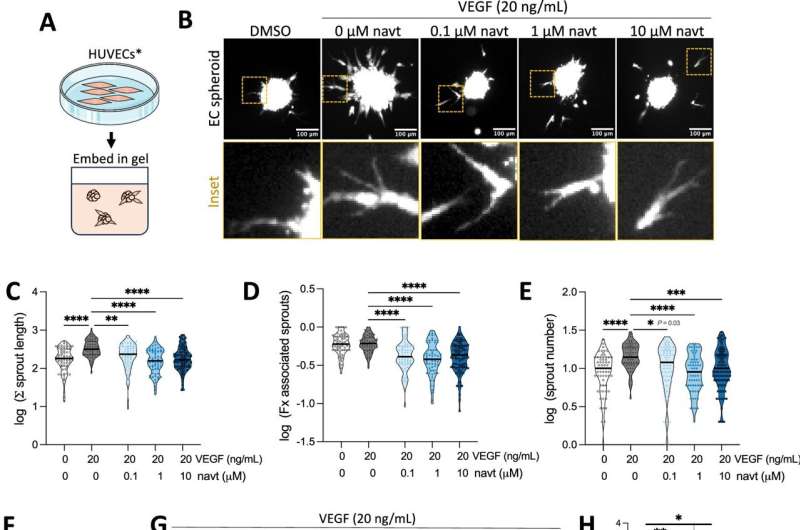
A recent study from researchers at Karolinska Institutet has illuminated the complex role of the protein p53, commonly known as the “guardian of the genome,” in regulating blood vessel growth. The findings, published in the journal Cell Death & Disease on January 2, 2026, highlight how varying levels of p53 can both inhibit and damage blood vessels, contributing to significant implications for cancer and eye diseases.
The research team, led by Pavitra Kannan from the Department of Microbiology, Tumor and Cell Biology, investigated the protein’s dual effects by manipulating p53 levels using a novel class of compounds. They employed advanced imaging techniques to observe the responses of healthy blood vessel cells during the process of angiogenesis, the formation of new blood vessels.
Understanding the Mechanisms of p53
The formation of new blood vessels is a highly coordinated process involving specialized cells located in the vessel walls. These cells divide, migrate, and assemble to create new vascular structures. In pathological conditions such as cancer and certain eye diseases, this process can become unregulated, leading to excessive vessel growth that may exacerbate the underlying condition.
One of the key findings from this research was the sensitivity of blood vessel cells to even minimal levels of p53. Kannan noted, “One of the most striking observations was how sensitive these blood vessel cells are even to very low p53 levels compared to other cell types.” When p53 levels are reduced, these cells temporarily halt division. Conversely, elevated levels of p53 can force cells into a permanent state where they lose the ability to divide or survive, highlighting the critical nature of the p53 response.
Interestingly, despite the stark differences in cellular outcomes at varying p53 levels, both low and high concentrations resulted in reduced blood vessel growth. This discovery underscores the complexity of p53’s role in vascular biology and suggests that the same protein can lead to divergent cellular behaviors based on its activation level.
Implications for Future Research
The insights gained from this study may pave the way for new therapeutic approaches targeting abnormal blood vessel growth in cancer and other diseases. Understanding how p53 operates at different levels could be crucial in designing treatments that effectively manage vascular conditions without compromising normal cell function.
As the research community continues to explore the multifaceted roles of p53, this study serves as a significant step forward in unraveling the complexities of angiogenesis. The findings not only contribute to the existing body of knowledge but also offer a foundation for developing innovative therapies aimed at controlling vascular growth in various pathological states.
For further details, refer to the original research by Omayma Al-Radi et al, “Pharmacological activation of p53 induces dose-dependent changes in endothelial cell fate during angiogenic sprouting,” published in Cell Death & Disease.

Urgent Swatting Incident Ties Up Emergency Resources in Alabama

Urgent Tax Alert: Claim Your Deductions Before April 15!

Scientists Investigate Cosmic Defects: Where Are They Now?

Spring Bocce Leagues Open Registration in Rapid City

CALV Offers Essential Communication Class for Real Estate Pros

Samsung Galaxy Watch 9 Set for Larger 435mAh Battery Upgrade

Healthy Choice Wellness Reports Earnings, Stock Sees Uptick

Prince Harry Claims to Be ‘Antidote to Andrew’ Amid Royal Crisis

Pet Owners Weigh Kibble Against Fresh Dog Food Options

ALMA Discovers Companion Orbiting Giant Star π 1 Gruis

U.S. Visa Rescheduling Hits H‐1B Applicants as New Vetting Rules Take Effect

University of Hawaiʻi Joins $25.6M AI Project for Disaster Monitoring

F-22 Raptor vs. Su-57 Felon: A 2025 Fighter Jet Comparison

Recent Divorce Judgments from Iberia Parish Court Records

Urgent: Flight Cancellations Loom at Texas Airports Amid Shutdown

Ohio State Study Uncovers Brain Connectivity and Function Links

Frank Dunn, Esteemed Builder and Community Leader, Passes Away at 89

Appian Recognizes 2025 Partner Award Winners for Enterprise Innovation
-
 Science10 months ago
ALMA Discovers Companion Orbiting Giant Star π 1 Gruis
-
 Politics8 months ago
U.S. Visa Rescheduling Hits H‐1B Applicants as New Vetting Rules Take Effect
-
Science10 months ago
University of Hawaiʻi Joins $25.6M AI Project for Disaster Monitoring
-
 World10 months ago
F-22 Raptor vs. Su-57 Felon: A 2025 Fighter Jet Comparison
-
 Politics9 months ago
Recent Divorce Judgments from Iberia Parish Court Records
-
 Top Stories10 months ago
Urgent: Flight Cancellations Loom at Texas Airports Amid Shutdown
-
 Science10 months ago
Ohio State Study Uncovers Brain Connectivity and Function Links
-
 Lifestyle10 months ago
Frank Dunn, Esteemed Builder and Community Leader, Passes Away at 89
-
 Business10 months ago
Appian Recognizes 2025 Partner Award Winners for Enterprise Innovation
-

 World10 months ago
Prince Andrew Faces Fallout from Scandals and Allegations
-

 Entertainment8 months ago
Malachi Barton Tops Google Searches as Disney’s Rising Star of 2025
-

 Top Stories9 months ago
Republican Matt Van Epps Wins Tennessee Special Election