
Science
NASA Plans Artemis II Rollback After Helium Flow Disruption

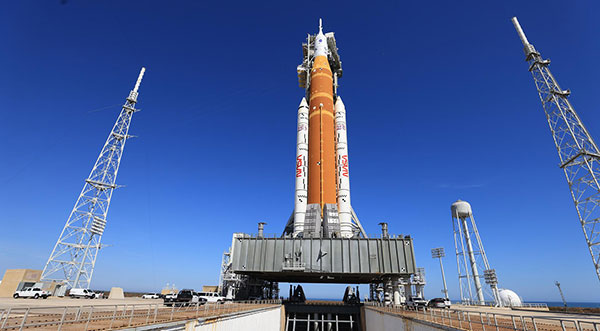
NASA is preparing to potentially roll back the Artemis II rocket and Orion spacecraft to the Vehicle Assembly Building (VAB) at the Kennedy Space Center in Florida. This decision follows an interruption in the flow of helium to the interim cryogenic propulsion stage of the Space Launch System (SLS) rocket, observed on February 21, 2024.
The agency’s teams are currently reviewing data to diagnose the issue while simultaneously making preparations for the rollback. This action is crucial as it allows engineers to address the problem effectively and determine the best path forward. Should the rollback proceed, it would indicate that NASA will not launch Artemis II during the March launch window as originally planned.
Troubleshooting Helium Flow Issues
The helium system is essential for maintaining the environmental conditions necessary for the upper stage engines of the SLS and for pressurizing the liquid hydrogen and liquid oxygen propellant tanks. While these systems functioned correctly during the Artemis II wet dress rehearsal, which concluded on February 19, 2024, the teams encountered difficulties in achieving a proper helium flow during subsequent operations and reconfigurations.
Operators are currently utilizing a backup method to sustain the required environmental conditions for the upper stage engines. The SLS rocket remains in a safe configuration as the teams investigate potential causes of the helium flow disruption. These investigations include examining the interfaces between the ground and rocket lines, a valve in the upper stage, and a filter that connects the ground and rocket systems.
Impact on Launch Schedule
If the rollback is confirmed, it will delay the Artemis II mission, pushing the launch beyond the original March window. Nevertheless, NASA’s quick preparations aim to preserve the April launch window, contingent upon the outcomes of data analysis, necessary repairs, and the evolving schedule in the coming days.
The Artemis II mission will feature a crew of astronauts, including NASA’s Reid Wiseman, Victor Glover, Christina Koch, and Jeremy Hansen from the Canadian Space Agency. Together, they represent a significant step in NASA’s efforts to return humans to the Moon.
NASA remains committed to addressing the helium flow issue promptly and ensuring that all systems function correctly before proceeding with any launch. The agency’s focus is on maintaining safety and mission integrity as they navigate the complexities of space exploration.

Urgent Swatting Incident Ties Up Emergency Resources in Alabama

Urgent Tax Alert: Claim Your Deductions Before April 15!

Scientists Investigate Cosmic Defects: Where Are They Now?

Spring Bocce Leagues Open Registration in Rapid City

CALV Offers Essential Communication Class for Real Estate Pros

Samsung Galaxy Watch 9 Set for Larger 435mAh Battery Upgrade

Healthy Choice Wellness Reports Earnings, Stock Sees Uptick

Prince Harry Claims to Be ‘Antidote to Andrew’ Amid Royal Crisis

Pet Owners Weigh Kibble Against Fresh Dog Food Options

ALMA Discovers Companion Orbiting Giant Star π 1 Gruis

U.S. Visa Rescheduling Hits H‐1B Applicants as New Vetting Rules Take Effect

University of Hawaiʻi Joins $25.6M AI Project for Disaster Monitoring

F-22 Raptor vs. Su-57 Felon: A 2025 Fighter Jet Comparison

Recent Divorce Judgments from Iberia Parish Court Records

Urgent: Flight Cancellations Loom at Texas Airports Amid Shutdown

Ohio State Study Uncovers Brain Connectivity and Function Links

Frank Dunn, Esteemed Builder and Community Leader, Passes Away at 89

Appian Recognizes 2025 Partner Award Winners for Enterprise Innovation
-
 Science9 months ago
ALMA Discovers Companion Orbiting Giant Star π 1 Gruis
-
 Politics7 months ago
U.S. Visa Rescheduling Hits H‐1B Applicants as New Vetting Rules Take Effect
-
Science10 months ago
University of Hawaiʻi Joins $25.6M AI Project for Disaster Monitoring
-
 World10 months ago
F-22 Raptor vs. Su-57 Felon: A 2025 Fighter Jet Comparison
-
 Politics9 months ago
Recent Divorce Judgments from Iberia Parish Court Records
-
 Top Stories10 months ago
Urgent: Flight Cancellations Loom at Texas Airports Amid Shutdown
-
 Science10 months ago
Ohio State Study Uncovers Brain Connectivity and Function Links
-
 Lifestyle10 months ago
Frank Dunn, Esteemed Builder and Community Leader, Passes Away at 89
-
 Business9 months ago
Appian Recognizes 2025 Partner Award Winners for Enterprise Innovation
-

 World10 months ago
Prince Andrew Faces Fallout from Scandals and Allegations
-

 Entertainment8 months ago
Malachi Barton Tops Google Searches as Disney’s Rising Star of 2025
-

 Top Stories9 months ago
Republican Matt Van Epps Wins Tennessee Special Election