
Science
MIT Launches TechAMP Program to Transform U.S. Manufacturing Education

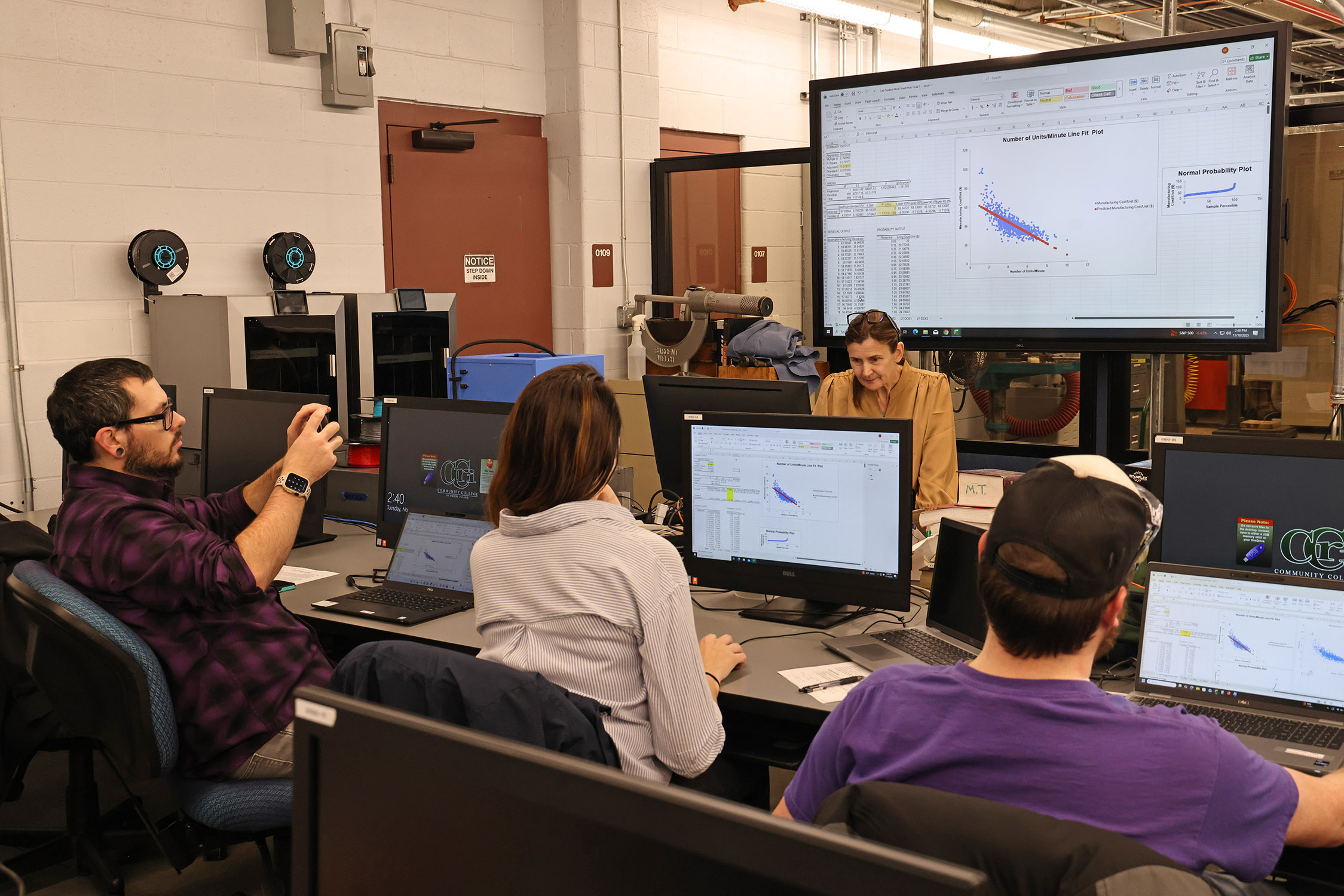
The Massachusetts Institute of Technology (MIT) has unveiled a new educational initiative aimed at enhancing the U.S. manufacturing workforce. This program, named the **Technologist Advanced Manufacturing Program** (TechAMP), offers a comprehensive training curriculum designed to equip workers with essential production skills. Funded by the **U.S. Department of Defense**, TechAMP features a combination of hands-on lab instruction, online lectures from MIT faculty, and interactive simulations at various collaborating institutions across the country.
TechAMP is a **12-month certificate program** that targets a critical gap in manufacturing education. It aims to establish the role of a “technologist” as a vital component of the manufacturing sector, enhancing career prospects for workers and improving the skill set of the workforce. According to **John Liu**, a principal research scientist in MIT’s Department of Mechanical Engineering and co-principal investigator of the program, “We think there’s a gap between the traditional worker categories of engineer and technician, and this technologist training fills it.”
Program Details and Collaborations
The program launched this fall in collaboration with several educational institutions, including the **University of Massachusetts at Lowell**, **Cape Cod Community College**, and **Ohio State University**. The inaugural cohort comprises over **70 students**, marking a significant step towards modernizing manufacturing education.
**Julie Diop**, executive director of MIT’s Initiative for New Manufacturing (INM), emphasized the program’s alignment with MIT’s broader mission to revitalize U.S. manufacturing. “Through TechAMP and other programs, we’re excited to reach beyond MIT’s traditional realm of manufacturing education,” she stated. The program is designed to create new career pathways for workers while fostering a more skilled manufacturing workforce.
The curriculum is structured around a “hub-and-spoke” model, focusing on core principles of manufacturing, including process controls, efficiency, leadership skills, and operations management. These elements are complemented by six specialized areas such as mechatronics, automation programming, and robotics, which respond to industry demand for enhanced training.
Impact on Workers and Firms
Participants in the TechAMP program are optimistic about its potential. **Nicole Swan**, an employee at the manufacturing firm Proterial, described the course as a “confidence booster” that has opened her eyes to new career opportunities. The program aims not only to enhance individual skills but also to provide measurable benefits to participating companies through capstone projects that address real-world manufacturing challenges.
**Michael Trotta**, CEO of Crystal Engineering, highlighted the importance of such programs. “There are many manufacturing jobs that don’t require a four-year degree but do demand high skill levels and effective communication,” he noted. Trotta and his employees provided feedback on the TechAMP curriculum, ensuring it meets industry needs.
The program’s structure allows for direct value capture for companies, as employees work on projects that could lead to significant cost savings. Diop pointed out that this aspect makes TechAMP a worthwhile investment for firms looking to enhance their workforce capabilities.
As TechAMP evolves, discussions are underway with various educational networks in manufacturing-heavy states to expand the program. **Ben Armstrong**, executive director at MIT’s Industrial Performance Center, noted that a substantial percentage of titled engineers in manufacturing do not hold formal engineering degrees. This highlights the necessity for more structured training and credentials in the sector.
MIT President **Sally A. Kornbluth** has positioned the initiative as a crucial step towards building a future in new manufacturing. “Helping America build a future of new manufacturing is a perfect job for MIT,” she stated during the program’s launch in May 2025.
With TechAMP already generating excitement and interest from various stakeholders, MIT is poised to make significant contributions to the evolution of manufacturing education. As Liu remarked, “There’s been a lot of excitement so far, and it’s coming from organizations and people who are eager to learn more.” The program’s success could redefine the landscape of manufacturing careers, ensuring that workers are well-equipped to meet the challenges of modern production environments.

Urgent Swatting Incident Ties Up Emergency Resources in Alabama

Urgent Tax Alert: Claim Your Deductions Before April 15!

Scientists Investigate Cosmic Defects: Where Are They Now?

Spring Bocce Leagues Open Registration in Rapid City

CALV Offers Essential Communication Class for Real Estate Pros

Samsung Galaxy Watch 9 Set for Larger 435mAh Battery Upgrade

Healthy Choice Wellness Reports Earnings, Stock Sees Uptick

Prince Harry Claims to Be ‘Antidote to Andrew’ Amid Royal Crisis

Pet Owners Weigh Kibble Against Fresh Dog Food Options

ALMA Discovers Companion Orbiting Giant Star π 1 Gruis

U.S. Visa Rescheduling Hits H‐1B Applicants as New Vetting Rules Take Effect

University of Hawaiʻi Joins $25.6M AI Project for Disaster Monitoring

F-22 Raptor vs. Su-57 Felon: A 2025 Fighter Jet Comparison

Recent Divorce Judgments from Iberia Parish Court Records

Ohio State Study Uncovers Brain Connectivity and Function Links

Prince Andrew Faces Fallout from Scandals and Allegations

Urgent: Flight Cancellations Loom at Texas Airports Amid Shutdown

Frank Dunn, Esteemed Builder and Community Leader, Passes Away at 89
-
 Science8 months ago
ALMA Discovers Companion Orbiting Giant Star π 1 Gruis
-
 Politics6 months ago
U.S. Visa Rescheduling Hits H‐1B Applicants as New Vetting Rules Take Effect
-
Science8 months ago
University of Hawaiʻi Joins $25.6M AI Project for Disaster Monitoring
-
 World8 months ago
F-22 Raptor vs. Su-57 Felon: A 2025 Fighter Jet Comparison
-
 Politics8 months ago
Recent Divorce Judgments from Iberia Parish Court Records
-
 Science9 months ago
Ohio State Study Uncovers Brain Connectivity and Function Links
-
 World8 months ago
Prince Andrew Faces Fallout from Scandals and Allegations
-
 Top Stories8 months ago
Urgent: Flight Cancellations Loom at Texas Airports Amid Shutdown
-
 Lifestyle8 months ago
Frank Dunn, Esteemed Builder and Community Leader, Passes Away at 89
-

 Business8 months ago
Appian Recognizes 2025 Partner Award Winners for Enterprise Innovation
-

 Entertainment6 months ago
Malachi Barton Tops Google Searches as Disney’s Rising Star of 2025
-

 Science9 months ago
Innovator Captures Light at 2 Billion Frames Per Second