
Science
Michigan State University Launches $14M Facility for Chip Testing

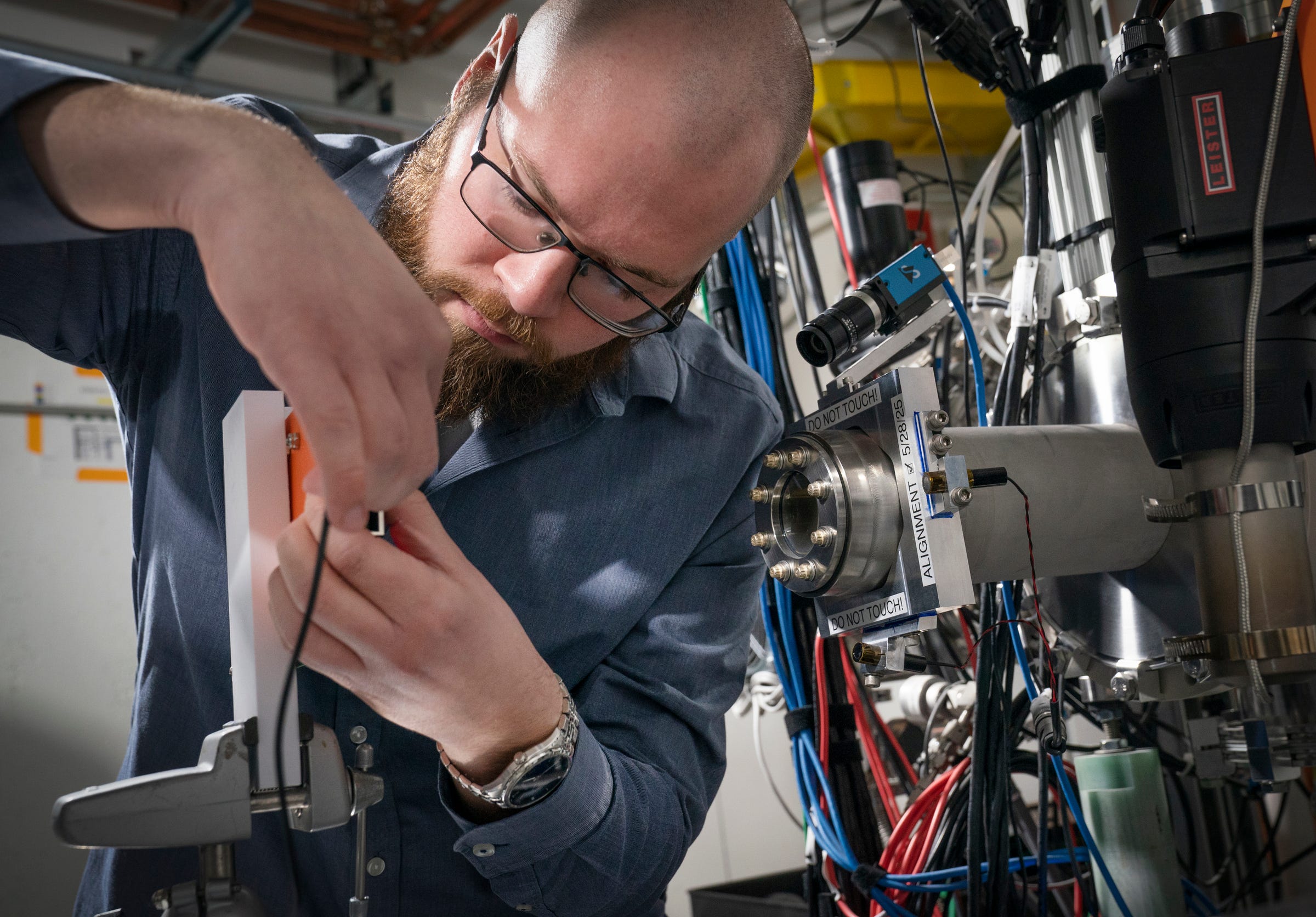
Michigan State University (MSU) has inaugurated a cutting-edge facility designed to test microelectronics against the effects of cosmic rays. The facility, known as the K500 Chip Testing Facility, represents a significant investment of approximately $14 million, funded by the U.S. Department of Defense. It is one of only three heavy ion cyclotron facilities in the United States dedicated to chip testing, joining similar facilities at the Lawrence Berkeley National Laboratory in California and Texas A&M University.
The K500 facility, which began operations earlier this year, simulates decades of cosmic ray exposure in mere minutes. This capability is crucial for manufacturers seeking to ensure that their microchips can withstand the harsh conditions of space, defense applications, and automotive use. As advanced electronics become increasingly embedded in everyday life—ranging from smartphones to self-driving cars—the potential for interference from cosmic rays poses a significant risk.
Cosmic rays are highly energetic particles, primarily protons and atomic nuclei, that travel through space at nearly the speed of light. They originate from various sources, including the sun and supernova explosions, and constantly bombard Earth. While most cosmic rays are deflected by the planet’s magnetic field or disintegrate in the atmosphere, the few that reach electronics can cause malfunctions ranging from temporary glitches to severe failures.
The need for robust testing became glaringly apparent following a serious incident on October 2025. An Airbus A320 operated by JetBlue experienced a sudden altitude drop caused by a malfunction in its flight control systems, attributed to cosmic ray interference. This event led to the grounding of 6,000 Airbus aircraft for software updates, causing widespread travel disruptions during the Thanksgiving holiday.
The K500 facility addresses the growing demand for rigorous testing of microchips. Lab director Thomas Glasmacher emphasized the importance of simulating the cosmic ray environment chips will face in space, stating, “You need to, in a limited amount of time, provide the kinds of cosmic rays a device or a chip in space sees in 50 years or so.” Using advanced technology, researchers can replicate 50 years of cosmic radiation exposure in just five minutes or less.
Inside the facility, a plasma charged with ions is accelerated using massive energy inputs, ranging from 20 million to 40 million electron volts per unit mass. This process allows the testing of various semiconductor technologies under conditions that mimic the challenges faced in space. Steve Lidia, manager of the FRIB beam instrumentation and measurement department, explained, “We give customers a menu, and they order off the menu,” highlighting the flexibility in testing options available to manufacturers.
Since opening, the K500 facility has operated at around 40% capacity and is projected to offer approximately 2,500 hours of “beam time” to clients this year. Plans are underway to expand the facility with an additional 5,500 square feet to accommodate more simultaneous testing activities.
Beyond providing essential services to the government and industry, the facility also plays a vital role in education. It offers hands-on experience for MSU students, fostering collaboration with industry leaders. According to John Papapolymerou, interim dean of MSU’s College of Engineering, the facility enhances workforce development in critical fields such as semiconductors and electronics.
The K500’s contributions to training future engineers will be further integrated into the upcoming Leinweber Center for Engineering and Digital Innovation, scheduled for completion in August 2028. This facility aims to combine digital learning and advanced research, serving as a hub for education and career readiness in areas including materials science and artificial intelligence.
In summary, the K500 Chip Testing Facility at Michigan State University is poised to become a cornerstone of microchip testing and education, addressing critical challenges posed by cosmic rays and supporting the development of future technologies.

Urgent Swatting Incident Ties Up Emergency Resources in Alabama

Urgent Tax Alert: Claim Your Deductions Before April 15!

Scientists Investigate Cosmic Defects: Where Are They Now?

Spring Bocce Leagues Open Registration in Rapid City

CALV Offers Essential Communication Class for Real Estate Pros

Samsung Galaxy Watch 9 Set for Larger 435mAh Battery Upgrade

Healthy Choice Wellness Reports Earnings, Stock Sees Uptick

Prince Harry Claims to Be ‘Antidote to Andrew’ Amid Royal Crisis

Pet Owners Weigh Kibble Against Fresh Dog Food Options

ALMA Discovers Companion Orbiting Giant Star π 1 Gruis

U.S. Visa Rescheduling Hits H‐1B Applicants as New Vetting Rules Take Effect

University of Hawaiʻi Joins $25.6M AI Project for Disaster Monitoring

F-22 Raptor vs. Su-57 Felon: A 2025 Fighter Jet Comparison

Recent Divorce Judgments from Iberia Parish Court Records

Urgent: Flight Cancellations Loom at Texas Airports Amid Shutdown

Ohio State Study Uncovers Brain Connectivity and Function Links

Frank Dunn, Esteemed Builder and Community Leader, Passes Away at 89

Appian Recognizes 2025 Partner Award Winners for Enterprise Innovation
-
 Science9 months ago
ALMA Discovers Companion Orbiting Giant Star π 1 Gruis
-
 Politics7 months ago
U.S. Visa Rescheduling Hits H‐1B Applicants as New Vetting Rules Take Effect
-
Science10 months ago
University of Hawaiʻi Joins $25.6M AI Project for Disaster Monitoring
-
 World10 months ago
F-22 Raptor vs. Su-57 Felon: A 2025 Fighter Jet Comparison
-
 Politics9 months ago
Recent Divorce Judgments from Iberia Parish Court Records
-
 Top Stories10 months ago
Urgent: Flight Cancellations Loom at Texas Airports Amid Shutdown
-
 Science10 months ago
Ohio State Study Uncovers Brain Connectivity and Function Links
-
 Lifestyle10 months ago
Frank Dunn, Esteemed Builder and Community Leader, Passes Away at 89
-
 Business9 months ago
Appian Recognizes 2025 Partner Award Winners for Enterprise Innovation
-

 World10 months ago
Prince Andrew Faces Fallout from Scandals and Allegations
-

 Entertainment8 months ago
Malachi Barton Tops Google Searches as Disney’s Rising Star of 2025
-

 Top Stories9 months ago
Republican Matt Van Epps Wins Tennessee Special Election