
Science
Indigenous-Led Hunting Proven Effective in Managing Deer Overpopulation

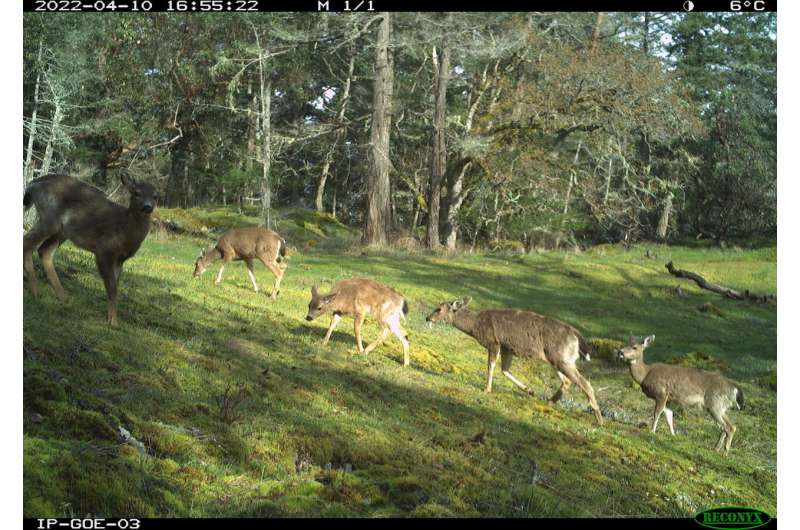
A recent study indicates that Indigenous-led hunting is the most effective strategy for managing the overpopulation of black-tailed deer on the Southern Gulf Islands in British Columbia. Conducted by researchers from the University of British Columbia (UBC) in collaboration with Coast Salish Nations, the findings were published in the journal People and Nature on November 21, 2025. The research highlights the ecological and cultural benefits of integrating Indigenous knowledge with scientific approaches to wildlife management.
The study, spearheaded by Dr. Tara Martin from UBC’s Faculty of Forestry, reveals that deer populations have surged to levels nearly ten times higher than a century ago. This increase is attributed to human-altered landscapes, reduced hunting activities, and the decline of natural predators. The unchecked growth of black-tailed deer has led to severe ecological deterioration, including the overbrowsing of vegetation, impeded forest regeneration, and a drop in biodiversity.
“The islands appear beautiful and natural, but they are entirely degraded,” Dr. Martin stated. “Hyperabundant deer are one of the major drivers of this ecological change.” One particularly vulnerable ecosystem is the Garry Oak meadow, which is now at risk of irreversible collapse due to excessive grazing.
Complexity of Deer Management
Developing effective deer management strategies is inherently complex, requiring a balance between ecological health and community well-being. The research team, including lead author and doctoral student Sofie McComb, explored various management options. These included Indigenous-led hunting, improving predator viability, hiring deer reduction specialists, and increasing licensed hunting. Notably, Indigenous-led hunting emerged as the only strategy likely to achieve significant ecological and cultural benefits.
Indigenous-led hunting was found to improve human and ecological well-being by nearly 60%, while other strategies, such as increased licensed hunting, showed less than 30% likelihood of delivering long-term benefits. The study emphasizes the importance of integrating diverse knowledge systems to inform decision-making in wildlife management.
“The framework we present helps decision-makers navigate complex problems where competing values often lead to paralysis,” McComb explained. “We are offering practical and inclusive solutions to manage hyperabundant deer, an issue impacting ecosystems worldwide.”
Consequences of Inaction
According to the researchers, maintaining the status quo will not address ongoing ecological challenges and will perpetuate decision-making paralysis. They warn that delaying action could lead to irreversible damage to ecosystems. “If we don’t take action soon, ecosystems may become irrecoverable,” McComb cautioned. “Inaction is a choice that has detrimental effects on both the ecosystem and the deer population, which are now resorting to consuming starvation foods.”
The study provides a transparent framework applicable to communities globally facing similar challenges with herbivore overpopulation. By weighing ecological and cultural benefits alongside feasibility and cost, decision-makers can pursue a path toward recovery that is both effective and socially responsible.
“This work demonstrates that restoring cultural sovereignty and ecosystem health can coexist,” Dr. Martin concluded. “It is possible to find solutions to environmental issues that benefit both people and the land.”
The findings of this research underscore the value of Indigenous-led initiatives in addressing ecological crises, paving the way for more sustainable and culturally informed wildlife management practices across various regions.

Urgent Swatting Incident Ties Up Emergency Resources in Alabama

Urgent Tax Alert: Claim Your Deductions Before April 15!

Scientists Investigate Cosmic Defects: Where Are They Now?

Spring Bocce Leagues Open Registration in Rapid City

CALV Offers Essential Communication Class for Real Estate Pros

Samsung Galaxy Watch 9 Set for Larger 435mAh Battery Upgrade

Healthy Choice Wellness Reports Earnings, Stock Sees Uptick

Prince Harry Claims to Be ‘Antidote to Andrew’ Amid Royal Crisis

Pet Owners Weigh Kibble Against Fresh Dog Food Options

ALMA Discovers Companion Orbiting Giant Star π 1 Gruis

U.S. Visa Rescheduling Hits H‐1B Applicants as New Vetting Rules Take Effect

University of Hawaiʻi Joins $25.6M AI Project for Disaster Monitoring

F-22 Raptor vs. Su-57 Felon: A 2025 Fighter Jet Comparison

Ohio State Study Uncovers Brain Connectivity and Function Links

Recent Divorce Judgments from Iberia Parish Court Records

Prince Andrew Faces Fallout from Scandals and Allegations

Urgent: Flight Cancellations Loom at Texas Airports Amid Shutdown

Frank Dunn, Esteemed Builder and Community Leader, Passes Away at 89
-
 Science8 months ago
ALMA Discovers Companion Orbiting Giant Star π 1 Gruis
-
 Politics6 months ago
U.S. Visa Rescheduling Hits H‐1B Applicants as New Vetting Rules Take Effect
-
Science8 months ago
University of Hawaiʻi Joins $25.6M AI Project for Disaster Monitoring
-
 World8 months ago
F-22 Raptor vs. Su-57 Felon: A 2025 Fighter Jet Comparison
-
 Science9 months ago
Ohio State Study Uncovers Brain Connectivity and Function Links
-
 Politics8 months ago
Recent Divorce Judgments from Iberia Parish Court Records
-
 World8 months ago
Prince Andrew Faces Fallout from Scandals and Allegations
-
 Top Stories8 months ago
Urgent: Flight Cancellations Loom at Texas Airports Amid Shutdown
-
 Lifestyle8 months ago
Frank Dunn, Esteemed Builder and Community Leader, Passes Away at 89
-

 Business8 months ago
Appian Recognizes 2025 Partner Award Winners for Enterprise Innovation
-

 Entertainment6 months ago
Malachi Barton Tops Google Searches as Disney’s Rising Star of 2025
-

 Science9 months ago
Innovator Captures Light at 2 Billion Frames Per Second