
Science
Groundbreaking Simulation Reveals Milky Way’s Secrets in Detail

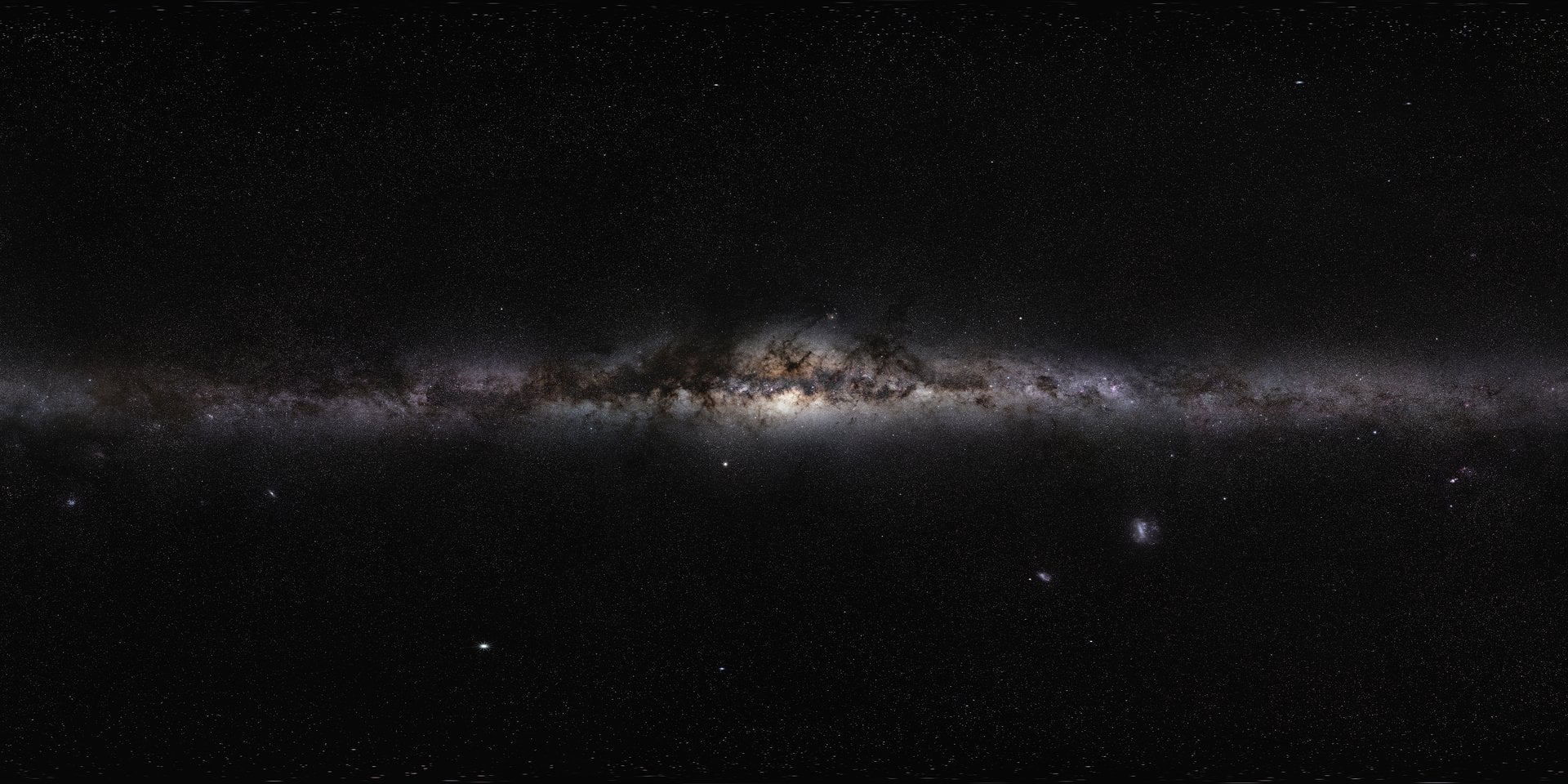
Researchers at the RIKEN Center for Interdisciplinary Theoretical and Mathematical Sciences (iTHEMS) in Japan have achieved a remarkable milestone by creating the first-ever simulation of the Milky Way that accurately models over 100 billion stars over a timespan of 10,000 years. This breakthrough, which was developed in collaboration with colleagues from the University of Tokyo and the Universitat de Barcelona, significantly surpasses previous models, representing 100 times more individual stars and completing simulations at a speed 100 times faster.
This innovative simulation was realized through a combination of 7 million CPU cores, machine learning algorithms, and advanced numerical simulations. The results, published in a research paper titled “The First Star-by-star N-body/Hydrodynamics Simulation of Our Galaxy Coupling with a Surrogate Model,” will appear in the Proceedings of the International Conference for High Performance Computing, Networking, Storage and Analysis (SC ’25).
New Insights into Galactic Dynamics
The ability to simulate the Milky Way at this unprecedented level of detail allows astronomers to test theories regarding galactic formation, structure, and evolution. For decades, scientists have sought to create increasingly complex simulations that accurately capture the myriad forces influencing galaxies, including gravity, fluid dynamics, supernovae, and the effects of supermassive black holes (SMBHs).
Traditionally, the computing power required to model galaxies in such detail has been a limiting factor. Current systems can only handle about one billion solar masses, which accounts for less than 1% of the Milky Way’s total star count. A typical supercomputer takes approximately 315 hours—over 13 days—to simulate just 1 million years of galactic evolution, representing a minuscule fraction of the Milky Way’s total age of approximately 13.61 billion years.
Innovative Use of AI Models
To overcome these challenges, the research team led by Hirashima utilized an AI-driven surrogate model that operates independently of the main computational resources. By training this model on high-resolution supernova simulations, they were able to predict the impact of these stellar explosions on surrounding gas and dust for up to 100,000 years post-explosion. This integration of machine learning with physical simulations enabled the team to simultaneously model both large-scale galactic dynamics and small-scale stellar phenomena.
The effectiveness of this innovative approach was validated through extensive testing on the Fugaku and Miyabi Supercomputer Systems. The results were striking: the new method can now simulate the evolution of a galaxy with over 100 billion stars and model 1 million years of evolution in just 2.78 hours. This efficiency means that a simulation covering 1 billion years of galactic history could be completed in approximately 115 days.
This advancement not only provides astronomers with a powerful tool for exploring galactic evolution but also highlights the potential of AI-enhanced simulations to reduce both time and energy requirements in complex modeling tasks. Beyond astrophysics, the methodologies developed in this research could be applied to other fields requiring intricate simulations, such as meteorology, ocean dynamics, and climate science.
The implications of this work extend far beyond the confines of astrophysics, offering a glimpse into the future of computational science and the role of artificial intelligence in advancing our understanding of the universe.

Urgent Swatting Incident Ties Up Emergency Resources in Alabama

Urgent Tax Alert: Claim Your Deductions Before April 15!

Scientists Investigate Cosmic Defects: Where Are They Now?

Spring Bocce Leagues Open Registration in Rapid City

CALV Offers Essential Communication Class for Real Estate Pros

Samsung Galaxy Watch 9 Set for Larger 435mAh Battery Upgrade

Healthy Choice Wellness Reports Earnings, Stock Sees Uptick

Prince Harry Claims to Be ‘Antidote to Andrew’ Amid Royal Crisis

Pet Owners Weigh Kibble Against Fresh Dog Food Options

ALMA Discovers Companion Orbiting Giant Star π 1 Gruis

U.S. Visa Rescheduling Hits H‐1B Applicants as New Vetting Rules Take Effect

University of Hawaiʻi Joins $25.6M AI Project for Disaster Monitoring

F-22 Raptor vs. Su-57 Felon: A 2025 Fighter Jet Comparison

Ohio State Study Uncovers Brain Connectivity and Function Links

Recent Divorce Judgments from Iberia Parish Court Records

Prince Andrew Faces Fallout from Scandals and Allegations

Urgent: Flight Cancellations Loom at Texas Airports Amid Shutdown

Frank Dunn, Esteemed Builder and Community Leader, Passes Away at 89
-
 Science8 months ago
ALMA Discovers Companion Orbiting Giant Star π 1 Gruis
-
 Politics6 months ago
U.S. Visa Rescheduling Hits H‐1B Applicants as New Vetting Rules Take Effect
-
Science8 months ago
University of Hawaiʻi Joins $25.6M AI Project for Disaster Monitoring
-
 World8 months ago
F-22 Raptor vs. Su-57 Felon: A 2025 Fighter Jet Comparison
-
 Science9 months ago
Ohio State Study Uncovers Brain Connectivity and Function Links
-
 Politics8 months ago
Recent Divorce Judgments from Iberia Parish Court Records
-
 World8 months ago
Prince Andrew Faces Fallout from Scandals and Allegations
-
 Top Stories8 months ago
Urgent: Flight Cancellations Loom at Texas Airports Amid Shutdown
-
 Lifestyle8 months ago
Frank Dunn, Esteemed Builder and Community Leader, Passes Away at 89
-

 Business8 months ago
Appian Recognizes 2025 Partner Award Winners for Enterprise Innovation
-

 Entertainment6 months ago
Malachi Barton Tops Google Searches as Disney’s Rising Star of 2025
-
 Science9 months ago
Innovator Captures Light at 2 Billion Frames Per Second