
Science
Former Fast-Food Worker Transitions to Semiconductor Industry

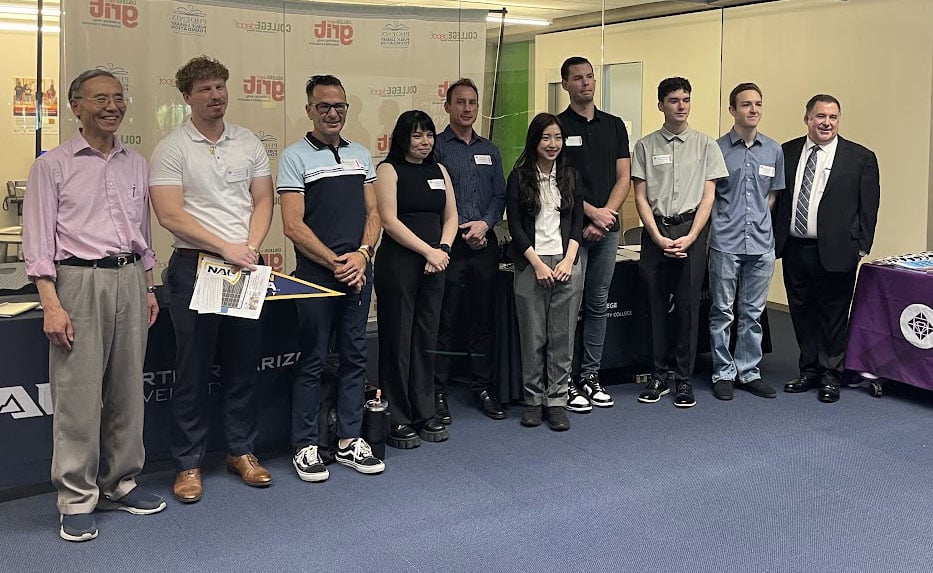
Nolan Cottingham, a former fast-food employee, has embarked on a new career path in the semiconductor industry through TSMC Arizona’s technician apprenticeship program. This initiative allows him to work full-time as a process technician while earning a certificate that paves the way for further education without incurring significant student debt. The program, launched through a collaboration involving Northern Arizona University, Rio Salado College, and TSMC, is designed to fill a critical skills gap in a rapidly growing sector.
Cottingham, who previously worked at In-N-Out, expressed enthusiasm for the hands-on nature of his new role. “I’m good with computers, I’m good with thinking on the fly,” he stated. Now nearly a year into the program, he spends four days a week on TSMC Arizona’s diffusion team, with Mondays reserved for classes covering essential topics like safety, data visualization, and advanced manufacturing processes. This engaging experience, he noted, stands in stark contrast to his earlier jobs in food service, reinforcing his belief that dedication to the program yields substantial rewards.
Details of the Apprenticeship Program
The apprenticeship program was established with a grant from the Arizona Commerce Authority, supplemented by contributions from TSMC Arizona, Shan Strategies, and the SEMI Foundation. TSMC actively recruits process technicians and enrolls them in this registered apprenticeship initiative. According to Lauren Majure, business and educational partnerships manager at Northern Arizona University, the first cohort attracted significant interest, with hundreds expressing a desire to participate.
“Most of the students don’t have a background in this field, but we found a good group of people who think in that manner,” Majure remarked. The program comprises eight classes: four from Rio Salado College, three from NAU, and one safety course at TSMC Arizona. Courses taught by NAU professors include advanced mathematics, instrumentation, and metrology, specifically tailored for nanotechnology and advanced manufacturing processes.
Students benefit from hands-on experience, including field trips to NAU’s Microelectronics Processing and Characterization Testing (MPaCT) Center, which houses cutting-edge semiconductor equipment. This collaboration is part of NAU’s broader strategy to enhance its role in the semiconductor sector, including plans for a Semiconductor Training Center at its North Valley campus in Phoenix. Professor Andy Wang is leading these educational expansion efforts.
Growing Demand for Semiconductor Technicians
The semiconductor industry is experiencing significant growth, particularly in Arizona, where demand for microchips continues to rise across various sectors. There is, however, a notable shortage of qualified personnel to fill these roles. According to the Semiconductor Industry Association, the sector anticipates the addition of nearly 115,000 jobs by 2030, which includes over 26,000 technicians and 27,000 engineers.
Majure highlighted the challenge posed by declining college enrollment rates, stating, “With a decrease in college attendance, there simply aren’t enough workers to fill the jobs that will be coming.” Programs like the TSMC apprenticeship are essential in bridging this gap. The Bureau of Labor Statistics projects that employment for semiconductor processing technicians will grow by 11% over the next decade, a rate much faster than the national average.
Reflecting on his experience, Cottingham noted the dynamic nature of his work. Each day presents new challenges, making the role both stimulating and rewarding. Initially, he found himself grappling with unfamiliar terminology and processes, which felt akin to “learning in a foreign language.” However, after about two months, he began to adapt and thrive in this new environment.
“It’s just interesting how much you can learn,” he said, underscoring the potential for growth within the program. Cottingham’s journey from flipping burgers to contributing to the semiconductor industry exemplifies how targeted educational initiatives can effectively prepare individuals for rewarding careers in high-demand fields.

Urgent Swatting Incident Ties Up Emergency Resources in Alabama

Urgent Tax Alert: Claim Your Deductions Before April 15!

Scientists Investigate Cosmic Defects: Where Are They Now?

Spring Bocce Leagues Open Registration in Rapid City

CALV Offers Essential Communication Class for Real Estate Pros

Samsung Galaxy Watch 9 Set for Larger 435mAh Battery Upgrade

Healthy Choice Wellness Reports Earnings, Stock Sees Uptick

Prince Harry Claims to Be ‘Antidote to Andrew’ Amid Royal Crisis

Pet Owners Weigh Kibble Against Fresh Dog Food Options

ALMA Discovers Companion Orbiting Giant Star π 1 Gruis

U.S. Visa Rescheduling Hits H‐1B Applicants as New Vetting Rules Take Effect

University of Hawaiʻi Joins $25.6M AI Project for Disaster Monitoring

F-22 Raptor vs. Su-57 Felon: A 2025 Fighter Jet Comparison

Recent Divorce Judgments from Iberia Parish Court Records

Urgent: Flight Cancellations Loom at Texas Airports Amid Shutdown

Ohio State Study Uncovers Brain Connectivity and Function Links

Frank Dunn, Esteemed Builder and Community Leader, Passes Away at 89

Appian Recognizes 2025 Partner Award Winners for Enterprise Innovation
-
 Science9 months ago
ALMA Discovers Companion Orbiting Giant Star π 1 Gruis
-
 Politics7 months ago
U.S. Visa Rescheduling Hits H‐1B Applicants as New Vetting Rules Take Effect
-
Science10 months ago
University of Hawaiʻi Joins $25.6M AI Project for Disaster Monitoring
-
 World10 months ago
F-22 Raptor vs. Su-57 Felon: A 2025 Fighter Jet Comparison
-
 Politics9 months ago
Recent Divorce Judgments from Iberia Parish Court Records
-
 Top Stories10 months ago
Urgent: Flight Cancellations Loom at Texas Airports Amid Shutdown
-
 Science10 months ago
Ohio State Study Uncovers Brain Connectivity and Function Links
-
 Lifestyle10 months ago
Frank Dunn, Esteemed Builder and Community Leader, Passes Away at 89
-
 Business9 months ago
Appian Recognizes 2025 Partner Award Winners for Enterprise Innovation
-

 World10 months ago
Prince Andrew Faces Fallout from Scandals and Allegations
-

 Entertainment8 months ago
Malachi Barton Tops Google Searches as Disney’s Rising Star of 2025
-

 Top Stories9 months ago
Republican Matt Van Epps Wins Tennessee Special Election