
Science
Engineers Maintain Stability at Antarctica’s Neumayer III Base

The Neumayer III base in Antarctica is facing unique challenges as it grapples with the effects of climate change. With no sunlight for over two weeks, the base, which is crucial for scientific research, has to contend with the dangers of ice shelf disintegration and shifting ice. This has pushed the station over a foot closer to the coast of Antarctica.
Opened in 2009, Neumayer III is one of approximately 70 permanent research stations on the continent and serves as a home for researchers in fields such as meteorology and geophysics. The base sits on more than 650 feet of ice on the Ekstrom Ice Shelf, and its design reflects the harsh conditions that led to the abandonment of its predecessors, Neumayer Station and Neumayer Station II, in 1992 and 2008, respectively.
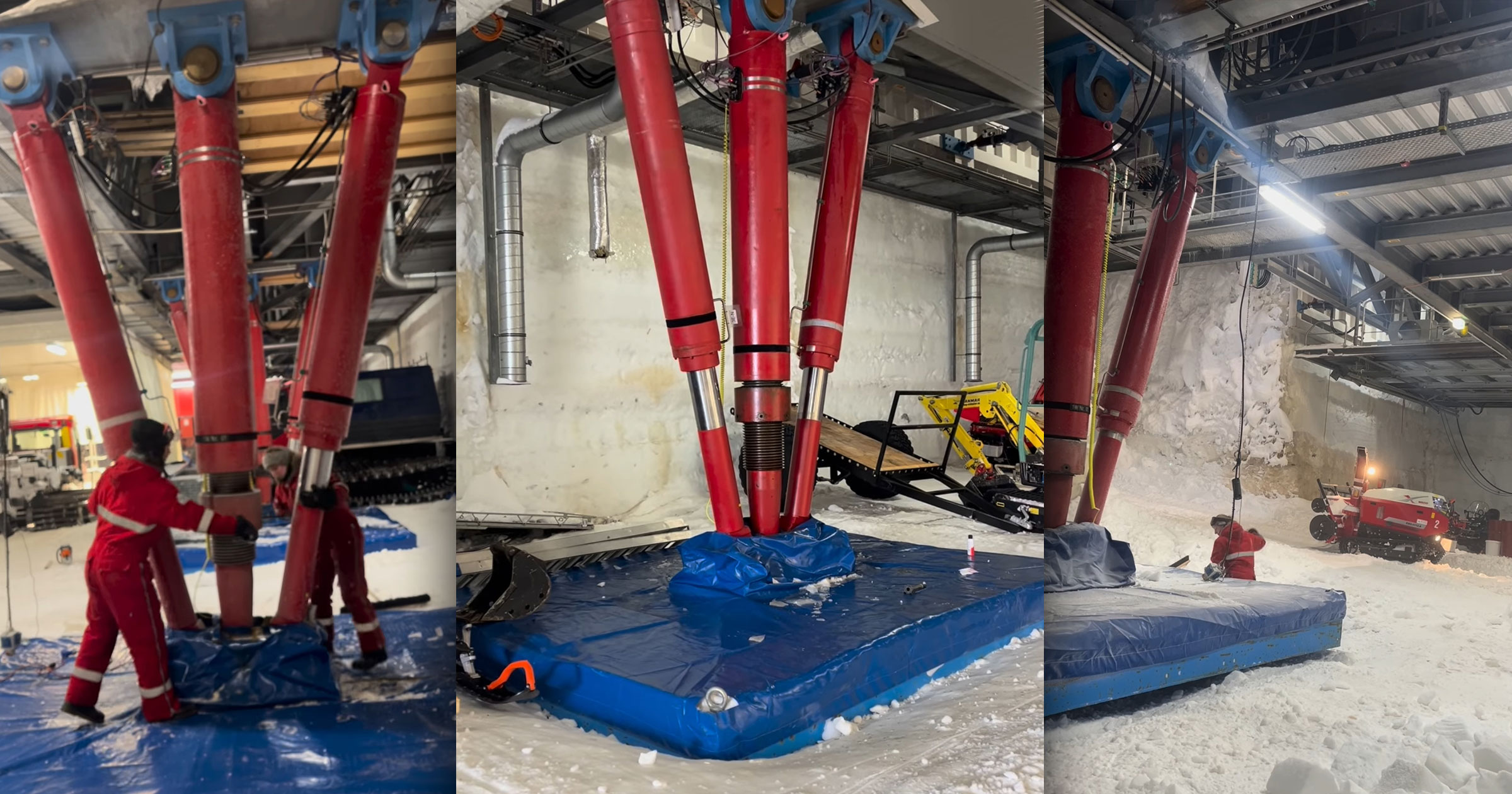
To combat the relentless environment, Neumayer III is elevated on 16 hydraulic stilts, which allow the 20,000-square-foot facility to remain above the shifting ice below. This engineering marvel is a testament to innovative design, enabling a permanent presence in one of the planet’s most inhospitable regions.
Thomas Schenk, a Swiss engineer and the technical lead at Neumayer III since 2024, provides insight into how the station is maintained. In a recently circulated video, he demonstrated the complex lifting system designed by the German engineering firm IgH. This system keeps the facility stable as the ice around it continually shifts.
Schenk explained the procedure, saying, “Everything here in Antarctica that isn’t built on rock will inevitably sink into the snow sooner or later.” His team regularly checks the alignment of the station to ensure it remains level. Each week, they adjust the structure, and occasionally, it requires lifting and realigning when one of the stilts shifts.
The video illustrates the careful process involved in maintaining the station’s stability. Schenk and his team first loosen horizontal brackets that secure the station against the surrounding snow. They then utilize hydraulic cylinders to lift each stilt, followed by using a snow blower to pack fresh snow underneath. Once the new snow is in place, the weight of the station is transferred back onto the leg, ensuring proper alignment.
Schenk noted that during the summer season, the entire base is raised by approximately 6.5 feet each year using a similar method. This meticulous approach highlights the ongoing efforts to adapt to climate impacts while continuing vital research in the region.
As climate change accelerates the melting of ice in Antarctica, the work being done at Neumayer III is increasingly important. The facility is not just a research hub; it represents human ingenuity in the face of nature’s challenges.

Urgent Swatting Incident Ties Up Emergency Resources in Alabama

Urgent Tax Alert: Claim Your Deductions Before April 15!

Scientists Investigate Cosmic Defects: Where Are They Now?

Spring Bocce Leagues Open Registration in Rapid City

CALV Offers Essential Communication Class for Real Estate Pros

Samsung Galaxy Watch 9 Set for Larger 435mAh Battery Upgrade

Healthy Choice Wellness Reports Earnings, Stock Sees Uptick

Prince Harry Claims to Be ‘Antidote to Andrew’ Amid Royal Crisis

Pet Owners Weigh Kibble Against Fresh Dog Food Options

ALMA Discovers Companion Orbiting Giant Star π 1 Gruis

U.S. Visa Rescheduling Hits H‐1B Applicants as New Vetting Rules Take Effect

University of Hawaiʻi Joins $25.6M AI Project for Disaster Monitoring

F-22 Raptor vs. Su-57 Felon: A 2025 Fighter Jet Comparison

Recent Divorce Judgments from Iberia Parish Court Records

Urgent: Flight Cancellations Loom at Texas Airports Amid Shutdown

Ohio State Study Uncovers Brain Connectivity and Function Links

Frank Dunn, Esteemed Builder and Community Leader, Passes Away at 89

Appian Recognizes 2025 Partner Award Winners for Enterprise Innovation
-
 Science10 months ago
ALMA Discovers Companion Orbiting Giant Star π 1 Gruis
-
 Politics8 months ago
U.S. Visa Rescheduling Hits H‐1B Applicants as New Vetting Rules Take Effect
-
Science10 months ago
University of Hawaiʻi Joins $25.6M AI Project for Disaster Monitoring
-
 World10 months ago
F-22 Raptor vs. Su-57 Felon: A 2025 Fighter Jet Comparison
-
 Politics9 months ago
Recent Divorce Judgments from Iberia Parish Court Records
-
 Top Stories10 months ago
Urgent: Flight Cancellations Loom at Texas Airports Amid Shutdown
-
 Science10 months ago
Ohio State Study Uncovers Brain Connectivity and Function Links
-
 Lifestyle10 months ago
Frank Dunn, Esteemed Builder and Community Leader, Passes Away at 89
-
 Business10 months ago
Appian Recognizes 2025 Partner Award Winners for Enterprise Innovation
-

 World10 months ago
Prince Andrew Faces Fallout from Scandals and Allegations
-

 Entertainment8 months ago
Malachi Barton Tops Google Searches as Disney’s Rising Star of 2025
-

 Top Stories9 months ago
Republican Matt Van Epps Wins Tennessee Special Election