
Science
Dark Matter Shows Familiar Behavior in Groundbreaking Study

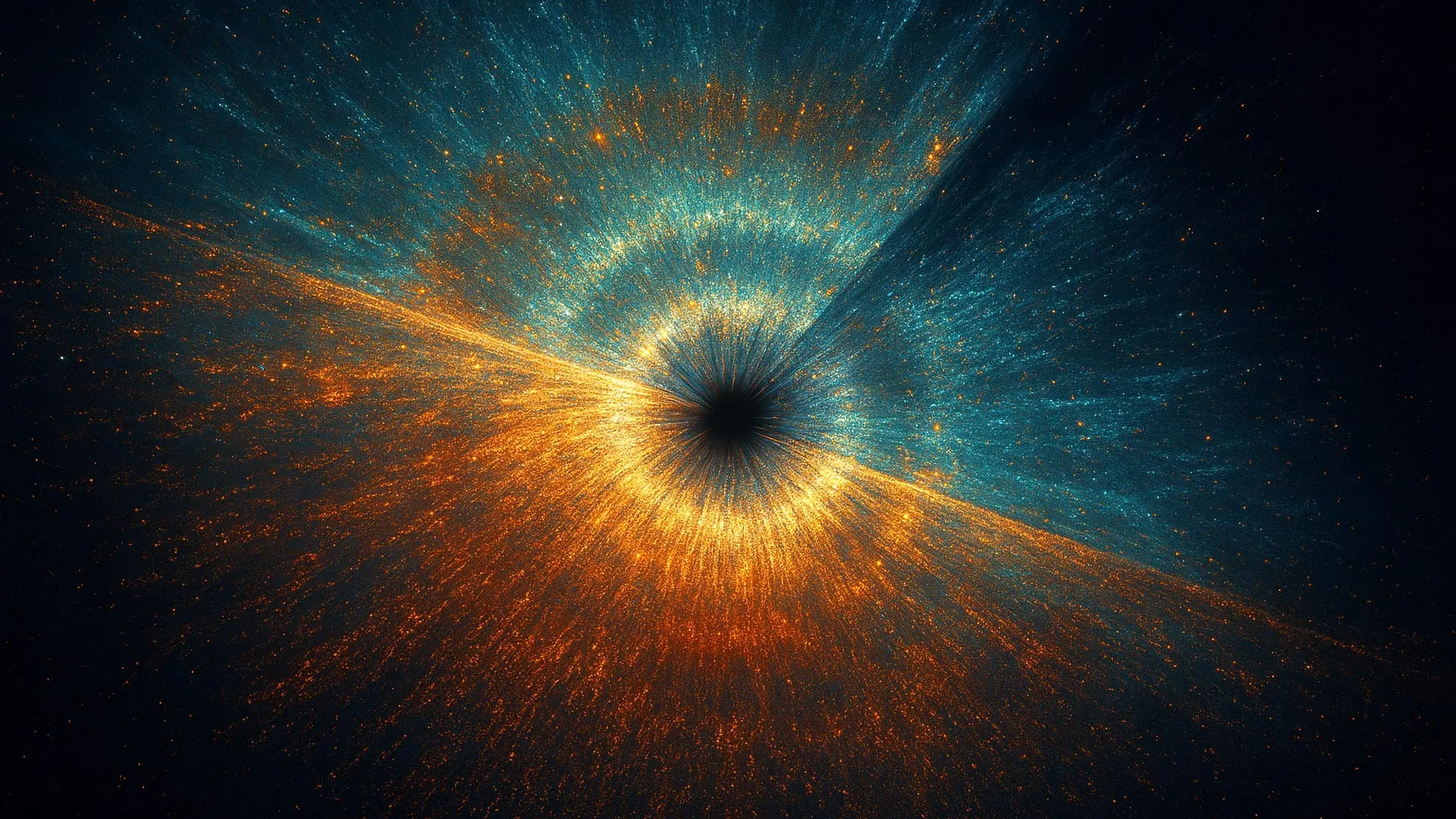
Scientists at the Université de Genève have made significant strides in understanding dark matter, revealing that it appears to behave similarly to ordinary matter. Their research, published in the journal Nature Communications, investigates whether dark matter follows the same physical laws that govern visible matter, a question that has puzzled cosmologists for decades.
The study compares the movement of galaxies within the gravitational wells created by massive objects in the universe. By examining this relationship, the researchers found that dark matter sinks into these wells in a manner consistent with established physical principles, specifically Euler’s equations. This suggests that dark matter acts much like ordinary matter, which is affected by known forces such as gravity and electromagnetism.
Camille Bonvin, an associate professor in the Department of Theoretical Physics at UNIGE and co-author of the study, explains, “If dark matter is not subject to a fifth force, then galaxies—which are mostly made of dark matter—will fall into these wells like ordinary matter, governed solely by gravity.” The implications of this finding could reshape our understanding of the cosmos, as dark matter is believed to be five times more prevalent than ordinary matter.
Despite these promising results, the researchers caution that their findings do not entirely eliminate the possibility of a hidden fifth force acting on dark matter. Nastassia Grimm, the study’s lead author and former postdoctoral researcher at UNIGE, notes, “If such a fifth force exists, it cannot exceed 7% of the strength of gravity—otherwise, it would already have appeared in our analyses.”
This investigation into dark matter’s behavior is particularly crucial as scientists seek to clarify its role in shaping the universe. The next steps in this research are focused on determining whether any subtle interactions not accounted for in the current models affect dark matter.
Upcoming experiments such as the Legacy Survey of Space and Time (LSST) and the Dark Energy Spectroscopic Instrument (DESI) are expected to gather data sensitive enough to detect forces as weak as 2% of gravity. Isaac Tutusaus, a researcher at the Institute of Cosmic Sciences (ICE-CSIC) and co-author of the study, states, “These new data will deepen our understanding of dark matter’s behavior.”
As scientists continue to unravel the mysteries of dark matter, this research marks an important milestone in modern cosmology, paving the way for future discoveries that could transform our understanding of the universe.

Urgent Swatting Incident Ties Up Emergency Resources in Alabama

Urgent Tax Alert: Claim Your Deductions Before April 15!

Scientists Investigate Cosmic Defects: Where Are They Now?

Spring Bocce Leagues Open Registration in Rapid City

CALV Offers Essential Communication Class for Real Estate Pros

Samsung Galaxy Watch 9 Set for Larger 435mAh Battery Upgrade

Healthy Choice Wellness Reports Earnings, Stock Sees Uptick

Prince Harry Claims to Be ‘Antidote to Andrew’ Amid Royal Crisis

Pet Owners Weigh Kibble Against Fresh Dog Food Options

ALMA Discovers Companion Orbiting Giant Star π 1 Gruis

U.S. Visa Rescheduling Hits H‐1B Applicants as New Vetting Rules Take Effect

University of Hawaiʻi Joins $25.6M AI Project for Disaster Monitoring

F-22 Raptor vs. Su-57 Felon: A 2025 Fighter Jet Comparison

Recent Divorce Judgments from Iberia Parish Court Records

Ohio State Study Uncovers Brain Connectivity and Function Links

Prince Andrew Faces Fallout from Scandals and Allegations

Urgent: Flight Cancellations Loom at Texas Airports Amid Shutdown

Frank Dunn, Esteemed Builder and Community Leader, Passes Away at 89
-
 Science8 months ago
ALMA Discovers Companion Orbiting Giant Star π 1 Gruis
-
 Politics6 months ago
U.S. Visa Rescheduling Hits H‐1B Applicants as New Vetting Rules Take Effect
-
Science8 months ago
University of Hawaiʻi Joins $25.6M AI Project for Disaster Monitoring
-
 World8 months ago
F-22 Raptor vs. Su-57 Felon: A 2025 Fighter Jet Comparison
-
 Politics8 months ago
Recent Divorce Judgments from Iberia Parish Court Records
-
 Science9 months ago
Ohio State Study Uncovers Brain Connectivity and Function Links
-
 World8 months ago
Prince Andrew Faces Fallout from Scandals and Allegations
-
 Top Stories8 months ago
Urgent: Flight Cancellations Loom at Texas Airports Amid Shutdown
-
 Lifestyle8 months ago
Frank Dunn, Esteemed Builder and Community Leader, Passes Away at 89
-

 Business8 months ago
Appian Recognizes 2025 Partner Award Winners for Enterprise Innovation
-

 Entertainment7 months ago
Malachi Barton Tops Google Searches as Disney’s Rising Star of 2025
-
 Science9 months ago
Innovator Captures Light at 2 Billion Frames Per Second