
Science
Biomedical Funding Challenges Leave Ph.D. Students Struggling

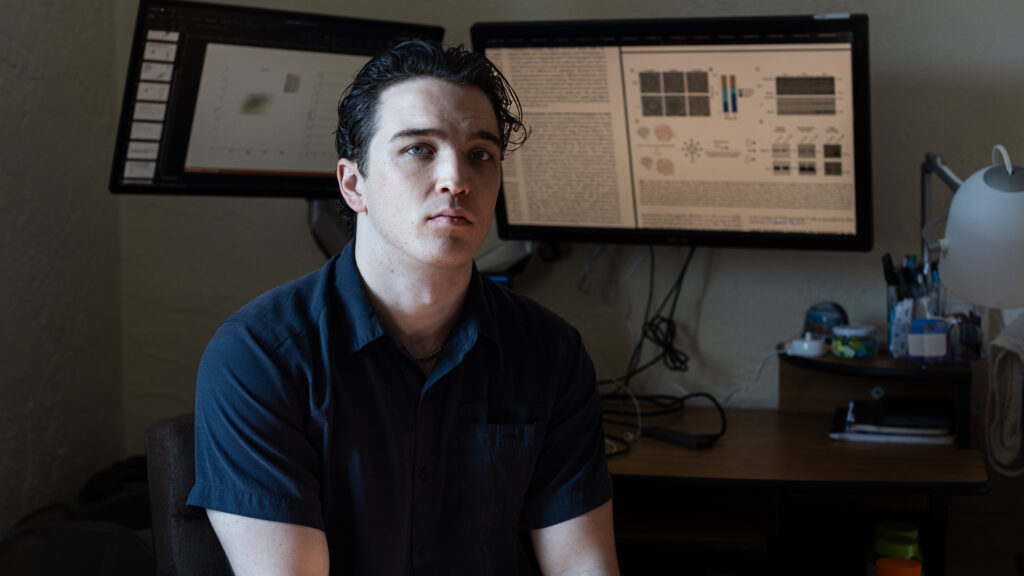
An increasingly precarious funding landscape in biomedical research is leaving first-year Ph.D. students grappling with uncertainty as they seek laboratory placements essential for their academic careers. Many aspiring scientists, including Alex Sathler, who recently received a prestigious National Science Foundation fellowship worth $37,000 annually for three years, are finding that financial support does not guarantee access to well-funded research labs.
While the fellowship offers significant recognition and financial stability, Sathler has encountered barriers. Enrolled in a program jointly run by the University of California, Berkeley, and UC San Francisco, he was turned away by two labs where he hoped to work on his dissertation. Lab heads cited budget constraints as the reason for not accepting more students. “The real sense that I get is that there aren’t enough labs with funding to give everyone their best fit,” Sathler shared.
This sentiment resonates across the country, as first-year biomedical graduate students report similar challenges. According to a recent analysis by STAT, a reduced number of projects funded by the National Institutes of Health has intensified competition for limited spots in well-funded labs. Reports indicate that NIH funding has decreased significantly, with projections suggesting further reductions in the coming years.
As funding becomes scarcer, many students are left feeling disillusioned. Some professors, who had initially expressed willingness to accept students, have since withdrawn those commitments, forcing aspiring researchers to reconsider their options. “The strain that you’re hearing is real. It’s not an isolated case. It’s actually across the board,” said Chevelle Newsome, president of the Council of Graduate Schools.
Competition Heightens as Programs Adjust
Some Ph.D. programs anticipated these funding challenges and proactively reduced incoming class sizes by one-third. Despite these adjustments, data released last fall indicated a slight rise in overall biomedical graduate enrollment, including master’s and doctoral programs. Life science Ph.D. students typically engage in rotation periods, allowing them to experience various labs before settling on a research group. However, this practice is becoming increasingly complicated.
Hannah Barsouk, a biochemistry student at Stanford University, noted that several labs have expressed uncertainty about their ability to accept new students due to funding worries. “Funding issues have cast a ‘cloud of general anxiety’ over my first year,” Barsouk said. She has reached out to between 30 and 40 labs, keeping meticulous records of their responses. As she navigates her options, Barsouk is mindful of the competition among her peers.
Meanwhile, other institutions, such as Georgia Tech and Emory University, have shifted to a direct-admission system for their joint bioengineering program. This change requires applicants to secure a lab before being offered admission, a model more common in Europe. Such a system places additional pressure on students to establish connections with lab members and advisers without firsthand experience in the labs.
Funding Cuts Create Long-term Concerns
While Stanford has not implemented a direct-admission approach, it has reduced independent funding for its bioscience graduate students from four years to two. After this period, advisers are expected to cover stipends from their research grants unless students find alternative funding sources. The university plans to further reduce this guarantee to one year for incoming students, raising concerns about job security among faculty regarding prospective graduate students.
One anonymous biology student recounted her experience of being assured a position in a lab, only to have the professor later stress the necessity of obtaining her NSF fellowship to join. This shift in tone left her feeling misled. “I kind of feel pretty screwed,” she said, echoing a common sentiment among students facing the realities of reduced funding.
For Sathler, the journey through graduate school has been similarly fraught. He has received feedback from labs indicating that while his fellowship is beneficial, it may not cover the entire salary required. A seminar in his program designed to help first-year students connect with potential advisers has found it challenging to secure faculty willing to present.
As first-year students typically have until the beginning of their second year to secure a lab placement, there is still hope that funding conditions may improve. Congressional appropriations committees have recently endorsed a slight budget increase for the NIH, but this remains contingent upon a Senate vote on a forthcoming bill.
The shifting landscape of biomedical funding has left many students questioning their futures. A biology student, who applied to other programs after realizing her chances of joining her desired lab were slim, faced disappointment with both attempts. She now finds herself contemplating whether her long-term goal of running her own lab is still attainable. “I try to avoid looking further ahead, because it just gets bleak,” she reflected.
With funding challenges impacting the academic trajectory of budding scientists, the need for systemic solutions becomes increasingly urgent. As the landscape evolves, the experiences of first-year Ph.D. students may serve as a bellwether for the future of biomedical research and education.

Urgent Swatting Incident Ties Up Emergency Resources in Alabama

Urgent Tax Alert: Claim Your Deductions Before April 15!

Scientists Investigate Cosmic Defects: Where Are They Now?

Spring Bocce Leagues Open Registration in Rapid City

CALV Offers Essential Communication Class for Real Estate Pros

Samsung Galaxy Watch 9 Set for Larger 435mAh Battery Upgrade

Healthy Choice Wellness Reports Earnings, Stock Sees Uptick

Prince Harry Claims to Be ‘Antidote to Andrew’ Amid Royal Crisis

Pet Owners Weigh Kibble Against Fresh Dog Food Options

ALMA Discovers Companion Orbiting Giant Star π 1 Gruis

U.S. Visa Rescheduling Hits H‐1B Applicants as New Vetting Rules Take Effect

University of Hawaiʻi Joins $25.6M AI Project for Disaster Monitoring

F-22 Raptor vs. Su-57 Felon: A 2025 Fighter Jet Comparison

Recent Divorce Judgments from Iberia Parish Court Records

Ohio State Study Uncovers Brain Connectivity and Function Links

Prince Andrew Faces Fallout from Scandals and Allegations

Urgent: Flight Cancellations Loom at Texas Airports Amid Shutdown

Frank Dunn, Esteemed Builder and Community Leader, Passes Away at 89
-
 Science8 months ago
ALMA Discovers Companion Orbiting Giant Star π 1 Gruis
-
 Politics6 months ago
U.S. Visa Rescheduling Hits H‐1B Applicants as New Vetting Rules Take Effect
-
Science8 months ago
University of Hawaiʻi Joins $25.6M AI Project for Disaster Monitoring
-
 World8 months ago
F-22 Raptor vs. Su-57 Felon: A 2025 Fighter Jet Comparison
-
 Politics8 months ago
Recent Divorce Judgments from Iberia Parish Court Records
-
 Science9 months ago
Ohio State Study Uncovers Brain Connectivity and Function Links
-
 World8 months ago
Prince Andrew Faces Fallout from Scandals and Allegations
-
 Top Stories8 months ago
Urgent: Flight Cancellations Loom at Texas Airports Amid Shutdown
-
 Lifestyle8 months ago
Frank Dunn, Esteemed Builder and Community Leader, Passes Away at 89
-

 Business8 months ago
Appian Recognizes 2025 Partner Award Winners for Enterprise Innovation
-

 Entertainment6 months ago
Malachi Barton Tops Google Searches as Disney’s Rising Star of 2025
-

 Science9 months ago
Innovator Captures Light at 2 Billion Frames Per Second