
Science
Astronomers Unveil Massive Cosmic Sheet Surrounding Milky Way

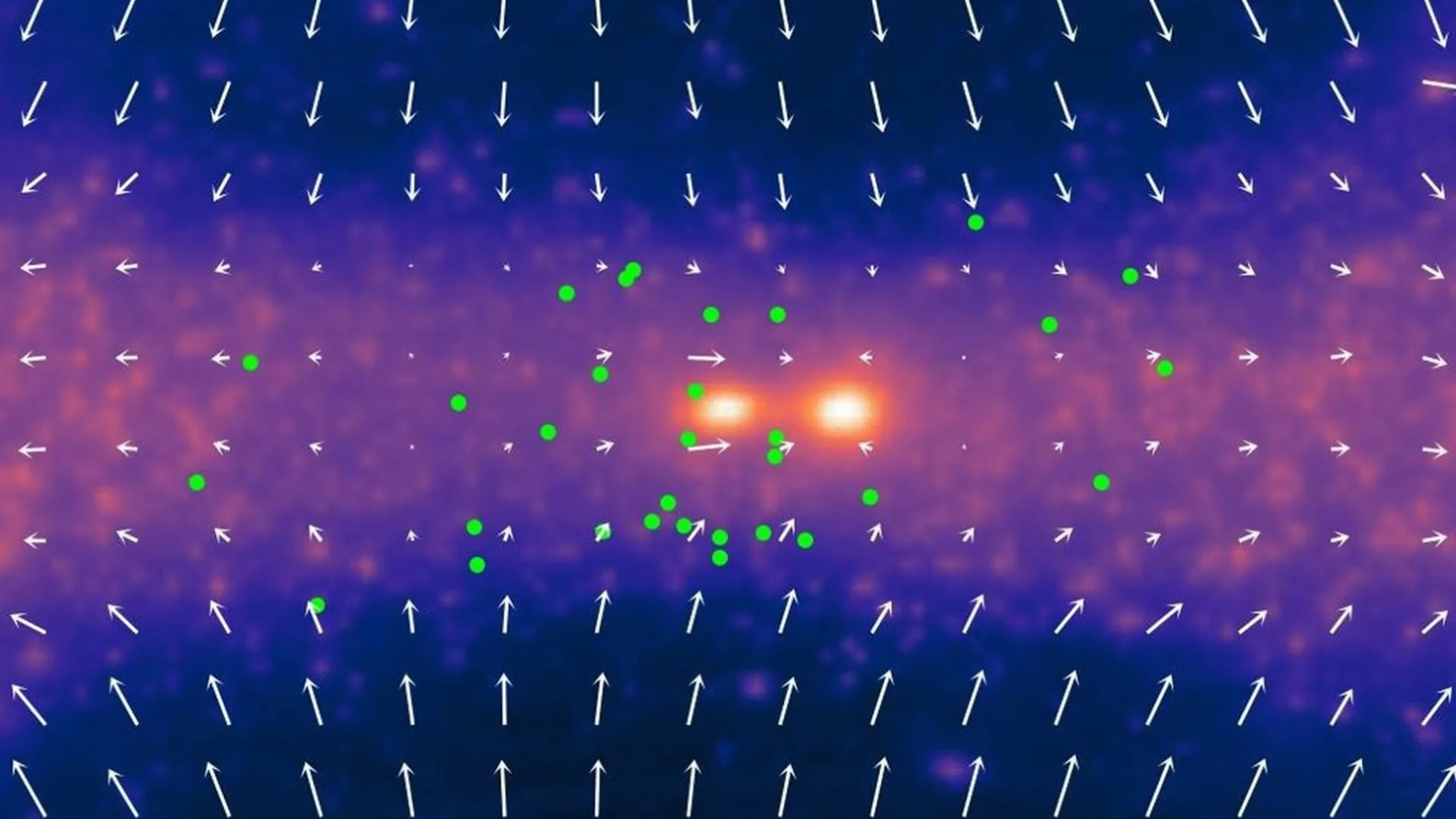
A groundbreaking discovery has been made by astronomers at the University of Groningen, revealing a vast, flat structure of matter surrounding the Milky Way. This cosmic sheet, primarily composed of dark matter, explains why most nearby galaxies are moving away from our galaxy rather than being drawn in by its gravitational pull. The findings, published on March 6, 2026, provide crucial insights into the dynamics of galaxies in our cosmic neighborhood.
Understanding the Cosmic Environment
For decades, scientists have grappled with the question of why most large galaxies near the Milky Way are receding instead of approaching. This phenomenon has puzzled researchers since Edwin Hubble first noted the expansion of the universe nearly a century ago. While Hubble’s observations confirmed that galaxies are generally moving away from each other, exceptions exist, notably the neighboring Andromeda Galaxy, which is closing in on the Milky Way at approximately 100 kilometers per second.
The research team, led by PhD graduate Ewoud Wempe from the Kapteyn Institute, utilized advanced computer simulations to explore the distribution of matter surrounding the Local Group, which includes the Milky Way, Andromeda, and several smaller galaxies. Their simulations revealed a broad, flattened structure extending tens of millions of light-years across, with enormous cosmic voids situated both above and below this sheet.
Reproducing Galactic Motions
The simulations accurately reflect the positions and velocities of neighboring galaxies, demonstrating that this arrangement of matter can reproduce observed cosmic movements. By beginning with conditions from the early universe, the researchers harnessed data from the cosmic microwave background to model how matter evolved after the Big Bang. This powerful computational approach allowed them to create a “virtual twin” of our cosmic neighborhood, effectively matching the current dynamics of the Local Group.
As the model incorporated the flat distribution of matter, the simulated galaxies exhibited movements consistent with actual observations. This suggests that galaxies within the sheet are influenced by additional mass spread throughout that plane, which counteracts the gravitational pull from the Local Group. In contrast, the sparse galactic presence in regions outside the plane clarifies why fewer objects are observed drifting toward us.
According to lead researcher Ewoud Wempe, this study marks a significant step in understanding the distribution and motion of dark matter around our galaxy. “We are exploring all possible local configurations of the early universe that ultimately could lead to the Local Group,” he stated. “It is great that we now have a model that is consistent with the current cosmological model on one hand, and with the dynamics of our local environment on the other.”
Fellow astronomer Amina Helmi has also expressed enthusiasm regarding these findings, emphasizing the importance of determining a mass distribution that aligns with the positions of galaxies within and just beyond the Local Group. “I am excited to see that, based purely on the motions of galaxies, we can determine a mass distribution that corresponds to the positions of galaxies within and just outside the Local Group,” she noted.
The discovery of this cosmic sheet not only resolves a longstanding mystery but also enhances our understanding of dark matter’s role in shaping the universe. As researchers continue to analyze these findings, they pave the way for future investigations that could further illuminate the complexities of our cosmic environment.

Urgent Swatting Incident Ties Up Emergency Resources in Alabama

Urgent Tax Alert: Claim Your Deductions Before April 15!

Scientists Investigate Cosmic Defects: Where Are They Now?

Spring Bocce Leagues Open Registration in Rapid City

CALV Offers Essential Communication Class for Real Estate Pros

Samsung Galaxy Watch 9 Set for Larger 435mAh Battery Upgrade

Healthy Choice Wellness Reports Earnings, Stock Sees Uptick

Prince Harry Claims to Be ‘Antidote to Andrew’ Amid Royal Crisis

Pet Owners Weigh Kibble Against Fresh Dog Food Options

ALMA Discovers Companion Orbiting Giant Star π 1 Gruis

U.S. Visa Rescheduling Hits H‐1B Applicants as New Vetting Rules Take Effect

University of Hawaiʻi Joins $25.6M AI Project for Disaster Monitoring

F-22 Raptor vs. Su-57 Felon: A 2025 Fighter Jet Comparison

Recent Divorce Judgments from Iberia Parish Court Records

Urgent: Flight Cancellations Loom at Texas Airports Amid Shutdown

Ohio State Study Uncovers Brain Connectivity and Function Links

Frank Dunn, Esteemed Builder and Community Leader, Passes Away at 89

Appian Recognizes 2025 Partner Award Winners for Enterprise Innovation
-
 Science9 months ago
ALMA Discovers Companion Orbiting Giant Star π 1 Gruis
-
 Politics7 months ago
U.S. Visa Rescheduling Hits H‐1B Applicants as New Vetting Rules Take Effect
-
Science10 months ago
University of Hawaiʻi Joins $25.6M AI Project for Disaster Monitoring
-
 World10 months ago
F-22 Raptor vs. Su-57 Felon: A 2025 Fighter Jet Comparison
-
 Politics9 months ago
Recent Divorce Judgments from Iberia Parish Court Records
-
 Top Stories10 months ago
Urgent: Flight Cancellations Loom at Texas Airports Amid Shutdown
-
 Science10 months ago
Ohio State Study Uncovers Brain Connectivity and Function Links
-
 Lifestyle10 months ago
Frank Dunn, Esteemed Builder and Community Leader, Passes Away at 89
-
 Business9 months ago
Appian Recognizes 2025 Partner Award Winners for Enterprise Innovation
-

 World10 months ago
Prince Andrew Faces Fallout from Scandals and Allegations
-

 Entertainment8 months ago
Malachi Barton Tops Google Searches as Disney’s Rising Star of 2025
-

 Top Stories9 months ago
Republican Matt Van Epps Wins Tennessee Special Election