
Science
Astronauts Gear Up for Historic Artemis 2 Mission to the Moon

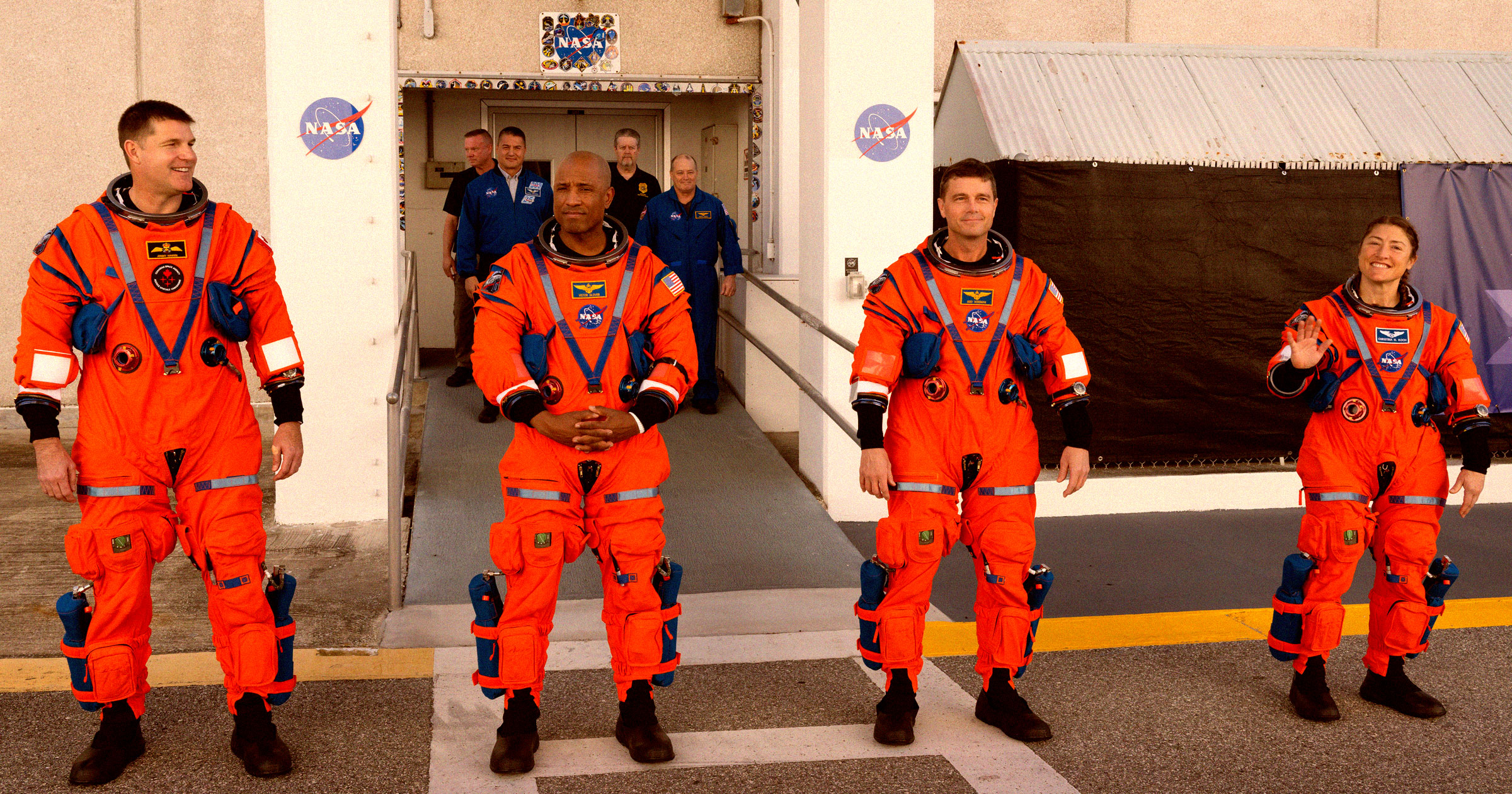
Four astronauts are preparing for a groundbreaking journey to the Moon, marking the first time humans will venture beyond Earth’s gravity well in over 50 years. NASA’s Artemis 2 mission, slated for launch in February 2026, aims to send these astronauts aboard an Orion spacecraft attached to the massive Space Launch System (SLS) rocket. This mission will take the crew on a flyby of the Moon, setting the stage for future lunar landings planned for Artemis 3, which is tentatively scheduled for 2027.
This mission represents a significant step in space exploration. The Artemis 2 crew will travel farther from Earth than any human has since the Apollo missions. Although they won’t land on the lunar surface, the trajectory will enable them to orbit the Moon, thereby pushing the boundaries of human spaceflight.
Preparation at NASA’s Kennedy Space Center
Over the weekend, NASA conducted a critical dress rehearsal for the upcoming launch. Canadian astronaut Jeremy Hansen and NASA astronauts Victor Glover, Reid Wiseman, and Christina Koch donned their bright orange Orion Crew Survival System suits, which have been under development for several years. This rehearsal included a countdown demonstration test, simulating the events that will occur on launch day, from wearing the suits to entering and exiting the spacecraft.
While the SLS rocket has not yet been positioned on the launch pad at Launch Complex 39B, the astronauts were able to practice inside NASA’s Kennedy Space Center Vehicle Assembly Building. The Orion spacecraft was already stacked on the SLS since October, allowing for valuable rehearsal time. According to NASA, engineers are currently finalizing preparations for both the spacecraft and the rocket systems.
The dress rehearsal was originally scheduled for November 19, but issues with the Orion hatch led to a delay. A spokesperson for NASA explained, “This demonstration was paused when a blemish was found on the crew module thermal barrier, preventing hatch closure until it could be addressed.” Despite this setback, NASA remains optimistic, stating that they are on track to launch Artemis 2 no later than April 2026, with potential opportunities to launch as soon as February.
Looking Ahead to the Launch
The countdown to launch day is an exciting time for the space community. This rehearsal serves as a final verification of the timeline for both the crew and supporting teams on the ground. Following this, NASA will prepare for any potential emergencies that may arise on the launch pad.
The complexity of this mission cannot be understated. The last time humans were in proximity to the Moon was during NASA’s Apollo 17 mission, which took place over 53 years ago. The Artemis program aims to reignite human exploration of the lunar surface and eventually pave the way for future missions to Mars.
The Artemis 2 mission embodies a significant leap into a new era of space exploration, with the potential for immense scientific and technological advancements. As preparations continue, the world looks forward to witnessing history in the making once again.

Urgent Swatting Incident Ties Up Emergency Resources in Alabama

Urgent Tax Alert: Claim Your Deductions Before April 15!

Scientists Investigate Cosmic Defects: Where Are They Now?

Spring Bocce Leagues Open Registration in Rapid City

CALV Offers Essential Communication Class for Real Estate Pros

Samsung Galaxy Watch 9 Set for Larger 435mAh Battery Upgrade

Healthy Choice Wellness Reports Earnings, Stock Sees Uptick

Prince Harry Claims to Be ‘Antidote to Andrew’ Amid Royal Crisis

Pet Owners Weigh Kibble Against Fresh Dog Food Options

ALMA Discovers Companion Orbiting Giant Star π 1 Gruis

U.S. Visa Rescheduling Hits H‐1B Applicants as New Vetting Rules Take Effect

University of Hawaiʻi Joins $25.6M AI Project for Disaster Monitoring

F-22 Raptor vs. Su-57 Felon: A 2025 Fighter Jet Comparison

Recent Divorce Judgments from Iberia Parish Court Records

Urgent: Flight Cancellations Loom at Texas Airports Amid Shutdown

Ohio State Study Uncovers Brain Connectivity and Function Links

Frank Dunn, Esteemed Builder and Community Leader, Passes Away at 89

Appian Recognizes 2025 Partner Award Winners for Enterprise Innovation
-
 Science9 months ago
ALMA Discovers Companion Orbiting Giant Star π 1 Gruis
-
 Politics8 months ago
U.S. Visa Rescheduling Hits H‐1B Applicants as New Vetting Rules Take Effect
-
Science10 months ago
University of Hawaiʻi Joins $25.6M AI Project for Disaster Monitoring
-
 World10 months ago
F-22 Raptor vs. Su-57 Felon: A 2025 Fighter Jet Comparison
-
 Politics9 months ago
Recent Divorce Judgments from Iberia Parish Court Records
-
 Top Stories10 months ago
Urgent: Flight Cancellations Loom at Texas Airports Amid Shutdown
-
 Science10 months ago
Ohio State Study Uncovers Brain Connectivity and Function Links
-
 Lifestyle10 months ago
Frank Dunn, Esteemed Builder and Community Leader, Passes Away at 89
-
 Business10 months ago
Appian Recognizes 2025 Partner Award Winners for Enterprise Innovation
-

 World10 months ago
Prince Andrew Faces Fallout from Scandals and Allegations
-

 Entertainment8 months ago
Malachi Barton Tops Google Searches as Disney’s Rising Star of 2025
-

 Top Stories9 months ago
Republican Matt Van Epps Wins Tennessee Special Election