
Politics
Minnesota Senate Considers Shifting Medicaid to Direct Care Model

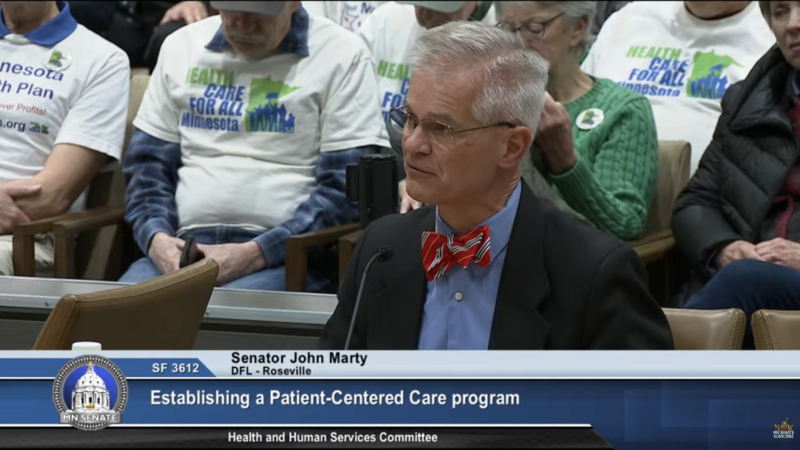
Members of the Minnesota Senate’s Health and Human Services Committee convened on March 10, 2024, to discuss a significant legislative proposal aimed at removing insurance companies from the state’s Medicaid and MinnesotaCare programs. The bill, known as SF 3612, seeks to eliminate managed care organizations (MCOs) from these public health programs, with the intention of streamlining patient access to care.
Proposed Changes to Medicaid and MinnesotaCare
Senator John Marty, a Democrat from Roseville and the chief architect of SF 3612, emphasized that the proposal would eliminate the “middleman” role played by insurance companies. “These organizations create barriers to patient care using limited networks and differing drug formularies, along with prior authorizations,” he stated during the committee meeting. Currently, most recipients of MinnesotaCare and Medical Assistance—Minnesota’s Medicaid program—receive their coverage through MCOs, while a smaller portion benefits from a fee-for-service model.
The bill is supported in the state House by Rep. Tina Liebling, also a Democrat from Rochester. Under the proposed structure, the Minnesota Department of Human Services would contract with a single administrative services organization (ASO) to manage care benefits, without taking on financial risk. “I presume one of the existing MCOs, which already deals with claims payment, would continue that part of their business,” Marty explained, indicating that they would still manage administrative functions.
Insights from Other States and Concerns Raised
Sheldon Toubman, an attorney with Disability Rights Connecticut, provided testimony based on Connecticut’s successful transition from an MCO to an ASO system in 2012. Toubman noted that this shift has saved the state over $4 billion, highlighting that a high percentage of taxpayer funds are directed toward healthcare rather than administrative costs. “We have very high medical cost ratios, around 97%, meaning almost all the taxpayers’ money is actually going to health care,” he remarked.
On the opposing side, Chelsea Olson from the Minnesota Council of Health Plans raised concerns about the potential impact of the bill on healthcare provider participation. Olson argued that MCOs leverage their commercial contracts to ensure that in-network doctors accept Medicaid patients, which could change under a single-payer system. “How will the state replace this leverage to prevent providers from prioritizing commercial payers over the lower-paying MA enrollees?” she questioned.
Senator Bill Lieske, a Republican from Lonsdale and a chiropractor by profession, echoed these concerns. He warned that having a single option might reduce negotiation power for providers, potentially leading to less favorable conditions for both patients and practitioners.
Testimony from Nancy Westman, a psychiatric nurse practitioner at Hennepin Health, illustrated the administrative challenges within the current system. She described how patients often face delays in receiving necessary medications due to coverage restrictions. “I may have to trial three different psychiatric medications to support and stabilize a patient,” Westman explained, expressing frustration over the obstacles to timely care.
The committee ultimately decided to lay the bill over for further consideration, and a fiscal analysis of the potential costs associated with this change has yet to be released. As discussions continue, the implications of this proposed legislation could significantly alter the landscape of healthcare delivery in Minnesota.

Urgent Swatting Incident Ties Up Emergency Resources in Alabama

Urgent Tax Alert: Claim Your Deductions Before April 15!

Scientists Investigate Cosmic Defects: Where Are They Now?

Spring Bocce Leagues Open Registration in Rapid City

CALV Offers Essential Communication Class for Real Estate Pros

Samsung Galaxy Watch 9 Set for Larger 435mAh Battery Upgrade

Healthy Choice Wellness Reports Earnings, Stock Sees Uptick

Prince Harry Claims to Be ‘Antidote to Andrew’ Amid Royal Crisis

Pet Owners Weigh Kibble Against Fresh Dog Food Options

ALMA Discovers Companion Orbiting Giant Star π 1 Gruis

U.S. Visa Rescheduling Hits H‐1B Applicants as New Vetting Rules Take Effect

University of Hawaiʻi Joins $25.6M AI Project for Disaster Monitoring

F-22 Raptor vs. Su-57 Felon: A 2025 Fighter Jet Comparison

Ohio State Study Uncovers Brain Connectivity and Function Links

Recent Divorce Judgments from Iberia Parish Court Records

Prince Andrew Faces Fallout from Scandals and Allegations

Urgent: Flight Cancellations Loom at Texas Airports Amid Shutdown

Frank Dunn, Esteemed Builder and Community Leader, Passes Away at 89
-
 Science8 months ago
ALMA Discovers Companion Orbiting Giant Star π 1 Gruis
-
 Politics6 months ago
U.S. Visa Rescheduling Hits H‐1B Applicants as New Vetting Rules Take Effect
-
Science8 months ago
University of Hawaiʻi Joins $25.6M AI Project for Disaster Monitoring
-
 World8 months ago
F-22 Raptor vs. Su-57 Felon: A 2025 Fighter Jet Comparison
-
 Science8 months ago
Ohio State Study Uncovers Brain Connectivity and Function Links
-
 Politics8 months ago
Recent Divorce Judgments from Iberia Parish Court Records
-
 World8 months ago
Prince Andrew Faces Fallout from Scandals and Allegations
-
 Top Stories8 months ago
Urgent: Flight Cancellations Loom at Texas Airports Amid Shutdown
-
 Lifestyle8 months ago
Frank Dunn, Esteemed Builder and Community Leader, Passes Away at 89
-

 Business8 months ago
Appian Recognizes 2025 Partner Award Winners for Enterprise Innovation
-

 Entertainment6 months ago
Malachi Barton Tops Google Searches as Disney’s Rising Star of 2025
-

 Science9 months ago
Innovator Captures Light at 2 Billion Frames Per Second