
Politics
Iran Faces Prolonged Decline Rather Than Imminent Revolution

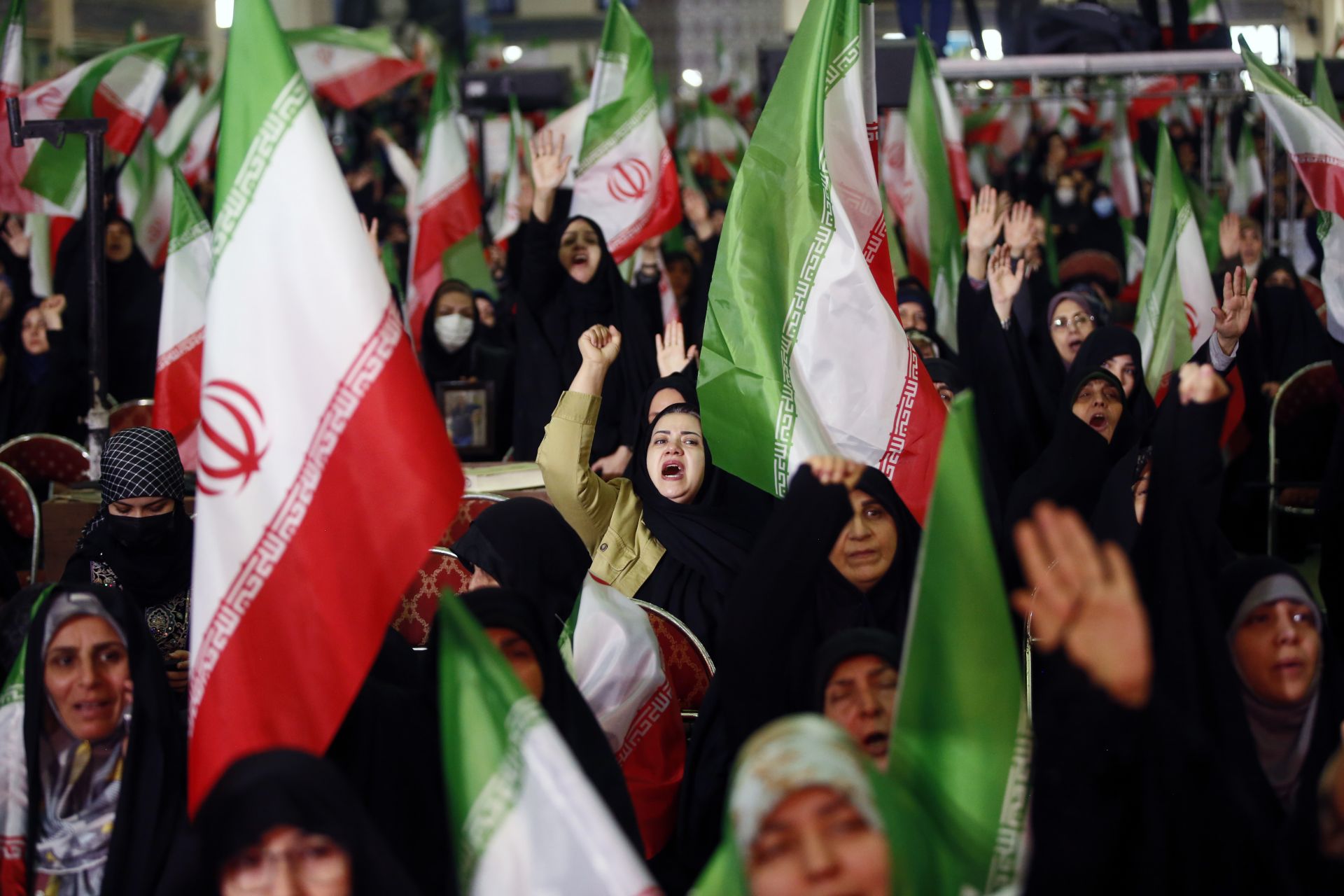
Across decades, analysts and observers have speculated about the possibility of a new revolution in Iran, expecting a moment reminiscent of the 1979 upheaval. Recent events, including protests and government crackdowns, have intensified this narrative. Yet, despite the ongoing turmoil, Iran appears to be entering a prolonged phase of political decline rather than standing on the brink of a revolutionary moment.
In recent years, acts of quiet defiance have become increasingly common in major Iranian cities. Women publicly reject compulsory veiling, and protest songs circulate widely, reflecting a pervasive sense of dissatisfaction. The violent responses from the state during heightened confrontations, especially in late December and January, suggest a growing crisis. However, there remains no sustained mass uprising or unified leadership capable of challenging the political order that has prevailed for nearly fifty years.
The reality may be more unsettling than anticipated. Rather than approaching a revolutionary threshold, Iran is witnessing a gradual erosion of political legitimacy. Power persists, but it is increasingly disconnected from the public’s moral and ethical frameworks. This decline is characterized not by sudden upheavals but by a slow, creeping decay of the regime’s authority.
The analogy to the 1979 Revolution can obscure the complexities of Iran’s current situation. Revolutions are infrequent occurrences, especially in systems marked by significant delegitimization. They require not only widespread public anger but also fractures within the elite, organizational capacity, and a consensus on the need for change. While many Iranians express moral discontent with the ruling ideology, there is little consensus on what a new order might entail.
Over the past decade, there has been a significant symbolic transformation in Iranian society. The Islamic Republic no longer holds the moral ground it once did. Concepts such as dignity, personal autonomy, and truth-telling have begun to overshadow the regime’s revolutionary rhetoric. Although this shift has not led to the emergence of a new political system, it has eroded the moral foundations of the current regime.
What we see today is a strained political condition. The state retains its coercive mechanisms but lacks symbolic legitimacy. Society has withdrawn its belief in the regime without coalescing around a viable alternative. The result is not a collapse but what can be termed “authoritarian aging,” where the regime survives by narrowing its ambitions and relying on routine governance methods and force.
The January 2026 crackdown exemplifies this dynamic. The extensive use of lethal force against protesters reveals a regime unwilling to risk uncertainty. While such actions may temporarily restore an illusion of order, they signal fragility. A regime confident in its legitimacy would not resort to extreme violence against its citizens.
This disconnect between visible cultural defiance and political stagnation illustrates the complexities of Iranian society. The widespread refusal of women to adhere to the compulsory headscarf represents a significant challenge to the regime’s authority. However, it has not yet led to a continuous mass mobilization. For many, particularly the youth, the goal has shifted from seizing state power to minimizing its influence over their lives. Emigration and quiet noncompliance have become forms of political expression.
The absence of a revolutionary movement signals exhaustion on both sides of the social divide. The Islamic Republic struggles to persuade its citizens, while a significant portion of society has lost faith in the notion that revolution is a feasible path forward.
The regime’s reaction to the recent nationwide protests underscores this deterioration. Security forces employed overwhelming and often lethal force, resulting in hundreds of deaths and thousands of arrests. Yet, such repression failed to restore authority or moral deterrence; instead, it highlighted the characteristics of aging authoritarian systems—violence acting as a substitute for legitimacy.
The erosion of legitimacy is evident across various governance dimensions. Elections continue, but without the mobilization and excitement of earlier times. Official rituals are observed with diminishing participation, and state media increasingly relies on repetition of familiar slogans rather than meaningful engagement. This shift reflects a system that has moved away from transformation and towards preservation.
The administrative decline is further compounded by economic mismanagement and corruption. Iran’s economy faces persistent challenges, including currency instability and ineffective subsidy reforms. While sanctions have played a role, their impact is exacerbated by poor decision-making and institutional fragmentation. Environmental crises, such as water shortages and air pollution, have amplified public discontent and underscored the government’s reactive rather than proactive nature.
A generational shift within the state apparatus has also accelerated this trend. Many mid- and senior-level officials have emerged from ideologically driven institutions, prioritizing loyalty over technocratic expertise. While capable professionals remain, the emphasis on ideological commitment over practical governance has narrowed policy debates and strategic planning.
This change has significant implications for the regime’s relationship with the younger population. Many Iranians under 50 lack direct experience of the revolution or the Iran-Iraq War, events that historically bolstered the regime’s moral authority. Their political consciousness has been shaped by recent protests, state violence, and a pervasive sense of alienation rather than revolutionary fervor.
Alienation manifests itself in various ways. A disenchanted populace may disengage rather than directly oppose the regime. Over time, this can diminish the state’s capacity to mobilize support during crises, even as it continues to exert control.
At the highest levels of the regime, a growing detachment from public sentiment is evident. Voter turnout has plummeted in recent elections, yet the Guardian Council has continued to disqualify candidates, further narrowing political competition. This lack of responsiveness fosters mutual cynicism, with rulers suspicious of citizens and citizens feeling their voices are unheard.
Governance becomes defensive in such an environment. Policies are designed to maintain stability rather than inspire confidence, reinforcing a custodial approach to governance that prioritizes preservation of the revolutionary legacy over addressing contemporary societal needs.
While the temptation to assess Iran through the lens of its past revolution is strong, the structural conditions that enabled the 1979 upheaval no longer exist. Today’s Iran boasts a more entrenched ruling system, a robust security apparatus, and a fragmented opposition. Most critically, the moral chasm between the state and society has not resulted in a coherent vision for political change.
In many late-stage authoritarian regimes, collapse has often occurred not during periods of intense repression but rather when elite confidence falters. Historical examples show that significant shifts arise when segments of the establishment reassess their interests. Iran’s trajectory may not follow a linear path, but the slow, cumulative erosion of authority could eventually yield profound transformations.
Understanding Iran’s political landscape is crucial for international observers. The perception that continuity implies strength and unrest signals imminent collapse is misleading. A regime that governs without legitimacy is not stable; rather, it is constrained. Its foreign policy becomes rigid, as compromises risk exposing ideological vulnerabilities.
External pressures may weaken the regime but do not inherently create cohesive alternatives. In aging authoritarian systems, external shocks can solidify the security apparatus rather than precipitate collapse. Iran’s political order, forged in adversity, has proven resilient under pressure, suggesting that expecting a dramatic internal collapse may overestimate both the regime’s fragility and the readiness of an alternative political force to emerge.
Ultimately, Iran’s political decline is marked by a unique paradox: the regime presents a façade of strength abroad while revealing brittleness at home. The leadership clings to symbols of sovereignty even as it loses control over the underlying meanings that resonate with its citizens. The current order may not be permanent, but the path to change is likely to be indirect and shaped by gradual internal shifts.
The significant political transformation in Iran is already underway—not through visible revolts but in the moral consciousness of its people. Many no longer accept the Islamic Republic’s ideological claims. The critical question is not when a revolution will occur but how long a regime can endure when its citizens have mentally moved beyond it. In the realm of politics, aging can be both prolonged and, ultimately, transformative.

Urgent Swatting Incident Ties Up Emergency Resources in Alabama

Urgent Tax Alert: Claim Your Deductions Before April 15!

Scientists Investigate Cosmic Defects: Where Are They Now?

Spring Bocce Leagues Open Registration in Rapid City

CALV Offers Essential Communication Class for Real Estate Pros

Samsung Galaxy Watch 9 Set for Larger 435mAh Battery Upgrade

Healthy Choice Wellness Reports Earnings, Stock Sees Uptick

Prince Harry Claims to Be ‘Antidote to Andrew’ Amid Royal Crisis

Pet Owners Weigh Kibble Against Fresh Dog Food Options

ALMA Discovers Companion Orbiting Giant Star π 1 Gruis

U.S. Visa Rescheduling Hits H‐1B Applicants as New Vetting Rules Take Effect

University of Hawaiʻi Joins $25.6M AI Project for Disaster Monitoring

F-22 Raptor vs. Su-57 Felon: A 2025 Fighter Jet Comparison

Ohio State Study Uncovers Brain Connectivity and Function Links

Recent Divorce Judgments from Iberia Parish Court Records

Prince Andrew Faces Fallout from Scandals and Allegations

Urgent: Flight Cancellations Loom at Texas Airports Amid Shutdown

Frank Dunn, Esteemed Builder and Community Leader, Passes Away at 89
-
 Science8 months ago
ALMA Discovers Companion Orbiting Giant Star π 1 Gruis
-
 Politics6 months ago
U.S. Visa Rescheduling Hits H‐1B Applicants as New Vetting Rules Take Effect
-
Science8 months ago
University of Hawaiʻi Joins $25.6M AI Project for Disaster Monitoring
-
 World8 months ago
F-22 Raptor vs. Su-57 Felon: A 2025 Fighter Jet Comparison
-
 Science8 months ago
Ohio State Study Uncovers Brain Connectivity and Function Links
-
 Politics8 months ago
Recent Divorce Judgments from Iberia Parish Court Records
-
 World8 months ago
Prince Andrew Faces Fallout from Scandals and Allegations
-
 Top Stories8 months ago
Urgent: Flight Cancellations Loom at Texas Airports Amid Shutdown
-
 Lifestyle8 months ago
Frank Dunn, Esteemed Builder and Community Leader, Passes Away at 89
-

 Business8 months ago
Appian Recognizes 2025 Partner Award Winners for Enterprise Innovation
-

 Entertainment6 months ago
Malachi Barton Tops Google Searches as Disney’s Rising Star of 2025
-

 Science9 months ago
Innovator Captures Light at 2 Billion Frames Per Second