
Politics
Gaza’s Fragmented Militia Landscape Challenges Hamas Authority

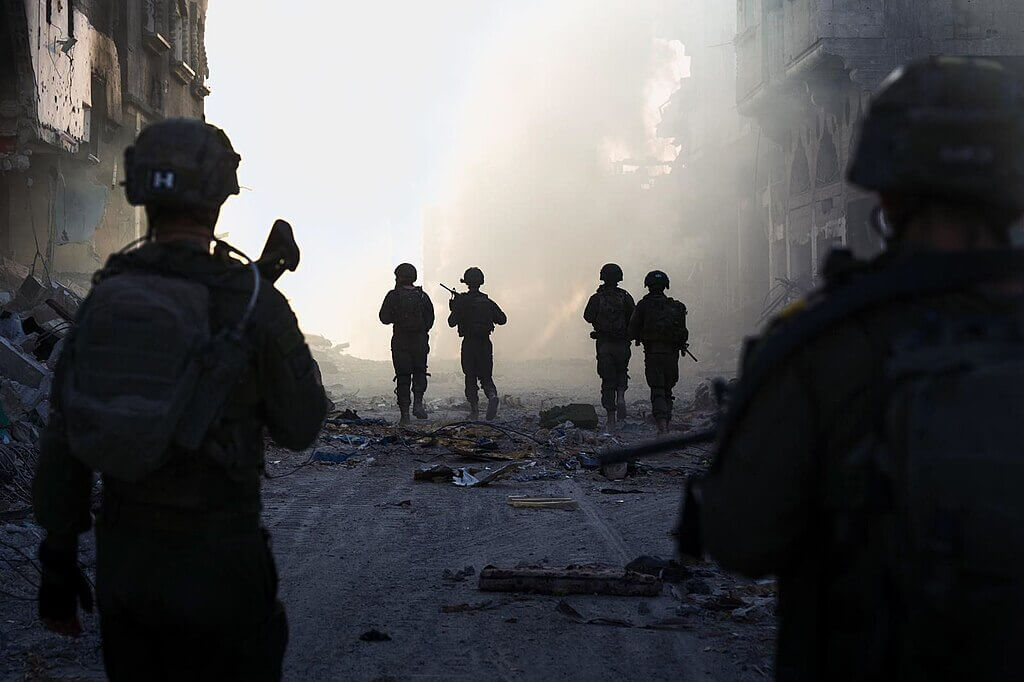
Recent developments in Gaza have unveiled a complex landscape of armed factions that challenge the authority of Hamas, the dominant militant group in the region. Following the violent escalation with Israel that began on October 10, 2023, various militias, clan networks, and criminal organizations have emerged, demonstrating a fragmentation that complicates the existing power dynamics within Gaza.
Giorgio Cafiero, CEO of Gulf State Analytics and an adjunct assistant professor at Georgetown University, offers insight into this evolving situation. He notes that while no single group currently rivals Hamas in power or organization, their presence significantly contributes to the instability of Gaza’s already volatile environment.
Understanding Armed Fragmentation in Gaza
Mapping the ecosystem of armed factions in Gaza is both conceptually and empirically challenging. Fluid affiliations and overlapping identities blur the lines between organized militias, clan-based networks, and criminal organizations. Many of these groups operate in the shadows, maneuvering around the more established factions like Hamas and the Palestinian Islamic Jihad (PIJ).
At least a dozen distinct Palestinian armed groups have been identified, each varying in ideological orientation, organization, and affiliations with other actors, including Israel and the Islamic State (ISIS). For instance, the Popular Forces, led by Yasser Abu Shabab, has emerged as a notable anti-Hamas militia. Formed in early 2025, this group has gained notoriety for targeting Hamas positions during recent airstrikes, leveraging its estimated strength of around 1,000 fighters.
Based strategically along a humanitarian aid corridor near the Kerem Shalom crossing, the Popular Forces have exploited their location to intercept incoming aid shipments. Abu Shabab’s criminal background predates his leadership role; he previously led a looting network before his re-emergence as a militia leader amid the chaos following the October attacks.
The Rise of Competing Factions
Another faction, the Popular Army – Northern Forces, operates under the Popular Forces and is led by Ashraf al-Mansi. This group has engaged in intermittent clashes with Hamas in northern Gaza, particularly in Jabalia and Beit Lahiya. Al-Mansi publicly thanked U.S. President Donald Trump for efforts aimed at achieving a ceasefire in Gaza, highlighting the faction’s complex positioning amidst international politics.
Established in August 2025, the Counter-Terrorism Strike Force, led by Hossam al-Astal, has positioned itself as an anti-Hamas militia primarily active in southeastern Khan Younis. With a limited number of fighters, the group has not yet executed significant operations against Hamas but receives support from Israeli intelligence. Al-Astal has been vocal about his collaboration with Israeli forces, framing it as essential for survival in Gaza’s perilous environment.
The Shujaiya Popular Defense Forces, led by Rami Helles, also exemplify the clan-based armed groups in Gaza. With ties to the historically significant Helles family, this militia has a legacy of resistance against Hamas, dating back to the 2007 conflict over Gaza’s control. Although small in size, the group maintains a commitment to the Palestinian resistance.
Among the most influential clans are the al-Majayda and Doghmosh clans, known for their historical significance and military capabilities. The al-Majayda clan has recently faced confrontations with Hamas, particularly due to allegations of collaboration with networks opposing Hamas. Despite internal strife, clan leadership has publicly supported Hamas’ broader security campaign, urging members to cooperate with authorities.
The Doghmosh clan, historically armed and influential, has experienced tensions with Hamas as well. Their members span the Palestinian political spectrum, with notable figures like Mumtaz Doghmosh previously leading armed factions and pledging allegiance to ISIS.
The activities of these anti-Hamas groups, along with clan rivalries and criminal organizations, complicate the prospects for stability in Gaza. This fragmentation poses challenges to any overarching efforts aimed at peace and reconstruction following the ongoing conflict.
As the situation evolves, Israeli support for these militias reflects a long-standing strategy aimed at undermining Palestinian unity. By fostering internal divisions, Israel seeks to complicate efforts for a cohesive Palestinian front, thereby maintaining Gaza as a fragmented landscape dominated by competing factions rather than a unified resistance against occupation.
The interplay of these forces signals a challenging road ahead for Gaza, where the quest for stability remains hindered by a complex web of rivalries, ideologies, and external influences.

Urgent Swatting Incident Ties Up Emergency Resources in Alabama

Urgent Tax Alert: Claim Your Deductions Before April 15!

Scientists Investigate Cosmic Defects: Where Are They Now?

Spring Bocce Leagues Open Registration in Rapid City

CALV Offers Essential Communication Class for Real Estate Pros

Samsung Galaxy Watch 9 Set for Larger 435mAh Battery Upgrade

Healthy Choice Wellness Reports Earnings, Stock Sees Uptick

Prince Harry Claims to Be ‘Antidote to Andrew’ Amid Royal Crisis

Pet Owners Weigh Kibble Against Fresh Dog Food Options

ALMA Discovers Companion Orbiting Giant Star π 1 Gruis

U.S. Visa Rescheduling Hits H‐1B Applicants as New Vetting Rules Take Effect

University of Hawaiʻi Joins $25.6M AI Project for Disaster Monitoring

F-22 Raptor vs. Su-57 Felon: A 2025 Fighter Jet Comparison

Recent Divorce Judgments from Iberia Parish Court Records

Ohio State Study Uncovers Brain Connectivity and Function Links

Urgent: Flight Cancellations Loom at Texas Airports Amid Shutdown

Frank Dunn, Esteemed Builder and Community Leader, Passes Away at 89

Prince Andrew Faces Fallout from Scandals and Allegations
-
 Science9 months ago
ALMA Discovers Companion Orbiting Giant Star π 1 Gruis
-
 Politics7 months ago
U.S. Visa Rescheduling Hits H‐1B Applicants as New Vetting Rules Take Effect
-
Science9 months ago
University of Hawaiʻi Joins $25.6M AI Project for Disaster Monitoring
-
 World9 months ago
F-22 Raptor vs. Su-57 Felon: A 2025 Fighter Jet Comparison
-
 Politics9 months ago
Recent Divorce Judgments from Iberia Parish Court Records
-
 Science9 months ago
Ohio State Study Uncovers Brain Connectivity and Function Links
-
 Top Stories9 months ago
Urgent: Flight Cancellations Loom at Texas Airports Amid Shutdown
-
 Lifestyle9 months ago
Frank Dunn, Esteemed Builder and Community Leader, Passes Away at 89
-
 World9 months ago
Prince Andrew Faces Fallout from Scandals and Allegations
-

 Business9 months ago
Appian Recognizes 2025 Partner Award Winners for Enterprise Innovation
-

 Entertainment7 months ago
Malachi Barton Tops Google Searches as Disney’s Rising Star of 2025
-

 Top Stories8 months ago
Republican Matt Van Epps Wins Tennessee Special Election