
Politics
Court Rules on DMCA Safe Harbor in McGucken v. Shutterstock Case

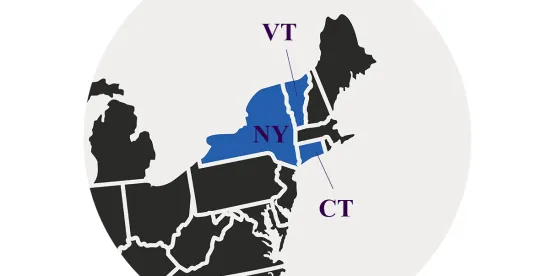
The US Court of Appeals for the Second Circuit has made a significant ruling regarding the Digital Millennium Copyright Act (DMCA) in the case of Elliott McGucken v. Shutterstock Inc.. On February 10, 2026, the Court upheld the dismissal of McGucken’s claims against Shutterstock for lack of scienter but vacated the summary judgment on copyright claims, sending the case back to the district court for further examination.
McGucken, a professional photographer, discovered that several hundred of his copyrighted photographs had been uploaded to Shutterstock by three different user accounts, which generated over $2,000 in licensing revenue. After Shutterstock removed the images within four days of receiving takedown notices and terminated the accounts involved, McGucken initiated legal action. He alleged copyright infringement under 17 U.S.C. § 106 and false copyright management information (CMI) under 17 U.S.C. § 1202.
The district court previously granted summary judgment in favor of Shutterstock on all claims. McGucken subsequently appealed the decision. The Second Circuit assessed the claims and agreed that McGucken did not establish a triable issue concerning Shutterstock’s scienter related to CMI.
Key Findings of the Second Circuit
The Court identified two critical factors in its ruling. First, it found that Shutterstock’s practice of watermarking all images did not indicate that the platform knowingly affixed false CMI to McGucken’s works to facilitate infringement. Second, the automated removal of CMI from uploaded images, a measure taken to prevent malware and protect personally identifiable information, did not demonstrate that Shutterstock was aware it was removing McGucken’s CMI without authorization.
On the copyright infringement claim, the Second Circuit concurred that Shutterstock qualifies as a “service provider” under the DMCA. The Court noted that Shutterstock maintained a repeat infringer policy and exhibited no interference with standard technical measures. Furthermore, it affirmed that the platform lacked actual or “red flag” knowledge of the infringement and acted swiftly upon notification.
Nevertheless, the Court found that two key elements of the safe harbor provision under 17 U.S.C. § 512(c)(1) remained in contention. The first question was whether the storage of the images was “at the direction of the user.” The Court indicated that a factfinder must evaluate whether Shutterstock exercised “substantive and discretionary control” over the uploaded content, including the extent of aesthetic or editorial judgment used in accepting images.
The second issue pertained to whether Shutterstock had the “right and ability to control” the allegedly infringing activities. The Court explained that safe harbor protections may be unavailable if a service provider exercises “substantial control” over user activities, extending beyond merely promoting or demoting content. Control can also be inferred if a provider selectively reviews only a portion of uploaded material instead of all submissions.
Implications for Service Providers and Copyright Owners
Due to these unresolved issues, the Second Circuit vacated the summary judgment on the copyright claim and remanded the case for further proceedings. The clarification provided by the Court regarding “at the direction of a user” and “right and ability to control” will be closely monitored as the case returns to the US District Court for the Southern District of New York.
Both online service providers and copyright holders should pay attention to how these standards are applied in practice, as they could significantly influence the scope of DMCA safe harbor protections moving forward.

Urgent Swatting Incident Ties Up Emergency Resources in Alabama

Urgent Tax Alert: Claim Your Deductions Before April 15!

Scientists Investigate Cosmic Defects: Where Are They Now?

Spring Bocce Leagues Open Registration in Rapid City

CALV Offers Essential Communication Class for Real Estate Pros

Samsung Galaxy Watch 9 Set for Larger 435mAh Battery Upgrade

Healthy Choice Wellness Reports Earnings, Stock Sees Uptick

Prince Harry Claims to Be ‘Antidote to Andrew’ Amid Royal Crisis

Pet Owners Weigh Kibble Against Fresh Dog Food Options

ALMA Discovers Companion Orbiting Giant Star π 1 Gruis

U.S. Visa Rescheduling Hits H‐1B Applicants as New Vetting Rules Take Effect

University of Hawaiʻi Joins $25.6M AI Project for Disaster Monitoring

F-22 Raptor vs. Su-57 Felon: A 2025 Fighter Jet Comparison

Ohio State Study Uncovers Brain Connectivity and Function Links

Recent Divorce Judgments from Iberia Parish Court Records

Prince Andrew Faces Fallout from Scandals and Allegations

Urgent: Flight Cancellations Loom at Texas Airports Amid Shutdown

Frank Dunn, Esteemed Builder and Community Leader, Passes Away at 89
-
 Science8 months ago
ALMA Discovers Companion Orbiting Giant Star π 1 Gruis
-
 Politics6 months ago
U.S. Visa Rescheduling Hits H‐1B Applicants as New Vetting Rules Take Effect
-
Science8 months ago
University of Hawaiʻi Joins $25.6M AI Project for Disaster Monitoring
-
 World8 months ago
F-22 Raptor vs. Su-57 Felon: A 2025 Fighter Jet Comparison
-
 Science8 months ago
Ohio State Study Uncovers Brain Connectivity and Function Links
-
 Politics8 months ago
Recent Divorce Judgments from Iberia Parish Court Records
-
 World8 months ago
Prince Andrew Faces Fallout from Scandals and Allegations
-
 Top Stories8 months ago
Urgent: Flight Cancellations Loom at Texas Airports Amid Shutdown
-
 Lifestyle8 months ago
Frank Dunn, Esteemed Builder and Community Leader, Passes Away at 89
-

 Business8 months ago
Appian Recognizes 2025 Partner Award Winners for Enterprise Innovation
-

 Entertainment6 months ago
Malachi Barton Tops Google Searches as Disney’s Rising Star of 2025
-

 Science9 months ago
Innovator Captures Light at 2 Billion Frames Per Second