
Health
Researchers Develop Real-Time Tool to Monitor DNA Damage

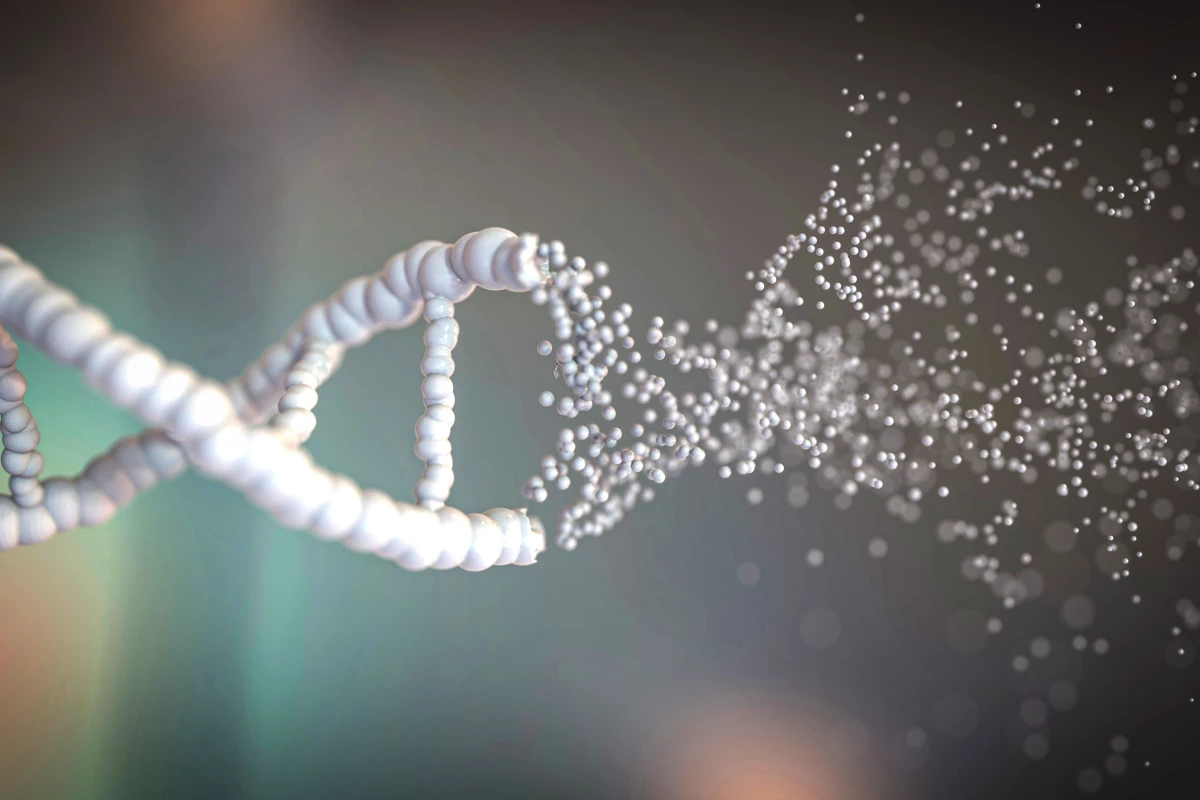
A team of researchers at Utrecht University has developed an innovative tool that allows for the real-time observation of DNA damage and repair processes within living cells. This groundbreaking advancement addresses a significant challenge in molecular biology, as monitoring how cells respond to DNA injuries has traditionally required methods that only provide static snapshots of the repair process.
DNA is susceptible to severe damage, particularly in the form of double strand breaks, where both strands of the DNA helix snap. Such breaks are among the most perilous types of DNA damage and activate the cell’s damage response immediately. Understanding how these repairs occur is crucial, as ineffective repair mechanisms can lead to various diseases, including cancer.
Innovation in Observation Techniques
Until now, scientists have relied on techniques that capture cells at various stages of repair, which limits their understanding of the dynamic process. The new tool developed by the Utrecht team employs glowing sensors that indicate the precise locations of DNA breaks as they occur. Lead researcher Tuncay Baubec describes this advancement as akin to “opening a window into the cell’s repair system,” enabling researchers to observe the intricate processes in real time without interfering with cellular functions.
The sensor is engineered from components of a natural protein already utilized by cells, allowing it to attach and detach from damaged DNA independently. This design ensures that the observation reflects the cell’s authentic behavior. The tool has proven effective in both fixed and live cells, functioning similarly to an antibody in traditional laboratory methods.
To demonstrate the sensor’s capabilities, researchers employed the Cas9 protein to create specific DNA breaks, successfully detecting single breaks even in densely packed heterochromatin. This versatility positions the sensor as an essential tool for studying DNA repair mechanisms across various chromatin environments.
Applications Beyond the Laboratory
The sensor’s glowing tag, which consists of a small protein domain from the cell, allows for delicate interactions with damaged DNA. As it binds briefly to the damage, it reveals the injury without hindering the cell’s natural repair processes. Tests confirmed that this approach does not disrupt the typical repair pathways, making it suitable for observing DNA damage in living cells and organisms.
In addition to cell cultures, the research team applied the sensor in a common model organism, a worm, where it effectively tracked DNA breaks during developmental stages. This capacity to monitor DNA damage in real organisms expands the potential applications of the tool beyond laboratory settings.
The sensor also offers the potential to link to other molecules, enabling scientists to map the locations of DNA breaks and observe which proteins are recruited to the damage sites. This could facilitate new experiments, allowing researchers to manipulate damaged DNA within the nucleus to assess factors influencing repair.
Baubec highlights the significant implications of their findings for medical research. Current clinical methods often rely on antibodies for similar assessments, but the new tool promises to streamline these processes. “Our tool could make these tests cheaper, faster, and more accurate,” Baubec notes, suggesting a transformative impact on methodologies in cancer research and beyond.
The study detailing this innovative sensor has been published in the journal Nature Communications, marking a pivotal milestone in the pursuit of understanding DNA repair mechanisms. As researchers continue to explore the intricacies of cellular responses to DNA damage, this tool may pave the way for new therapeutic strategies and enhance our grasp of genomic stability.

Urgent Swatting Incident Ties Up Emergency Resources in Alabama

Urgent Tax Alert: Claim Your Deductions Before April 15!

Scientists Investigate Cosmic Defects: Where Are They Now?

Spring Bocce Leagues Open Registration in Rapid City

CALV Offers Essential Communication Class for Real Estate Pros

Samsung Galaxy Watch 9 Set for Larger 435mAh Battery Upgrade

Healthy Choice Wellness Reports Earnings, Stock Sees Uptick

Prince Harry Claims to Be ‘Antidote to Andrew’ Amid Royal Crisis

Pet Owners Weigh Kibble Against Fresh Dog Food Options

ALMA Discovers Companion Orbiting Giant Star π 1 Gruis

U.S. Visa Rescheduling Hits H‐1B Applicants as New Vetting Rules Take Effect

University of Hawaiʻi Joins $25.6M AI Project for Disaster Monitoring

F-22 Raptor vs. Su-57 Felon: A 2025 Fighter Jet Comparison

Recent Divorce Judgments from Iberia Parish Court Records

Ohio State Study Uncovers Brain Connectivity and Function Links

Urgent: Flight Cancellations Loom at Texas Airports Amid Shutdown

Frank Dunn, Esteemed Builder and Community Leader, Passes Away at 89

Prince Andrew Faces Fallout from Scandals and Allegations
-
 Science9 months ago
ALMA Discovers Companion Orbiting Giant Star π 1 Gruis
-
 Politics7 months ago
U.S. Visa Rescheduling Hits H‐1B Applicants as New Vetting Rules Take Effect
-
Science9 months ago
University of Hawaiʻi Joins $25.6M AI Project for Disaster Monitoring
-
 World9 months ago
F-22 Raptor vs. Su-57 Felon: A 2025 Fighter Jet Comparison
-
 Politics9 months ago
Recent Divorce Judgments from Iberia Parish Court Records
-
 Science9 months ago
Ohio State Study Uncovers Brain Connectivity and Function Links
-
 Top Stories9 months ago
Urgent: Flight Cancellations Loom at Texas Airports Amid Shutdown
-
 Lifestyle9 months ago
Frank Dunn, Esteemed Builder and Community Leader, Passes Away at 89
-
 World9 months ago
Prince Andrew Faces Fallout from Scandals and Allegations
-

 Business9 months ago
Appian Recognizes 2025 Partner Award Winners for Enterprise Innovation
-

 Entertainment7 months ago
Malachi Barton Tops Google Searches as Disney’s Rising Star of 2025
-

 Top Stories8 months ago
Republican Matt Van Epps Wins Tennessee Special Election